Ealing Hospital celebrates its 40th and its Election time for the NHS – ESON newsletter 8/11/19
|
|||||||||||||||||||||||||||||||||||||||||||
|
|
|||||||||||||||||||||||||||||||||||||||||||
|
|||||||||||||||||||||||||||||||||||||||||||
 |
|||||||||||||||||||||||||||||||||||||||||||
|
|
|||||||||||||||||||||||||||||||||||||||||||
|
|
|||||||||||||||||||||||||||||||||||||||||||
|
|||||||||||||||||||||||||||||||||||||||||||
|
|||||||||||||||||||||||||||||||||||||||||||
|
Our NHS in Crisis
Issue: 87
1 November 2019
Management Recruiter Hunter Healthcare Publicises NHS North West London (NWL) ICS/ICP Aspirations As Part of Its Search for Five NHS London ICS Bosses
In many ways this is an extraordinary set of documents from an unusual source. An NHS activist in Brent spotted them. No-one in NHS NWL thought to send these NHS London/NHS NWL background documents to Ealing Save Our NHS (ESON) which has been attending NHS NWL commissioning and service delivery meetings now for some seven years.
Before we get into the nitty gritty ‘clinical’ content of these papers it’s interesting to note that the person doing the hiring is a Sir David Sloman. He was appointed NHS London supremo in February 2019. Wikipedia alleges that when he ran the Royal Free Hospital in Hampstead (2009 – 2018) he ignored the concerns of patients. He did, apparently, fall foul of the Data Protection Act in 2017 when he was discovered to have transferred data on 1.6 million patients to the Google DeepMind AI unit. Ironically 2017 was also the year he was Knighted.
What is rendered by Hunter Healthcare are NHS London and NHS NWL web pages on Integrated Care Systems (ICSs) and its Integrated Care Partnerships (ICSs). Confidence in the information presented as early as page 1 is dented by NHS NWL stating there are 400 GP Practices in NHS NWL. However the NHS NWL Collaboration of CCGs in 13 September 2019 stated there were 360. Who is right? And why is someone wrong?
Also on page 1 any flag waving is undermined by stating that, as at April 2019, the NHS NWL had an underlying deficit of £324 million, as well as there being financial challenges also present for our Local Authorities. Surely it’s time for NHS NWL to stop bleating about debts/deficits and get on with how It’s going to spend £4+ billion annually caring for its 2.4 million citizens much more effectively than it did each year 2012 to 2019. And care planning should be on a 10 year basis – as is Local Authority spatial planning. North west London’s population will probably reach 2.7 million by 2030 with a ten year accumulated spend of £40+ billion over that period. Plenty of cash here to do a lot of good. Cutting the £80+ million it cost to run the eight NHS NW CCGs in 2018/19 would be a great way of freeing up a bit more cash, as long as all these folks are not re-hired to staff up the new regional CCG and the eight local ICPs.
Ealing ICP
Some text and graphics (sometimes in such small type that it’s unreadable) have been thrown together (as a brace of slides each perhaps) for each of the eight NHS NWL ICSs. The only footprint/territory I really know anything about is Ealing. Comments on the Ealing ICP:
Hillingdon (12)
London North West (48)
Chelsea & Westminster (10)
Imperial (27)
Whatever does this mean? Does no-one in the NHS NWL office read material for sense before it’s published?
The London Vision
In the papers relating to ‘London NHS’ we have ‘The London Vision: The next steps on our journey to being the healthiest global city’. This motherhood and apple pie aspiration is clearly at odds with England’s, London’s (and Ealing’s) broken planning ‘system’.
Visit areas of London where intense, dense development (so-called ‘regeneration’) is taking place , around Wembley Stadium, North Acton and central Southall are good examples. Hundreds of residential tower blocks which will house tens of thousands of new residents, students and office workers are being built or planned over the next ten years. 85 towers of over 10 storeys or more have been counted in Ealing alone, which will house over 76,000 new residents – 25,000 in Southall alone.
What Primary Healthcare, Secondary Healthcare, mental health care and social care long term capacity planning is taking place in Ealing or London to cope with this population expansion? None that I can see. However, sadly, no long term care capacity planning is evident in education, housing, law & order, transport, business, culture and sport. These deficiencies are to be found nationally, regionally and locally. The notion that there is any possibility of maintaining or developing communities with an adequate range of current and future public and private services is but a distant dream.
‘Our NHS London Region Values’
‘Integrity, Compassion, Consistency, Courage, Effectively’
‘Core Values, Aspirational Values, Permission to Play Values’
‘Taking Accountability’
All marvellous, uplifting words, but as my mother used to say ‘handsome is as handsome does’.
NHS NWL 2012 – 2019 wasted up to £1.3 billion of public money, including over £72 million into the pockets of management consultants, on a disastrous failed Acute reconfiguration/transformation. Why should the 2.4 million registered patients throughout NHS NWL believe a word NHS NWL bosses now utter about future care provision?
Over £4 Million Wasted on Ealing CCG’s Ineffective Referral Facilitation Service (RFS)
Ealing Save Our NHS (ESON) finally got a response to its Freedom of Information request about the now cancelled Ealing CCG RFS. Between 16 March 2015 and 8 November 2019 the cost of the outsourced RFS was £4,161,746. The heart of the RFS is/was a group of Ealing GPs, employed by US healthcare giant UnitedHealth, who were paid to ‘double-guess’ consultant referral requests made by the GPs at Ealing’s 76 GP practices. Clearly there was a cost cutting intent to reduce the number of consultant referrals. From June 2015 to March 2016, 85% of the GP consultant referrals were upheld. During 2018/19 referrals acceptance shot up to 95%. Sanity finally prevailed and the CCG decided that the RFS was a complete waste of money.
NHS Pension Crisis Puts Patients At Risk This Winter
This was the disturbing headline in the 14 October 2019 issue of the ‘Financial Times’. NHS Providers, which represents hospital, mental health, community and ambulance services, has warned the Government it urgently needs a backdated solution to its disastrous 2016 pension changes. These changes limit the amount of tax relief doctors can claim on pension savings. This is a disincentive to work additional shifts during busy winter periods. It is thought to be the main reason many clinicians have opted for early retirement and cutting back their hours of work.
However with Brexit mania rife, a General Election and/or a Referendum in prospect the Government’s pre-occupations might be elsewhere in the coming months.
Drug Shortages Affecting 21% of Prescriptions Dispensed July – September 2019
A survey carried out by the Pharmacists Defence Association (www.the-pda.org) found that pharmacists were dealing with angry patients every day whose drugs were unavailable. 25% of pharmacists had suffered harm from drug shortages. 81% felt shortages would get worse.
Brexit is the quoted culprit.
Cuts in Alcohol Duty Linked to 2,000 Extra Deaths Since 2012
A research report by the University of Sheffield has proposed that some 5,000 lives and £500 million could be saved by raising taxes on alcoholic drinks. Scrapping the alcohol escalator – which raises taxes on alcohol by 2% above inflation – led to a 1% rise in alcohol consumption between 2012 and 2019.
This led to 61,000 extra hospital admissions at a cost of £317 million. The researchers concluded by stating that if the duty policy is not changed, 9.000 additional deaths could be expected by 2032.
Eric Leach

TODAY IS WORLD MENTAL HEALTH DAY
‘What’s the point of waking up each day feeling physically fine but wanting to kill yourself?’
One in five adults in Britain have mental health problems. One in ten children have mental health problems. (World Health Organisation data and other sources). That’s over 5 million adults and some 1.7 million children.
Last year the total NHS budget spend was £115 billion Of this just £12.2 billion was spent on mental health services. This really is the world upside down.
What Are Primary Care Networks (PCNs) All About? Will PCNs Actually Improve GP Services?
The first thing to say about PCNs is that they are informal and non-statutory. The idea, apparently, is by PCNs hiring non-GP staff, it will free up GPs to focus on patients with complex needs. This initiative is of course driven by the chronic shortage of GPs. These non-GP staff are Clinical Pharmacists and Social Prescribing Link Workers (SPLWs), first contact Physiotherapists, Physician Associates and Community Paramedics. £1.799 billion has been allocated to fund this, but as ever with the NHS there’s no explicit clarity as to exactly when and over what period this cash will be deployed.
It’s interesting, perhaps, to review what it would cost to hire and deploy these people for a year. On average it appears recruiting any one of these staff costs £4,5000. So if a PCN hires one of each of these roles it will cost £22,500.
Annual salaries plus an estimated ‘on’ cost of 40% would be:
Clinical Pharmacist: £35000 + 40% = £49,000
SPLW: £25,000 + 40% = £35,000
Physiotherapist: £34,000 + 40% = £47,600
Physician Associate: £30,000 + 40% = £46,000
Paramedic: £28,000 + 40% = £39,200
For all roles except the SPLW the PCN will be re-imbursed 70% of the cost. For the SPLW it will be 100%. There is a financial cap on this. Will this be for every year (until Eternity?) It seems recruitment costs will not be mitigated by re-imbursement. As well as this grant funding each PCN will receive £4.7111/patient for ‘core’, ‘extended hours’ and ‘network participation’. Is this every year?
All but one of the 76 GP Practices in Ealing has signed up to a PCN contract. Exactly how many of the above roles each PCN will recruit is an unknown. Also unknown is whether there will be enough people on the market to fill all these roles? And if there are, will this leave ‘gaps’ in Community or Secondary Care services?
In my PCN (South Central Ealing) there are 50,662 patients. My own GP Practice had already hired its own Pharmacist so this will ease the pressure on one grant-aided PCN Clinical Pharmacist. However one Physiotherapist shared amongst 50,662 patients could be a bit of a stretch.
Petition Launched to Stop CCG Mergers Which Are Attempting to Legitimise Non-Statutory Integrated Care Systems (ICSs)
All NHS commissioning bodies (bar a handful maybe!) are in some sort of merger turmoil as NHS England mandates one CCG per STP/ICS.
The 999 Call/KONP petition calls this out as a device to circumvent existing legislation and demands legislative changes or Parliamentary debate to legitimise ICSs.
Sign at:
http://bit.ly/ParliamentaryStopCCGMergers
CCGs – the 191 Clinical Commissioning Groups in England.
STP – Sustainability and Transformation Plan (or Provider): an October 2016 NHSE attempt at a five year change programme to deliver integrated healthcare and social care services.
ICS – Integrated Care System: an informal NHSE construct which is the current vehicle for integrated healthcare and social care commissioning and service delivery.
999 Call For the NHS is an independent, voluntary grassroots campaign group.
KONP – Keep Our NHS Public: an independent campaign group opposing NHS privatisation and underfunding.
112,000+ Quit Their Jobs in 2018 to Care For Relatives with Dementia
‘The Times’ of 28 September 2019 reported this huge number extracted from a report published by the Centre for Economic and Business Research. The report used data from the NHS and the Office for National Statistics (ONS).
The figure is up from the 2017 estimate of 50,000. Further to this, 147,000 people in 2018 reduced their hours at work or struggled to reduce their working hours to balance work with caring.
Dementia care, unlike care for those with heart attacks and cancer, is not free at the point of use – It’s means tested. Social care budgets are set to be cut by another £700 million in the next year as Local Authorities try to balance their books.
726 Homeless People Died in England and Wales in 2018: 20% More Than in 2017
Of these 726, just under half the deaths are blamed on drug overdoses and most were men aged 45 or over. The ONS began collecting these figures in 2013. This year’s figure is the highest recorded so far. The highest number of deaths were reported in London at 146.
ONS figures also show a 39% increase in over 60 year olds applying to Councils for temporary accommodation. The figure in 2012/13 was 1,800 and in 2017/18 it was 2,500.
The only country in Europe where homeless numbers are falling is Finland. Since 2007, Finland has had a ‘Housing First’ policy and gives those in need a permanent home as soon as possible.
NHS England (NHSE) Spending on the Independent Sector is Around 26% per Year and Not 7% as Widely Mis-Reported
A report by a highly respected and experienced former healthcare professional regulator has revealed that the widely touted 7% NHSE spend on the independent sector is way off mark. He powerfully argues that the real figure is around 26%.
David Rowland, the author of the report, Is the Director of the Centre for Health and the Public Interest. Prior to his current role he was Head of Policy at three national regulators and is a recognised social care policy expert.
Rowland carried out a comprehensive review of six years of accounts produced by the Department of Health and Social Care (DHSC). He found that the distinction between expenditure on different types of non-NHS bodies does not stand up to scrutiny. He also discovered that major items of expenditure on the private sector which are detailed in the accounts are excluded from the DHSC’s calculations.
On the basis of his re-worked calculations for 2018/19, £29 billion was spent by NHSE on the independent sector which is around 26% of total expenditure.
The research has also highlighted that spending on social care services has declined by some £450 million since 2014.
Four Seasons Care Homes Business is Struggling: 320 Care Homes and 170,00 Care Beds At Risk
‘The Times’ 4 October 2019 reported that the UK’s second largest care home operator – Four Seasons – has withheld rent payments to landlords without warning. Administrators were appointed to run Four Seasons in April 2019 and so far all their care homes remain open and not subject themselves to Administration.
Advinia Group – With 38 Care and Nursing Homes, 3,250 Beds and 4,500 staff – Under Financial Scrutiny by CQC
‘The Guardian’ of 7 October 2019 has reported that the Advinia Group is under financial investigation by the Care Quality Commission (CQC). CQC wants to carry out an Independent Business Review (IBR) of Advinia’s finances, but the company is failing to co-operate.
After borrowing £59 million from BUPA it now needs to repay Credit Suisse £6.2 million in May 2020. An indication of the company’s financial turbulence is that in summer 2019 it went through four Financial Directors in just five months!
Eric Leach

A long term plan in our view should have a clear strategic approach, which should be clearly stated and run through the document. ESON believes this is missing.
The NWL LTP is not explicit or transparent enough in stating that deficit-driven significant cuts in spending are at the heart of this plan. We consider that it would inevitably reduce the quantity and quality of care services over probably five years.
Without such a clear strategic approach being stated, we are concerned that the document raises more questions than it answers. We are raising many of these questions here, but there will be more.
The lack of a stated overarching approach also means that the consultation process is presenting us with an impossibly huge number of issues, covering organisation and the delivery of services to two and a half million people with a range of needs.
Much of our comments involve questions for which we require answers. As well as this document representing comments on the NHS NWL it constitutes a Freedom of Information Request.
Photo @Chalabala via Twenty20
Primary Care
We are surprised that the current patient registration figure in NHS NWL is as high as 2,485,629.
The Acton PCN with over 77,000 patients is unacceptably large
Improved access to psychological therapies? How many additional trained staff and in post when?
Where is the Mental Health chapter page?
Where is the evidence that a two hour meaningful response to a mental health crisis can be guaranteed in Ealing?
Of the 9,000 people returned home ‘early’ from hospital, what % of them were re-admitted within 1, 2 and 6 months?
How is NHS NWL ‘embedding’ a system to capture the voice of extremely knowledgeable and well informed groups like BPV, ESON and SCXH&H?
Accessible Care
How will NHS NWL increase GP capacity? Using capital grants maybe?
Two hour response to mental health community service users? See previous comment.
Just how will NHS NWL ensure ‘easiness’ in getting the ‘right’ support?
Proactive Planned Care
What is meant by ‘holistic personalised care’? If it’s not defined then it’s meaningless.
There are grossly inadequate Primary Care, Community Care and volunteer mental health staff in Ealing to provide a ‘full package’ of social support for people (who are mentally ill or mentally disabled).
Co-ordinated Care
Where is the performance data evidence that Multi-Discipline Teams (MDTs) are consistently active and/or effective?
Care Home care involving MDTs is surely aspirational rather than consistently deliverable.
Planned Activities
Surely PCNs will have clinical pharmacists and SPLWs – not NHS NWL?
What is the budget for creating, developing and maintaining a ’network of Primary Care and community training hubs’?
How will we know that we’re making a difference?
By March 2020, 60% of those with Serious Mental Illness (SMIs) will have five physical health checks. With an estimated 24,856 SMIs in NHS NWL this is quite some claim. (1% of population suffering from bipolar or Schizophrenia). How many SMIs were tested in 2018/19 and how many so far in 2019/20? Also explain how this physical illness data analysis will be acted upon to help the 24,856?
‘People will be able to make one phone call to get the care they need’. Not true in Ealing. Separate Secondary mental health SPA and Community mental health SPA.
Reducing Pressure on Emergency Hospital Services
‘Standardise the standard of Urgent Treatment Centres (UTCs)’. Are UTCs the same as Urgent Care Centres (UCCs)? If not please define UTC. If one visits Ealing Hospital UCC on a Sunday, you are likely to be re-directed to a GP practice in central Southall for triage, diagnosis and treatment. Is such a re-direction process ’standard’ across NWL on Sundays?
NHS NWL cannot ‘ensure people receive the right care, in the right place at the right time’. Anecdotally we know of Ealing mental health sufferers waiting months/years for psychotherapy. West London NHS Trust’s failure to report 18 week RTT performance data compounds this felony.
‘We will strengthen services at the front door of the hospital’. We look forward to seeing this. Many NHS NWL hospital ‘front doors’ are bleak and unwelcoming. Northwick Park and Ealing Hospitals are sadly examples of ‘weak front door services’.
Planned Activities
‘Benchmark and compare and continuously improve’
‘Understand specific local drivers’
It beggars belief that NHS NWL has not done this stuff for decades. Also does NHS NWL have the resources to analyse, diagnose and treat?
‘30% of NELs Same Day Emergency Care (SDEC)’. Is this achievable? What is it now?
‘a pan NWL London hub’. What is this? Where is this?
‘free up a further 100 beds by April 2020’. What makes NHS NWL think this is possible. Long range weather forecasters are already predicting a hard, cold winter.
‘Personalised multi-disciplinary care plan’.. we know of no-one who has one of these. How many are there now? What are the targets for years 1,2,3,4 and 5?
‘District Nursing Teams’. Do these still exist? How many District Nurses are currently employed within NHS NWL?
Giving People More Control…
1,000 trained SPLWs. Across England that works out at 1 SPLW/67,500 residents/patients. In the Acton PCN, with over 77,000 patients at 15 GP practices, there might be 2 SPLWs. A useful idea poorly implemented.
What are ‘Digital Healthy Hubs’. What are they? Where are they?
Tobacco, Obesity, Diabetes, Alcohol, Air Pollution….
We really do think that the priority should be mental health illnesses amongst young people. Mental illness is often the pre-cursor to substance abuse.
What NHS resources are available to tackle rough sleeper issues?
Improving Cancer Outcomes
What is meant by ‘work with emerging PCNs to improve early diagnosis’? Does this involve training/education of NWL’s 356 GP Practices and their 1,000+ GPs?
What are ‘Radiotherapy networks’?
Who are these ‘care navigators’? What are their skill sets, qualifications and experience? How many will be available in years 1,2,3,4, and 5?
In 2012 at the World Economic Forum in Davos, the great and the good met at the Workplace Wellness Alliance. Figures were presented showing 38% of ill health was attributable to mental illness in rich countries. 22% was attributable to heart disease, stroke, cancer, lung disease and diabetes. We doubt whether these figures have changed much. Hence this section should be about improving mental health outcomes – and not cancer outcomes.
Digitally-enabling Primary Care and Outpatient Care
According to statistica.com in 2018 it was estimated that 49% of 55 to 64 year olds do not use Smartphones. The percentage is probably much higher for those over 64 years old. We are consistently told that the highest growth in patients with multiple complex physical and mental illnesses is amongst the elderly. Apps, however brilliant they might be, offer little or no help whatsoever to the 270,00+ over 64s in NWL.
Improving Mental Health Services
This is the elephant in the room as far as ESON is concerned
What is the ‘detailed Mental House Annex’? Is this a building? Where will it be located? What is its function and capacity? What will be the cost of construction, staffing and maintenance? Is this cash available?
At the HCT/KONP ‘Mental Health Crisis Summit’ held at the Royal Free Hospital on 28 September 2019, grave concerns were voiced by many of the 250 attendees about the quality and effectiveness of current IAPT offerings across London and elsewhere. An independent review of NHS NWL IAPT services is urgently required.
Anecdotally there is no consistency of service levels at mental health ‘Sectioning’ facilities. Charing Cross Hospital’s facilities are often praised and St Bernard’s Hospital facilities often criticised.
The two community models contain laudable aspirations. However we have little confidence that money, staff and beds will be made available to meet these aspirations.
Crisis Care
What is a ‘Crisis haven prototype’?
West London NHS Trust does not publish performance against the statutory 18 week Refer To Treatment (RTT) metric. Anecdotally the RTT is regularly missed. Stories of 1 and 2 year waits for psychotherapy abound. Will enough money, staff and beds be available to treat even 50% of the 24,856 SMIs in years 1, 2, 3, 4, or 5?
Many SMIs we suspect have been recently discharged for Secondary Care to Primary Care. Anecdotally many NWL GPs are ill equipped to provide Primary Mental Health care. In Ealing Community Mental Health services seem stalled in some sort of political impasse. There’s nothing in the NWL LTP about training and educating the 1,000+ NHS NWL GPs in Mental Health Primary Care.
There is also nothing here about developing pathways from Primary Care back into Secondary Care when SMIs have a relapse. There is also nothing about collecting and regularly publishing the numbers of SMI’s relapsing in Primary Care.
We really cannot believe the following is based on reality:
‘The NWL Health and Care Partnership has developed outcome measures to understand how our mental health system is performing’ as part of an ICS, identifying areas for service improvement and to reduce health inequalities and address unwarranted variation’.
To allay our doubts about the above statement, please send us details of these ‘outcome measures’ and the underlying evidence which supports them.
Incredibly there are no mention whatsoever in the NHS NWL LTP of carers, carer groups, the role of carers, NHS NWL development and funding of career groups and carers. Carers are often the reliable and trusted advocates for the mentally ill and mentally disabled.
Shorter Waits for Primary Care
‘developing better forms’ is a case of form over content.
It really is quite preposterous to suggest that GPs are generally incompetent when deciding to refer a patient to a hospital consultant. The much hyped £3+ million Referral Facilitation Service (RFS) in Ealing run by US giant UnitedHealth is to be abandoned by Ealing CCG in October 2019. Allegedly very few Ealing GP referrals were over-ruled by the RFS GP panel. The whole scheme is now deemed to be a complete waste of money.
Telephone voice, mobile phone text, video and email will never replace physical face-to-face ‘hands on’ patient consultations.
This section is laden with clinical references almost exclusively to dermatology. What about audiology, cardiology, colonoscopy, endoscopy, gynaecology, haematology, neurology, etc, etc (you get the picture).
‘rightcare/right people/right time’ is not going to be achievable when the policy is clearly one of reducing the number of GP referrals to hospital consultants. We are concerned that there may emerge a direct correlation between the reduction in the number of GP referrals to hospital consultants and a possible increase in the mortality rate.
Population Health
We found a considerable amount of waffle in this section.
Building and revising ‘dashboards’ (secure or not secure) is generally about measuring and monitoring performance. The existence of maintained dashboards does not, per se, have any direct relationship with analysing the readings and having the money and resources to carry out changes in the quantity or quality of service the dashboard readings suggest.
What are ‘case-finding tools’?
Identifying high usage A&E attendees or those with high NEL profiles will do nothing empirically to reduce their pain, ‘cure’ them or improve their life expectancy.
What’s a ‘risk-stratification algorithm’?
‘links to family records’. This is just pie in the sky. Family diasporas are such that a son may live or have lived in London, his mother in Ireland and his father in Lancashire. For many families links to family medical records are a complete non-starter.
‘We will work with social care to include future appropriate details from social care records into the dashboard’. Do such social care records exist across the whole of NWL? Is this exercise to be attempted for all 2,485,629 registered patients?
The planned actions do seem like science fiction to us. For example we have seen no ’pro-active support to prevent future deterioration’ in mental health. Let’s be realistic and admit that crisis intervention is the best that can be achieved until significant improvements take place in staff recruitment and training, capital investment in existing and new buildings, in the number of specialist beds, doctors (of all sorts), nurses (of all sorts), support staff of all kinds and psychologists.
What about ‘quality improvement models’?
The rest of the section on ’What difference….’ And how will we know…’ makes for painful, unrealistic reading. Care delivery staff are run off their feet, often doing two jobs because their colleague left and was not replaced. We have been told that more cost savings are required because of the large deficit.
A Strong Start for Children and Young People (CYP)
The national LTP makes a ridiculous prediction about how much better CYP will be in 2028. Where’s the evidence for this? We currently have a virtual mental health epidemic of self-harming and other mental health conditions amongst teenage girls. Will that be ’solved’ any time soon for example? And to compound this, in the draft NHS NWL LTP submission mental health issues are virtually completely absent in this section.
Learning Difficulties and Autism
Hear again we argue with the LTP about priorities. Anxiety disorders and conduct disorders /ADHD are far more prevalent than Autism. Also in terms of treatment percentages, Schizophrenia is vastly under-treated compared with Autism Spectrum disorders.
Better Care for Major Health Conditions
Disappointing that mental health is not included here. One in five adults suffers from mental health problems. In NHS NWL that amounts to some 360,000 sufferers. (Only back pain rivals this number of sufferers – and that doesn’t even get a mention).
Developing an ICP
As we are Ealing based, we have just reviewed plans for an Ealing ICP.
Sadly what we are presented with is two slides with text on slide 2 too small to read. The contents of the two slides are either aspirational and/or littered with management consultant terms or unexplained jargon.
There is little here on social care and nothing on Secondary Mental healthcare, but lots about Acute.
It’s incredible to us that The Trust which runs Ealing Hospital (LNWUHT) is not part of Ealing ICP.
The Better Care fund (BCF) is mentioned but this cash runs out at the end of March 2020.
There is a weird unexplained graphic with includes ‘Hillingdon (12)’, ‘Chelsea & Westminster (10), London North West (48) and Imperial (27). What does it mean?
Is the Ealing ICP to be a delegated commissioning and service delivery body? Or is it just to be a delegated commissioning body? I think this should be made clear.
Finally:
‘Our Principles of integration.
+ A preventative, assets-based and population-health management approach’
We have absolutely no idea what this means.
Eric Leach, Vice Chair
Ealing Save Our NHS
13 October 2019

|
Early Mid-Life Crisis at Ealing Hospital
It’s becoming apparent that the now disgraced 2012 NHS North West London (NWL) ‘Shaping a Healthier Future’(SaHF) plan caused lasting financial, clinical, morale and identity problems for Ealing Hospital. To make matters worse it’s now clear that the 2014 ‘merger’ of Ealing Hospital with Northwick Park Hospital (along with Central Middlesex and St Mark’s Hospital) has delivered no real benefits of any kind to Ealing Hospital.
Even though SaHF was abandoned in March 2019, there is still no sign whatsoever of a recovery or strategic plan going forward for the hospital. No on-site Hospital Director, low morale, allegations of poor management, bullying and harassment make for a toxic mixture.
The latest doom and gloom ‘deficit’ financials for NHS NWL as a whole are such that cost cutting will be savage – especially at Ealing Hospital.
The Chief Executive of the overall NHS Trust responsible for the hospital (LNWUHT) has announced she will be formally retiring on 31 March 2020. However I understand that the search to find her successor is underway. Let’s hope the new Trust boss takes a positive view of Ealing Hospital and creates a viable sustainable strategy and identity for it.
Grants for Building Work announced for Charing Cross, Hammersmith, Hillingdon and St Mary’s Hospitals – But Not Till 2025 to 2030
Prime Minister Johnson is proposing no capital grants for building work for NHS North West London (NWL) till at least 2025 and at worst 2030. The London North West University Healthcare Trust (which runs Central Middlesex, Ealing, Northwick Park and St Mark’s Hospitals) has failed to secure any of Johnson’s promised cash and will have to wait till at least 2031 for any financial help with hospital maintenance backlogs.
NHS West London NHS Trust is named as One of 12 ‘Pilot Areas’ for additional Staff and a Share of £70 million Funds for Mental Health Services.
Mental Health Minister Nadine Dorries MP specifically identified eating, alcohol addiction, psychosis and bipolar disorder treatment for which these additional resources would be deployed.
Ken Loach ‘Lights Up’ Mental Health Crisis Summit
Over 200 people attended the HCT/KONP Mental Health Crisis Summit held at the Royal Free Hospital in London on 28 September 2019. Poignant and harrowing mental health case studies were shared by victims of our mental health service both in the plenary and workshop sessions.
For me there were three mesmeric speakers. First up was Ian Hodson of the Bakers, Food and Allied Workers Union. He outlined research results from investigating workers’ conditions and mental health profiles of people working in fast and slow food outlets in Scarborough. He found bullying, low pay/zero hours, insecure accommodation, sexual harassment and personal and social pressures. This led to depression and anxiety and tragically to two suicides. He powerfully laid the blame for these pressures at the door of current and previous Governments’ welfare, benefits, employment and housing policies. Employers must also must shoulder much of the blame, along with local healthcare and mental social care services.
Rachel Bannister of Mental Health-Time for Action brought much of the audience close to tears with her 13 years of tragic experiences with her Anorexic daughter and the totally inadequate litany of failed and inappropriate mental health treatments. Failure to diagnose, no continuity of care, young and inexperienced staff, multiple hospitalisations and admittance/discharge/relapse cycles were all painfully related. Descriptions of 50 mile, 100 mile and then an incredible 300 mile ‘Out of Area’ treatment sojourns were almost too cruel to comprehend. Enormous distress for her daughter and feelings day-in day-out of shame, guilt, helplessness and anxiety by Rachel herself.
Finally film maker Ken Loach lit up the audience with his passion for reversing years of failing healthcare, social care, welfare, benefits, education and housing policies. He described how a bike courier had got some parking fines, failed to pay them and got into Payday loans debt. Bailiffs turned up and took away his bike (and by so doing, his livelihood). Suicide tragically was the outcome. Loach boldly proposed the only way to get these Neoliberal policies changed was by voting in a Labour Government. He quite rightly stated that the country’s major problems were not Brexit at all. Mental health, education, poverty, inequality and climate change are all bigger than Brexit. In or out of Europe austerity needs to be buried and a return to social justice, housing and welfare for all, and care services free at the point of use.
Common themes throughout the day included a review and reform of the Improving Access to Psychological Therapies (IAPT) service, increased funding for mental health services prioritising early intervention and continuity of care, adoption of the social model of disability, and increased access to trauma resolution therapies.
Flawed PIP Medical Assessments On The Rise
‘Private Eye’ recently reported an increase in flawed medical assessments for Personal Independence Payments (PIP). These flawed assessments carried out on disabled people by outsourcers Atos and Capita rose by 40% over the last two years.
Claimants wanting their assessments to be recorded can no longer use their own recording equipment. Capita and Atos demand that their equipment is used – but few assessment centres have such has recording equipment. Claimants who have failed an assessment often wait months for a Benefits Tribunal Appeals Hearing to be convened. During this wait no PIP payments are made. There is a 72% success rate on Appeals.
Suicide Rates Amongst Young People and Men Reaches a Four Year High
According to the Office for National Statistics (ONS) there were 6,507 suicides registered in Britain last year compared with 5,821 in 2017. This is a rise of 11.8%. 75% of all suicides were by men. Suicides by men aged 20 to 24 rose by 30%. Scotland has the highest suicide rate. ONS analysis of the 2017 figures show that men in the lowest-skilled jobs had a 44% higher risk of suicide.
Some clinicians and mental health charities have linked these rises to pressures on mental health services and have called for more co-ordinated action across government.
In a separate announcement, King’s College London launched an £8 million mental health research centre. The college said it would be the first centre in Britain to investigate the impact on mental health of rapid social change, including the effect of social media and precarious employment on young people.
And even more recently, another research centre has been established in Cardiff focusing on children’s mental health. The first of its kind, it’s being funded to the tune of £10 million by the Wolfson Foundation charity. Targeted conditions include eating disorders, anxiety and depression.
Police Still Heavily Involved in Mental Health Incidents and Custody ‘Waiting For Doctors’
Data obtained from 36 of the 46 Police forces in the UK, shows a rise of 28% over four years in Police dealing with mental health incidents. In 2014 just over 385,200 mental health incidents were recorded. In 2018 that figure had risen to 494,159. In some cases Police Officers were supporting a mental health patient for up to 12 hours waiting for a doctor to take over. It does not take a genius to conclude that a shortage of mental health staff at all levels and an inadequate number of ‘places of safety’ is tying up Police resources. The Police themselves are the first to admit that they are ill equipped to support mental health patients and insist that it’s the NHS’s job not theirs.
In 2018 Dementia Patients and Their Families Paid £15 Billion in Care Home Fees
‘The Times’ of 4 September 2019 quoted this astronomic £15 billion figure paid out by Dementia suffers and their loved ones to private care homes last year. Although Dementia is now classified as a mental illness (DSM-IV) the State will not pick up the treatment bills as it will for cancer or a heart attack. The only ‘get out’ is if you can demonstrate you have assets of less than £23,250. Care for Dementia patients is not only expensive. It’s also a diminishing resource. Between 2012 and 2018, 1,600 Care Homes closed. Since the 2016 referendum on EU membership many Polish and Rumanian nurses have gone home. At the end of 2018 there were 110,000 vacancies in adult care.
FREE Screening of ‘Under The Knife’ Film at Ealing Green Church at 7:30pm on Friday 18 October 2019
Narrated by Alison Steadman, ‘Under the Knife’ is a positive historical documentary of the NHS from 1947 to date. The Director is Susan Steinberg an Emmy award winner. The film was made by Pam K Productions in partnership with Keep Our NHS Public and the Daily Mirror.
To book your FREE ticket, go to:
www.undertheknifefilm.co.uk/screenings
Venue details at:
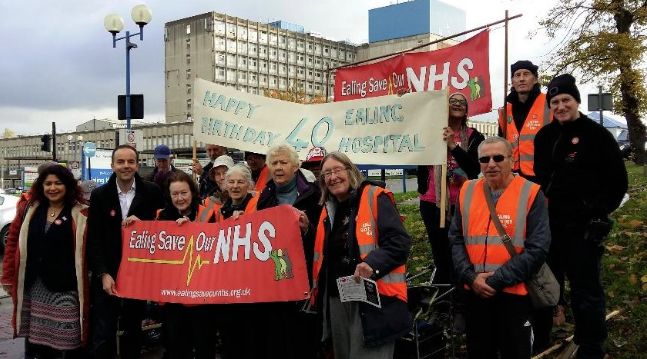
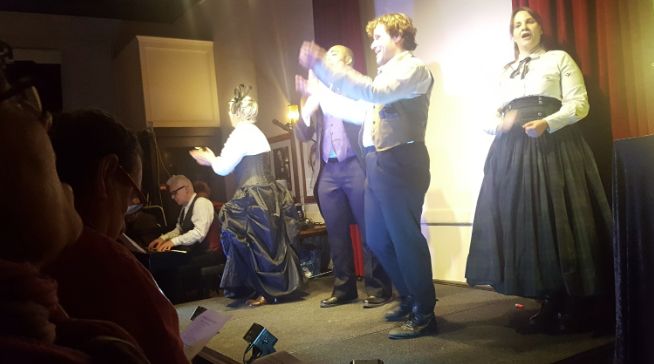
Ealing Hospital 40th Birthday Party Music Hall on 5th November 2019 at The Viaduct Pub Hanwell
Ealing Hospital formally opened its doors to patients on Bonfire Night 5th November 1979. Exactly 40 years to the day, local activists are throwing a birthday party for the hospital in the form of a ‘Music Hall’. In the best Victorian tradition, there will be popular Music Hall songs, comedy, verse, specialist acts and variety entertainment. All the artists are appearing for free and they include NHS staff and local professional and amateur performers. The local theatre company ‘A Wonderful Adventure’ (www.wonderfuladventure) is an active partner in mounting the event.
It’s £10/ticket which includes some finger food.
To book tickets go here:
Venue details at:
For more information text Eric Leach on 07836 275278 or email eric.alan.leach@gmail.com
Any profit will be given to Ealing Save Our NHS
Eric Leach

|
|||||||||||||||||||||||||||||||||||||||||||||||||||||||||||||||
|
Appalling Admission of Failure by NHS North West London (NWL) as Final Anticipated Deficit Figure for 2019/20 is £112 Million
‘Unscheduled Care’ is the reason given by NHS NWL bosses for an anticipated annual deficit at the end of this financial year of £112 million. Unscheduled care equates to poor planning. A deficit equates to underfunding.
The blood on the carpet here must be attributed to the disastrous £1.3 billion ‘Shaping a Healthier Future’ (SaHF) plan. SaHF, launched in 2012 and ignominiously abandoned in March 2019, tragically closed two hospital A&Es in September 2014. This has caused rises in unscheduled care at the remaining seven Major Hospital A&Es ever since. For over six years Ealing and Charing Cross Hospitals were threatened with downgrading (loss of A&Es). NHS NWL closed down Maternity and then Paediatrics at Ealing Hospital. At Ealing and Charing Cross Hospitals – loudly earmarked for possible complete closure as ‘Major Hospitals’- hiring new permanent staff has been difficult and expensive. So temporary, Agency, ‘Bank’ and locum staff costs have been enormous.
Patients at all seven Major Hospitals will no doubt now suffer from service cutbacks, closures, more pain and possible death in order to reduce this deficit. It’s hard to forget that expert analysis of SaHF pegged the cost of the failed initiative at £235.55 million by 31 March 2018. Separate research has revealed that management consultants’ fees incurred by NHS NWL on service transformation 2009/10 to 2018/19 now total over £76 million. The ‘Sunday Times’ on 10 February 2019 revealed that the maintenance backlog at just four of the nine NHS NWL Major Hospitals stood at £729 million.
When will anyone in authority take responsibility for this NHS NWL financial, management, planning, commissioning and service delivery debacle and do the honourable thing by resigning?
NHS NWL Hopes That Reducing the Number of Referrals to Hospital Consultants Will Cut Costs by £60 Million
NHS North West London (NWL) has decreed that GPs will have to restrict the number of patient referrals to hospital/Secondary Care consultants they initiate. This is to cut costs. NHS NWL’s cost cutting record is not good. The NHS NWL 2012 ‘Shaping a Healthier Future’ (SaHF) programme planned to achieve cuts of £4 million every year. No achieved SaHF cuts were ever announced during the programme’s 2012-2019 existence.
Presumably with fewer referrals to consultants, fewer consultants will be needed so salary costs will be saved. ‘Alternative ways’ must be sought by GPs whose opinion is that a patient needs hospital treatment. What alternatives might these be?
Maybe contacting the hospital consultant in a private capacity and paying for the consultation and the treatment? The patient having to put up with the pain by constant use of painkillers perhaps? Or if it’s someone with mental health problems, suggesting to the patient that they get a book from the library (or search the online world) and attempt to consult those resources for clues on how one might ’get better’.
The London North West University Healthcare NHS Trust LNWH) has been singled out by NHS NWL for cuts to its Acute costs, improvements in patient flow and reductions in Delayed Transfers of Care. For its two Hospital A&E units at Ealing and Northwick Park the 95% four hour waiting time target was breached to a level of just under 85% in December 2018. By March 2109 it had only improved to just over 88%. In a surprise revelation in September 2019 Dame Jacqueline Docherty, Chief Executive of LNWH, is seemingly stepping down from her role on 31 March 2020. A seven month notice period seems very protracted. In 2018/19 she earned £230,000.
Ealing’s Referral Facilitation Service Bites the Dust
Ealing GPs are soon to now ‘audit’ their own consultant referrals. Ealing CCG has decided to discontinue its Referral Facilitation Service (RFS) in November 2019. RFS is provide by US healthcare giant UnitedHealth at no small cost. The service was clearly aimed at reducing referrals by refusing some of them. The service has cost over £2 million over three years. Apparently very few referrals were refused and the service was correctly deemed to be a complete waste of money.
NHS NWL makes it clear that the hospitals which face the biggest financial challenges are those in the London North West University Healthcare NHS Trust. These, of course, are the Major Hospitals at Northwick Park, Ealing and Central Middlesex.
The Collaboration of NHS NWL CCGs, who collectively ‘boss’ the purchasing of all healthcare services for 2.2 million people in north west London were quoted in ‘The Guardian’ 9 September 2019:
‘The safety of our patients and the quality of our services will always come first’.
Given that the collaboration is a non-statutory purchasing body and not a clinical services delivery body, this aspiration is in many ways quite offensive. Four of the eight local CCG bosses in this collaboration signed their names to the shambolic SaHF Acute reconfiguration programme and have drawn their not ungenerous stipends for over six years. NHSE has clearly demanded that quantity of service and cost cutting are very high priorities.
It also appears that even if you are referred to one consultant, you will then be prevented contemporaneously being referred to a second consultant (of another discipline). To employ another mental health example there is plenty of data which confirms that those with mental health problems use more physical healthcare services than those without. (Colorado Access insurance system data puts the percentage at 60%). So chances are if a consultation with a psychologist and a urologist are needed, the GP must choose between say, a 20 week wait to see a urologist or a 40 week wait to see a psychologist. More stress for the GP, the patients and his/her loved ones – whichever choice the GP makes.
Yet Another Attempt at Acute Reconfiguration Transformation
Language and strategy very similar to that used in the failed SaHF is employed to instruct GPs to send fewer patients into Acute care. All attempts in NHS NWL in recent years to reduce Acute admissions (so called Non-Elective Admissions – NELs) and treat more patients in GP surgeries, GP hubs and at home mostly ended in failure – failure to cut costs and sustain bed number reductions. It will be interesting to see if West London NHS Trust’s (WLNT’s) 10 year Ealing Out Of Hospital services approach (branded Ealing Community Partners – ECP) can both save on costs and suffer no reduction in service quality. However, and somewhat surprisingly, at the 11 September 2019 WLNT Board meeting, there was no sign of cost cutting – more the opposite with lots of new hires planned. Clearly there are parts of NHS NWL not required to help reduce the enormous deficit.
The latest released monthly figures for July 2019 show little improvement with aspirations of further action on managing urgent care and limiting the growth of elective and outpatient care.
New Regional NHS NWL Clinical Commissioning Group (CCG) Start Date Delayed till April 2021
Lots of loud voices offered the opinion that the NHS NWL rush to eliminate eight local CCGs and ‘replace’ them with one new regional CCG in April 2020 was a bad idea. Many thought the whole process had not been adequately thought through. No doubt some (all?) of the eight existing local CCG bosses were less than impressed by the prospect of losing their remuneration in six months’ time. NHS NWL has announced that the start date will now be 1 April 2021.
Should the BMA Boss Be Paid More than Seven Times The Salary of a First Year Junior Doctor?
Union bosses do themselves no favours when their take home pay completely dwarfs the workers they are attempting to represent. ‘The Times’ of 9 September 2019 revealed that the salary of Chaand Nagpaul, Chairman and General Secretary of the British Medical Association (BMA) is £193,000/year. A first year Junior Doctor earns £27,100/year. One wonders whether Mr Nagpaul is worth seven first year Junior Doctors?
GP Locums Are Now Eligible for Holiday Pay – Backdated for Six Years
GP locums, who allegedly earn on average £140,000/year, can now enjoy holiday pay back datedfor up to six years. This is the outcome of a Court case in Gateshead. Not only could this cost an estimated £250 million a year, that figure does not include any back payments. The General Medical Council reckons there are 20,000 locum GPs in England, some of whom can command £1,000/day.
Surely this eligibility will encourage more GPs to become locums rather than become dedicated to one practice? Does this matter? Well the growth in locums will increase the running costs for Primary Care and will slowly eat away at the number of salaried and permanent partnership roles in GP practices. It will also degrade continuity of care, which is highly valued by most patients, especially elderly patients.
A&E Waiting Times Throughout England are the Worst for 10 Years
In 2008, 93% of patients were seen in NHA hospital A&E units within four hours. In 2018 it was 88%. Separate figures show that August 2019 was the busiest August month ever.
The UK Spends Less on Healthcare Than USA, France, Germany, Japan and Canada
The Office of National Statistics (ONS) has published data collected for 2017 on percentage of Gross National Product (GDP) spent on healthcare. Here are the top seven:
USA 17.1
France 11.3
Germany 11,2
Japan 10.9
Canada 10.7
UK 9.6
Italy 8.8

Mental Health Services in Crisis: Not Enough Nurses, Psychiatrists and Specialist Beds – and It’s Getting Worse
+ 2009 – 2018: 6,800 mental health nurses were lost
+ 20% fewer specialist psychiatric doctors in training
+ 2009 – 2018: beds for patients with serious mental health issues fell by 8,000
+ 75% of young people with mental health issues get worse before they receive treatment
+ 2009 – 2018: a 47% increase in the number of people detained under the Mental Health Act
+ 100,000 vacancies in NHS and Local Authority social care services
Figures courtesy of ‘M.D.’ in ‘Private Eye’ 23 August 2019 (Dr Phil Hammond).
Incidence of Mental Health Problems Linked to Poor Air Quality in Polluted Areas
Research has been recently published which indicates a strong link between poor air quality and the increased risk of bipolar disorder, severe depression and schizophrenia. Researchers used a US health insurance database of 151 million individuals with 11 years of inpatient and outpatient claims for mental illness. Data on 1.4 million patients in Denmark was also analysed. The latter data revealed that the rate of schizophrenia doubled amongst those exposed to poor air quality during early childhood.
Although all experts do not agree with the findings, the Royal College of Psychiatrists said that the research ‘builds on the increasing evidence of a link between air pollution and the development of mental illness’.
These findings will anger and exasperate residents of Hayes and Southall who have been subject to odour and air pollution since May 2017. The source of the 24 hour pollution is Berkeley Group and Ealing Council’s implementation of soil ‘cleaning’ initiatives on the Southall Gas Works site where some 10,000 new residents will occupy 3,750 new homes over the next decade.
Hospital Bed Reduction Programme is Relentless – 7,200 Over the Next 12 Months
It’s common knowledge that the cost of patients spending days and nights in hospital is very high. However there are times when a hospital stay is the only safe and viable option. With more of us living longer and having multiple physical and mental illnesses in our old age, surely we need to increase the number of hospital beds? But apparently not. A new NHS target has emerged to free up 7,200 beds nationally over the next 12 months.
Anecdotal research last year revealed that major causes of ‘Delayed Discharge’ (or bed blocking in the vernacular) at Ealing Hospital were elderly patients who were getting better and seriously ill mental health patients. The former had to stay in their bed because no arrangements could be made for them to be safely cared for at home or in mythical ‘community care’. As for the seriously mentally ill there were consistently no specialist mental health beds available.
Some of Our Hospitals and GP Surgeries are Toxic
‘The Times’ of 19 August 2019 reports that The British Lung Foundation has discovered that 248 (17%) of our NHS hospitals in England have dangerous levels of air pollution. The toxicity level being breached is the World Health Organisation’s (WHO’s) 10 micrograms per cubic metre of air (mcg/m3) of fine particles (PM2.5). These particles are tiny and can penetrate deep into the lungs and enter the blood stream.
Lowestoft Hospital fared the worst at 16.18 mcg/m3. 72% of all London NHS hospitals are in breach of the WHO standard of 10, as are 2,100 GP surgeries throughout England. Ealing Hospital (10.21) and West Middlesex Hospital (10.0) are in breach as is my own Hanwell GP surgery – Elthorne Park (10.32).
GP Surgeries to be Fined £40,000 for Closing for Four Hours Each Week
The ‘Daily Mail’ (who else?) on 19 August 2019 exclusively revealed that NHS England (NHSE) is putting GPs under even greater pressure by fining them £40,000/year for weekly half day closing. Apparently if GP Surgeries want to close for training they have to ask their CCG for permission.
NHSE has, apparently, invested time and resources to discover that 10% of GP surgeries in England close for four hours during day time every week. As it is, the weekday opening hours of 8:00am to 6:30pm are longer than most Local Authorities and most medium to large businesses.
This Draconian measure comes at a time when many GPs are contemplating early retirement; some newly qualified GPs are being tempted to go and work in Australia and New Zealand; and some GPs are going part time because of workload and stress.
This is not carrot and stick by NHSE – it’s stick and stick.
I got the chance to ask Dr Raj Patel in public on 20 August 2019 why NHSE was doing this. This Deputy Medical Director for Primary Care NHSE/NHSI passed off my question quite glibly and said that half day closing was an outdated anachronism. When I tried to follow this up by asking if it was true that if GP surgeries wanted to close for a few hours for training they had to get permission from their CCG – the microphone was taken from me…
Could ‘Social Prescribing’ Help Patients – Or Will it Prove To Be a Damp Squib?
In the January 2019 NHS Long Term Plan (LTP) there are proposals for 1,000 ‘Social Prescribing Link Workers’ (SPLWs) to be employed by the 1,000+ LTP defined Primary Care Networks (PCNs). SPLWs will attempt to help patients access activities and services that provide a more effective alternative to medicine. Examples quoted include referrals to community services, which could offer access to social, fitness or arts and culture initiatives. PCNs will get 100% re-imbursement for hiring a SPLW.
The first thing that occurs to me is that the role of the SPLW is possibly already being carried out by other ‘workers’. To some extent, Local Authority social workers and NHS mental health Trust psychologists and mental health workers will all be attempting to devise and help implement patients’ coping strategies through ‘social prescribing’.
Secondly, exactly who will these 1,000 workers be? What training or qualifications will be required of them? If they are in work now, won’t they leave a ‘hole’/vacancy in, for example, a Local Authority’s social services team?
That being said, SPLWs could provide some valuable services if there were enough of them. One SPLW working for my Hanwell PCN (five GP surgeries and 35,000 patients) would be spread quite thinly. In Acton – with a PCN of 15 GP surgeries and 77,000 patients – one SPLW could actually achieve very little. Maybe Acton PCN will hire five SPLWs. But where would it house them? Surely PCNs won’t have capital budgets for premises?
‘Team London Small Grants’ are now available for voluntary projects that help people who are experiencing loneliness and social isolation. Receiving a small grant might enable a volunteer group to respond effectively to a patient referred by a SPLW. Search for ‘Team London Small Grants’ at www.london.gov.uk. Deadline for applications is 13 September 2019.
Only time will tell whether PCNs will hire SPLWs who will enable needy patients to engage with social, sports, arts and cultural initiatives.
Prue Leith is the Latest TV Celebrity Chef to Lend Her Name to Improving NHS Hospital Food
The Health and Social Care Secretary Matt Hancock MP announced in June 2019 a comprehensive review of hospital food sourcing and preparation. In order no doubt to publicise this initiative further it was announced in August 2019 that Prue Leith, TV’s ‘The Great British Bake Off’ judge is to advise the Government.
No doubt somewhat related to these food improvement initiatives is the fact that 18 people have died this year in NHS food related incidences of listeria and streptococcus. Recently six UK hospital patients died after eating pre-packed sandwiches contaminated with listeria supplied to the NHS. 12 Mid Essex NHS patients died from streptococcus infections.
This isn’t the first NHS food improvement initiative involving ‘famous’ chefs in recent years. In 2000, TV chef Lloyd Grossman was hired by the NHS to train hospital chefs. In 2005 it was Jamie Oliver’s turn to get into the act. This time it was via embarrassing the Government over State school dinner offerings. In 2014 it was James Martin fronting the ‘Operation Hospital Food’ BBC1 TV series. Finally TV chef Ainsley Harriott joined other celebs in the 2015 NHSE/Public health England ‘Stay Well this Winter’ initiative.
The burning question of course is whether these celeb-led initiatives actually led to improved hospital food. What’s probably needed is more money for modern food preparation equipment in hospitals. We also need better trained and rewarded food sourcing and preparation staff, enlightened fresh food selection policies and an end to all aspects of outsourcing with regard hospital food.
Support for Children’s Health and Wellbeing Continues to Deteriorate in Ealing
On 1 July 2015, Ealing future would-be parents suffered the closure of Ealing Hospital’s Maternity Unit. On 30 June 2016, Ealing Hospital’s Paediatric services were withdrawn, along with the closure of the children’s A&E unit in the hospital. Anecdotaly, concerned parents still arrive in the middle of the night with seriously ill children only to discover to their horror that A&E specialist support for children no longer exists at the hospital.
On 6 July 2019 Ealing Council decided to close the Children’s Centres at Wood End and North Ealing. The annual budgets of 11 other Children’s Centres in Ealing were cut by 24%. Apparently, the Council insists that the level of midwifery, health visitor and other specialist services for children will be unaffected. Some parents will take this insistence with more than a little pinch of salt.
Are the Goals for Primary Care Networks a Case of ‘Mission Impossible’ or ‘Mission Irrelevant’?
As part of NHSE’s Long Term Plan published in January 2019, about 1,000 Primary Care Networks (PCNs) have been set up and are now in operation across England, with 76 of them in north west London. There are eight PCNs in Ealing, each PCN between 5 and 15 GP practices, and each handling between 36,661 and 77,731 patients. For each PCN a Clinical Director has been appointed. PCNs are not statutory bodies.
But what problems are PCNs supposed to fix? Apparently PCNs will bring General Practices together to work ‘at scale’. What exact problem or problems will this togetherness solve? No real clarity on that one from NHSE. As for ‘at scale’ I can only presume that in this context this means handling larger volumes of patients (presumably more efficiently and more quickly) than is the case currently.
Simplistically though, only many more GPs and Practice Nurses will facilitate handling larger volumes of patients (with hopefully reduced waiting times). And unless we all get much healthier or doctors/medicines/Primary Care treatments improve radically, with more GPs handling more patients we’ll need more hospital beds, consultants, operating theatres, psychologists, ICUs, A&E units etc, etc.
The PCN approach tries to negotiate the current and likely future shortage of GPs by offering cash inducements for GPs, via their PCN, to gain shared access to other kinds of healthcare professionals – initially pharmacists and physiotherapists. Another cited reason for PCNs is to enable the integration of Primary Care with other services. The track record of attempts to integrate healthcare and social care services in England however is strewn with failures. It’s suggested that with each PCN Clinical Director sitting on the new Ealing Integrated Care parthership (ICP) – in 2020 or 2021 – that this will somehow help to enable integration. The final NHSE PCN justification is ‘to improve population health’. How this might be achieved is not spelled out and is quite frankly an unsupportable claim.
NHSE’s ambitions for PCNs are quite breath-taking. PCNs are expected to deliver co-ordinated health and social care. This will involve co-ordinating local government, community pharmacies, dental providers, social care providers, mental health staff, hospitals, dementia workers, podiatrists/chiropodists, voluntary sector organisations and community service providers. Each PCN will hire (fire), manage and somehow share the following staff around its network of GP surgeries – clinical pharmacists, physiotherapists, Social Prescribing Link Workers (SPLWs), physician associates and paramedics. SPLWs, by the way, aim to connect people to community groups and statutory non-clinical services for practical and emotional support. Maybe they are what in the 1960s we called social workers.
As from April 2020, PCNs will provide structural medication reviews and optimisation; enhanced health in care homes; anticipatory care; personalised care; and supporting cancer diagnosis. As from April 2021, PCNs will deliver cardiovascular disease diagnosis and prevention, and locally agreed action to tackle inequalities.
PCN funding seems to be either ‘by April 2021’ or ‘by 2023/24’. It’s £1.8 billion over five years. 70% of the cost of hiring specific new clinical staff will be provided by NHSE. This 70% funding will commence this financial year with clinical pharmacists. SPLWs can be 100% funded right now by NHSE.
PCNs will need more than just a Clinical Director to handle personnel, financial, management and recruitment duties – as well as functioning as a GP. Is there money from NHSE to run this small PCN business? 0.25% of a person apparently. It seems inadequate. In the Acton PCN in Ealing, 15 GP surgeries are supposedly working together to collectively provide Primary Care for a registered patient population of 77,731. (This is a larger population than that of Macclesfield, Maidenhead, or Scarborough). Running this lot is akin to running quite a large small business.
According to a survey carried out by ‘GPonline’ in May 2019, 48% of GP practice partners think PCNs will increase workload amid fears of rising bureaucracy.
NHS NWL Gets £ZERO To Plug its £739+ Million NHS North West London Hospital Repair Backlog – in Johnson’s £850 Million Pre-Brexit Give-Away
El Presidente Johnson announced on 5 August 2019 his first pre-Brexit ‘give-away’ to selected NHS Trusts and CCGs. 20 NHS bodies throughout England will receive £850 million for building work. However the NHS North West London (NWL) region (or ‘Footprint’ in NHSE speak) with the largest repairs backlog will receive zero funds. To refresh your eyes and minds with some of these repair bills as reported in the ‘Sunday Times’ on 10 February 2019, they were:
+ Charing Cross Hospital: £312 million
+ St Mary’s Hospital: £229 million
+ Hammersmith Hospital: £108 million
+ Hillingdon Hospital: £80 million.
Why do I think NHS NWL has been given no cash whatsoever? Here is my take on it:
Beware of Geeks Bearing Gifts!
Artificial Intelligence (AI) is a barely 70 year old branch of computer software. AI is often simplisticly linked to robots (who, allegedly, might kill all humans and run the world ). However the mundane truth is that the best AI can offer now and within the medium term future is useful ‘decision support’ information to healthcare professionals.
AI might be able to predict a diagnosis or treatment protocol extremely precisely, but it can’t, intrinsically, tell a doctor, nurse (or patient) the cause of or reason for a medical condition. An AI algorithm (piece of software) is only as ‘right’ as its design. If the sotware designer gets it ’wrong’ then the AI algorithm will consistently get it wrong over and over again. This amounts to ‘Artificial Ignorance’.
Of course it’s very fashionable these days to support and eulogise about AI. Our new Prime Minister and our Secretary of State for Health and Social Care are literally gushing about it. President Johnson on 7 August 2019 threw £250 million at an NHS AI laboratory. Press reports quote how this investment would improve cancer screening and identify patients most at risk from heart disease and dementia. These are credible claims. However the claim that this investment in AI will ’end bed blocking’ has no credibility at all.
Climate Change is Now the Excuse for Disastrous A&E Performance in July 2019
In July 2019, no London NHS hospital met the NHS A&E 95% target for ward admission, transfer or discharge within four hours. Kings College Hospital was the worst performer at 73.6%. Apparently nationally in July 2019 A&E admissions were up year by year by 4.6%. Apparently the weather was responsible for increased admissions and poor performance.
The reality in NHS North West London is that hospitals have been underfunded for years, two hospital A &E units were closed down in September 2014 and two other hospital A&E units have had the real threat of closure hanging over them for seven years.
The chronic shortage of doctors, nurses and mental health staff is a national disgrace. No amount of NHS money for hospital repairs or AI will directly help to fund, hire and train more NHS doctors and nurses.
NHSE Paid $226 Billion US Healthcare Giant £7 million to ‘Help’ CCGs Cut Costs, Integrate Their Care Systems and Embrace Accountable Care
UnitedHealth Group, in association with management consultants PriceWaterhouseCoopers (PwC), was last year paid £7 million by NHS England (NHSE) to help 55 Clinical Commissioning Groups (CCGs) cut their costs. The turnover of UnitedHealth last year was $226 billion. Simon Stephens, the boss of NHSE, knows the company very well as he’s a former President of UnitedHealth Europe.
The Optum Alliance (UnitedHealthcare and PwC) have been acting as ‘programme coach‘ (US management consultancy jargon) to, for example, Harrow CCG. The alliance has extolled the virtues of ‘demand management’ (in simple language restricting care service supply) with specific targeting of restricting unplanned hospital admissions. The alliance has also been proselytising about US-style Accountable Care. Central tenets of the Accountable Care shibboleth involve financial incentives to improve ‘performance’ and cost control.
Thanks to Calderdale and Kirklees 999 Call the NHS for spotting this NHSE ‘investment’.
Friarage Hospital A&E Closure: NHS Bosses Get Cold Feet After Campaigners Mount Judicial Review
A&E services at Friarage NHS Hospital in North Allerton, South Yorkshire were closed in March 2019. Local campaign group ‘Save Friarage Hospital’ mounted a challenge to this and began Judicial Review proceedings. In July 2019 NHS bosses (Trust and CCG) announced there would be a full consultation into services at the hospital. As a consequence, the campaign group has shelved legal action.