Home Blog Page 17

Hundreds march through Ealing! (VIDEO)

0


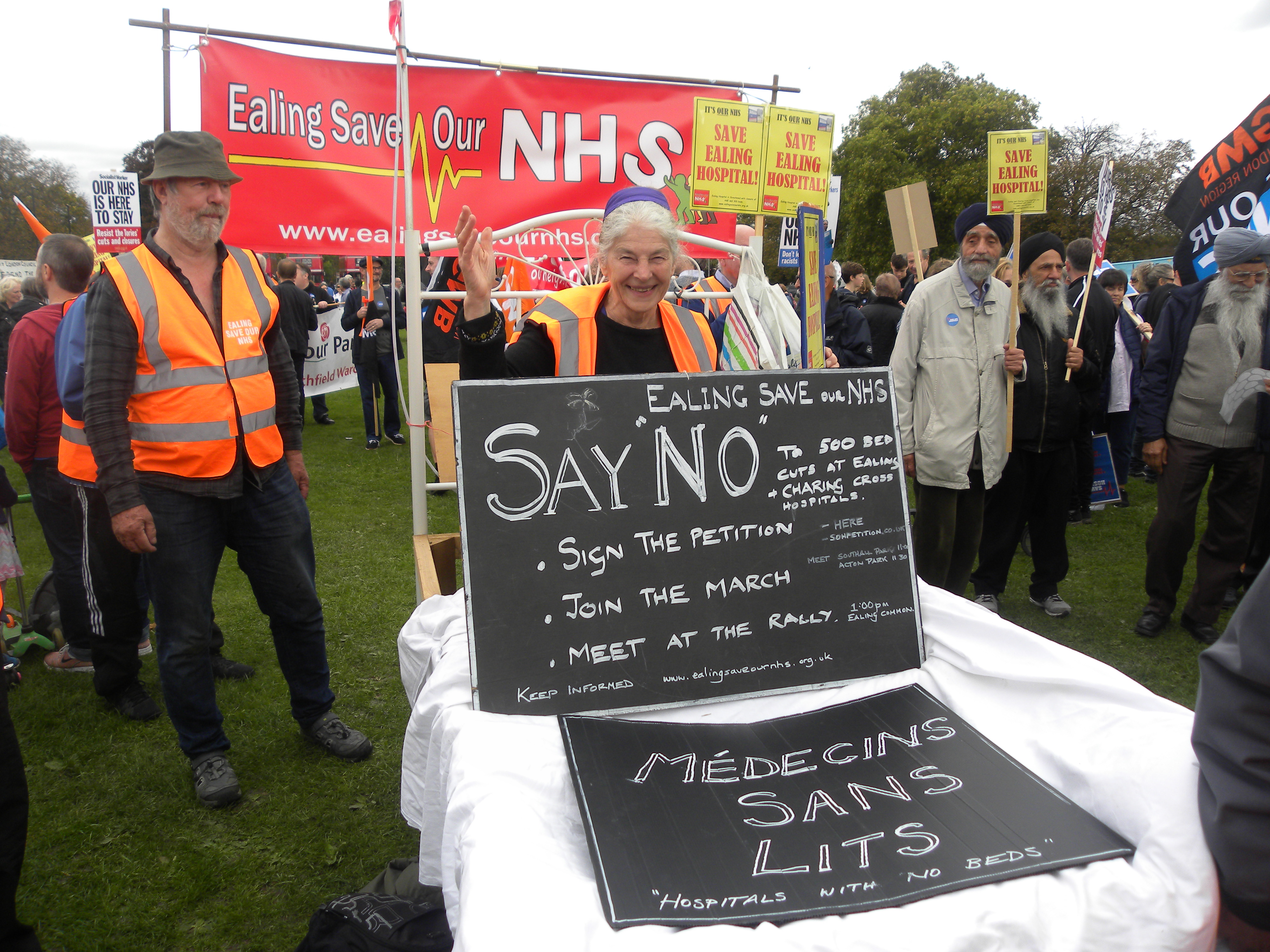
Hundreds of residents joined a demonstration to Save Ealing and Charing Cross Hospitals. Two separate marches – from Southall and Acton – converged at Ealing Common for a rally with music and food stalls.

Ealing Save our NHS Backs Ealing and Hammersmith Councils Rally from Ealing Save Our NHS on Vimeo.

City and Hackney Clinical Commissioning Group (CHCCG) to Test the Legality of STPs (and ACSs) in The Courts -September 2017

0


Issue: 52

September 2017


This occasional newsletter is researched, written and edited by a group of concerned residents in Ealing, West London who want to preserve our NHS. We view the wholesale engagement of private, for-profit healthcare service suppliers as unnecessary, profligate and dangerous. Increased financial funding is what is needed in our NHS – not financial cuts, closure of vital services or privatisation.


City and Hackney Clinical Commissioning Group (CHCCG) to Test the Legality of STPs (and ACSs) in The Courts

At last someone is going to law to test the legitimacy of a Sustainability and Transformation Plan (and consequentially its implementation engine an Accountable Care System). CHCCG is asking the Courts to decide whether its Footprint’s STP has any legal status or power to compel CCGs or other ‘partners’ to comply with major decisions. What kicked CHCCG into this action was a cabal of five Footprint CCGs wanting a single ‘Accountable Officer’ for all the seven CCGs in the Footprint.


Legal opinion from lawyers Hempsons includes the following:

‘The current health and care legislative framework is a brick wall that STPs and ACSs run into when they try to share decision making and join up services. It is designed for an inherently non-integrated, competitive, quasi-market’.


Watch this space!


Jonathan Bell, Chief Financial Officer , London North West Healthcare NHS Trust (LNWHNT), Total Remuneration, Financial Year Ending 31 March 2017:


£715,000 to £720,000


Extract from LNWHNT 2016/2017 Annual Report – page 106.


I thought at first that no editorial comment was required – but of course it is. The average annual remuneration in London is around £34,000 – outside London it’s around £22,000. So however hard and long hours worked by Mr Green those fire fighters, ground staff, caretakers, GP receptionists, PCSOs, nurses, teachers, journalists, junior doctors, grave diggers, hospital porters, bus drivers, and mid-wives working either in London or outside London earn at most 20 times less than Mr Green.


However, in an initiative the timing of which is almost beyond satire, LNWHNT has announced it is looking for 350 people to work for no remuneration whatsoever. The Trust’s Voluntary  Services Manager Shirley Hunte told the ‘Kilburn Times’ that LNWHNT was looking for people aged between 18 and 96 years old. (96??). They were expected to freely give of their time to welcome patients and visitors, help patients at meal times, and be patient companions providing interaction and guidance.


Now LNWHNT already ‘employs’ 200 volunteers in its four hospitals. From my experience some of these volunteers are retired professionals who have altruistic motives to help society. Some are lonely elderly people who enjoy the company. But surely the main point here is that we should be collecting and allocating adequate funding so that we are helped by paid, qualified and ideally experienced professionals. I paid my National Insurance for over 43 years and healthcare should be not only be free for me at the point of delivery, it should be delivered by a professional. What if there is some tragic accident in the hospital involving a volunteer? Could the volunteer be sued? Do volunteers take out insurance to cover this? I doubt it.


Notes From the Trenches

I recently visited Ealing Hospital accompanying a homeless, rough sleeper friend who had chest pains. He was weak and had to queue on his feet to be registered for triage at the Urgent Care Centre (UCC). Why is this? Why not a time  stamped, numbered, ticketing system so that patients could sit down and wait to be registered? Four burly Policemen had someone covered in blood and in custody and two of the Policemen also had to queue to have the miscreant registered. Madness.


After 5 hours of triage, heart and blood tests and diagnosis we had a happy ending as my friend had an infection and was given antibiotics and a puffer to help him breathe. The staff in the Chest Pain Unit were brilliant. However other experiences at Ealing Hospital on that day included:


+ A UCC person (private supplier Greenbrook Healthcare employee I guess) told my friend that subsequent to being treated in the hospital he should not come back but should visit his GP. My friend said he didn’t have one. She then told him that he needed proof of address and a passport to be registered and treated by a GP. This sounded wrong and during the day I checked this out with the NHS online. She was wrong – it’s the right of anyone (homeless or not) to register with a GP in England. The only caveat is if the GP list is full. He was give details of 10 local GP surgeries none of whom stated their list was full. A re-training issue here for Greenbrook


+ I picked up a copy of a free, full colour, 16 page tabloid called ‘Our Trust’. It was branded London North West Healthcare NHS Trust (LNWHT) but it did also bang on about the LNWHT Charitable Fund. I did find the pleas to give time and money variously to the Trust and its charity somewhat distasteful. After all I paid National Insurance for all those years for free healthcare from LNWHT and from the other 222 English NHS Trusts


Just what is the purpose of this publication? At whom is it aimed? On page 2 we have a bizarre piece penned by a LNWHT Human Resources Director on ‘..our new values..’. This is so offensive as I was reading this tosh standing in a District General Hospital which was given a death knell in 2012, had its Maternity closed in 2015 and its Paediatrics and children’s A&E closed in 2016. This from a key service supplier of an NHS region which promised and failed to save 4% on annual costs – but declined to admit this publicly until forced to by a Freedom of Information request. The phrase ‘..knowing the cost of everything but the value of nothing…’ springs to mind


There is some useful information in this publication but I feel I am being ‘sold to’. Surely not everything is as very wonderful as portrayed about Ealing, Northwick Park, Central Middlesex and St Mark’s Hospitals? What about transparency? What happened to honesty? If this is to be a regular quarterly publication we should all question whether this is a good use of public money. The Trust is one of the major service suppliers in the NW London STP Footprint which by 2021 has to reduce annual spending by £1.3 billion.  Just exactly how does spending money on this PR puff publication assist the cost saving mountain to be climbed?


+ Triage in the UCC is still in a public area. It’s at a counter a bit like a motorway toll booth or a McDonald’s drive through station. Surely triage must be housed in a personal interview room and not in the reception area? Also the person carrying it out must announce his/her status as someone qualified to carry out triage


+ I had a look at the Ealing Hospital UCC service supplier Greenbrook’s web site. It has an NHS web site address – www.greenbrook.nhs.uk  How can that be? Did the NHS purchase Greenbrook? I guess it must have done – although I don’t remember reading any press reports about this


+ £2:60/hour for car parking. Only new £1 coins accepted – and of course no change given. The ever wonderful ‘Friends Café’ (staffed by volunteers)  understandably ran out of change as countless non-mobile phone literate patients and loved ones wrestled with finding the right coins to feed the hungry parking machine beasts.


Medical Student ‘Drop Out’ Rates and the Number of Students with Untreated Mental Health Problems are Way Too High: 1,200 Drop Out Over  the Last Five Years

‘The Sunday Times’ of 27 August 2017 revealed FOI discovered data about the ‘drop out rate’ of medical undergraduates throughout England. It’s 10% and over the last five years. 1,200 did not complete their degree courses. This comes at a time when there are reports of increased mental health problems amongst medical students.


In September 2016 a DoE ten year study revealed that 37% of 14/15 year old girls exhibited three or more symptoms of psychological distress. This percentage was significantly lower for boys. In October 2016 NHS England and NHS Digital reported that self-harm had risen dramatically over the last ten years. The biggest rise was girls under 18 years of age. 13,853 girls poisoned themselves – a rise of 385%. Again the figures were lower for boys.


Set these almost epidemic levels of teenage mental health problems against the general chronic shortage of psychologists and the limited psychological support available in universities. What you get is that too many 18+ year old medical students – especially girls – are struggling with mental health problems, receiving inadequate treatment and failing to complete their degree courses.


Government Asks the Impossible of Local Authorities re: Social Care ‘Bed Blockers’ in Hospitals.

The Department of Communities & Local Government’s (DCLG’s) own figures reveal that social care funding given to Local Authorities (LAs) fell by 8.4% over the period 2010/11 to 2016/17. The cash loss was £1.3 (from £15.7 billion to £14.4 billion). From 2010 to 2017 the population of England rose by 2.1 million – from 52.6 million to 54.7 million (Office of National Statistics).


In August 2017 DCLG and the Department of Health (DoH) wrote to all LAs telling them to get social care ‘bed blockers’ out of hospital beds as soon as possible, otherwise they would be punished. Of the 152 LAs with social care responsibilities, 42 are required to reduce bed blocking by 60% or more. If they fail to reach the targets set they will receive reduced (or no?) extra social care grant funding in 2018/19.


No doubt those LAs who fail to meet these targets will be increasingly underfunded in 2018/19 and be unable to have social care bed blockers discharged from hospital – as the LA will have no cash to fund care home beds or care at home. As the government (McKinsey & Co) dogma is the reduce hospital beds by 40% anyway this will create a massive social care crisis. As ever with this Government, the largest number of sufferers, losers and life threatening service users will be the poor, the physically and mentally disabled, the vulnerable and the homeless.


The Brilliant 2014 ‘Barker Report’ on the Future for Care Services

Every now and then I stumble onto something which I like and want to support and promote. I was TV channel hopping early evening on 21 August 2017 and landed on the Parliamentary Channel. There, large as life, was Chris Ham boss of the King’s Fund talking about ‘Barker’ this and ‘Barker’ that.


I did some research on ‘Barker’ and tracked down the September 2014 report on the ‘Independent Commission on the Future of Health and Social Care in England’, chaired by business economist Kate Barker. It just blew me away.


Key Findings:

+  Single, ring-fenced budget for the NHS and social care, with a single Commissioner for local services

+ New care and support allowance – removing the battle lines between the NHS and Local Authorities

+ Much simpler pathway through health and social care which would benefit service users and carers

+ More equal support for equal need, making most social care free at the point of use

+ Rejection of new NHS charges and private insurance options in favour of public funding.


Policy Implications:

+ Significant re-engineering of Central and Local Government needed to facilitate a single, ring-fenced budget and a single Commissioner

+ Between 11% and 12% of GDP for care will be needed annually as  soon as possible to facilitate change and meet care needs

+ National Insurance contributions need to be increased to meet the annual £5 billion uplift to improve social care entitlements

+ Wealth taxation must been seriously considered as the means of generating additional resources that will be needed for health and social care services in the future.


Why oh why have these sensible recommendations not been implemented or at least investigated further by the Civil Service?


Private Hospitals Get £52 Million Tax Break: No Such Luck for NHS Hospitals

One in four private hospitals in this country (123 of them) are registered charities and as such have received rate relief amounting to £52 million. So says $177.5 billion turnover US retail pharmacy and healthcare company CVS Health  (www.cvshealth.com).


Nuffield Health, Britain’s third largest healthcare charity by income, will save £12.7 million in non-payment of business rates over the next five years. However in the NHS,  the University Hospitals of Birmingham Hospital Trust, for example, faces an increase of £2 million on its business rate for 2017.


US Accountable Care Organisations (ACOs) Have  Squandered Over $100 Billion on Software Investments – With Zero Return On Investment

US healthcare data warehousing products and services specialists Health Catalyst has strongly suggested that over $100 billion has been wasted on developing software to support Capitated Budget driven ACOs.


Health Catalyst’s opinions bear some weight as its software currently supports some 65 million patients throughout the USA. The company identifies five critical information system software elements for future ACO success. They are:


+ An Electronic Medical Record (EMR) used in a consistent and meaningful way across the Acountable Care (AC) enterprise to document patients’ healthcare status and treatment and support safe, evidence based care

+ A Health Information Exchange (HIE) to enable the sharing of patients’ clinical data across disparate EMRs in the AC enterprise

+ An Activity Based Costing (ABC) system to enable detailed, patient-specific collection of cost data that in turn enables the AC organisation to precisely understand cost of production and revenue margins in Capitated payment models

+ A Patient Reported Outcomes (PRO) system to enable the complete understanding of clinical outcomes and quality, from the patient’s perspective. This is not a patient satisfaction system – it is a critical outcomes assessment system, tailored to the patient and their protocols of treatment

+ An Enterprise Data Warehouse (EDW) system which is central to enabling the analysis of data collected in the information systems described above – and more. Without the EDW, the data collection systems described above are relegated to small or non-existent Return On Investment (ROI). It is the exposure and integration of the data in the EDW that liberates the ROI from those systems. It is common for EDWs to realise ROI as high as 450% in two years.


It seems the US market for EDW products is a rich one with over 40 vendors. However none of them, apparently, support ABCs and PROs (see above). In the UK it will be interesting to see whether indigenous software emerges to support ACO/ACS operations. Entering this world of sophisticated critical ACO/ACS information systems will not be for the faint hearted and only for those with deep pockets.


Health Catalyst has also developed a ‘Healthcare Analytic Adoption Model’. In this model at the bottom of nine levels (Level 0) are ‘Fragmented Point Solutions’. At the top of the model is Level 8 (Cost per Unit of Health Reimbursement & Prescriptive Analytics). Level 8 is also labeled ‘Contracting and Managing Health’. Level 0 is labeled ‘Inefficient , inconsistent versions of the truth’. One suspects that many NHS grant funded ACO/ACS experiments are currently at Level 0.

See www.healthcatalyst.com for more information


Greater Manchester (GM) Integrated Healthcare and Social Care Project is a ‘Work in Progress’

On 9 August 1944 I was born in Fairfield Hospital in Jericho, Bury, Lancashire – now in Greater Manchester. This small hospital may not survive in the progressive new world of CCGs, STP, ‘Healthier Together’, devolution and ACSs. That’s my personal baggage out of the way and now let me summarise what I learnt in Manchester, Salford and north Cheshire in August 2017:


+  No-one I met had any confidence that the £7.7 billion projected annual GM healthcare, public health and social care bill would be reduced by £2 billion by 2021.

+  There is little or no talk about Accountable Care Systems (ACSs) or in fact about the STP.

+  There were few words of praise for CCGs and there were clear doubts about their competences or in fact their probity

+  A feeling of ‘us all sort-of being it together’ did come across. The massive Labour Party domination in GM is, on balance, a big plus in trying to get NHS bodies, GPs and Local Authority bodies to work together

+  No surprises though to find deep seated Manchester v Salford wars, and Manchester city’s domination of proceedings

+  NHS bodies clearly have the whip hand in any integration initiatives

+  Social care and mental health did not figure prominently in the early proposals. I struggled to find out what the annual GM social care spend is. Annual Public Health and social care spend is £1.5 billion). There has been some turbulence in one of the mental health Trusts

+  There are pockets of successful healthcare and social care integrations, but none seem to declare any cost saving metrics

+  There are clearly some local successes which include medical records creation, maintenance and creative use of telemedicine in care homes, and Ambulance Service triage. But these are thin on the ground and by no means universally applied across the 493 square miles of GM

+  It’s felt that GM Mayor Andy Burnham genuinely supports the Devo-Manc Health project

+  The three NHS Vanguards in GM (Stockport Together, Salford Together and Salford and Wigan Foundation Chain) seem to be viewed as somewhat inconsequential grant funded ‘experiments’

+  A generally held view is that after-care and community support is inadequate. Following hospital discharge there’s evidence of a lack of co-ordination between primary care and secondary care and a shortfall in District Nurses and Health Visitors

+  There’s clearly an over-reliance on private care providers

+  The ‘normalisation’ of healthcare and social care integrated, cost-saving services across the region seems a long way off. It’s surely going to be over a year before even the beginnings of designing a process to set a C apitated budget for one or more ACSs will be feasible

+  What drives changes is the 2014 NHS ‘Healthier Together’ project. This is not all that different to the 2012 NHS ‘Shaping a Healthier Future’ (SaHF) project inflicted upon North West London. The cost saving plan is to maintain four major hospitals – three of which are confirmed but the fourth has been acrimoniously fought over. Threats and worries about down grading District General Hospitals and hospital A&E closures are all too apparent in press reports

+  It’s intriguing that the quoted GM annual healthcare spend for 2.8 million residents is £6.2 billion. However for NW London’s 2.1 million residents the annual healthcare spend quoted in the 2012 SaHF was £3.6 billion.


Ealing and Hammersmith Petition (VIDEO)

0

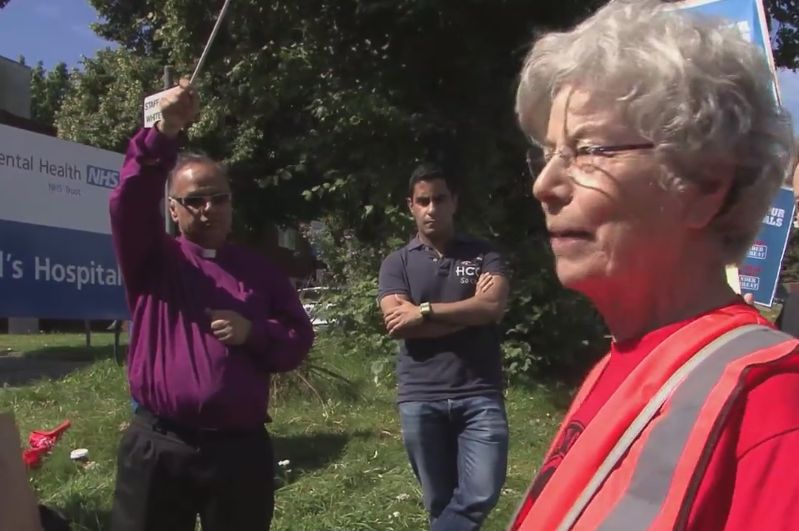
Ealing and Hammersmith and Fulham Councils announced their intention to organise a petition demanding to keep our respective Borough’s major hospitals open and fit for purpose. See the highlights of the launch event held outside Ealing Hospital last Friday, 11th August.

Link to petition

Ealing Save our NHS – Ealing and Hammersmith petition launch from Ealing Save Our NHS on Vimeo.

44 Months To Go Until  National NHS Costs Will Have Been Reduced by £1.83  Billion Every Month – August 2017

0


Issue: 51

August 2017


This occasional newsletter is researched, written and edited by a group of concerned residents in Ealing, West London who want to preserve our NHS. We view the wholesale engagement of private, for-profit healthcare service suppliers as unnecessary, profligate and dangerous. Increased financial funding is what is needed in our NHS – not financial cuts, closure of vital services or privatisation.


44 Months To Go Until  National NHS Costs Will Have Been Reduced by £1.83  Billion Every Month

£22 billion annual cost savings beginning in the Financial Year ending 31 March 2022 is the ACS/STP/Footprints/Simon Stevens FYFV/NHS England/UK Government target.


The first eight pioneer STP/Accountable Care Systems (ACSs), which will deliver these monumental savings, don’t commence until 1 April 2018. The other 36 STP/ACSs will clearly have shorter grant-aided pioneering periods until they begin the cost saving for real commencing 1 April 2021.


ACSs (ACOs generically) are completely untested in England. The concept (originating in the USA) is after all only some 10 years old. ACOs have tended to be much smaller than those about to be attempted here. Cost savings results in the USA have been mixed – as have ACO experiences in Spain and New Zealand.


Does anyone actually believe reaching this £22 billion cost saving target in FY 2021/22 is in any way possible? Isn’t this a massive ‘throw of the dice’?


In NHS NW London a much less ambitious cost saving project (healthcare only – no social care or healthcare and social care integration) has been unable to identify any cost savings whatsoever (FOI response 30 May 2017). This project, ‘Shaping a Healthier Future’ was designed in 2012 and has been in its implementation phase for over four years.


Who actually believed that such a target is/was desirable?


What is the point of creating publicly paraded performance targets which are ‘unhittable’?


Just what do these impossible-to-attain financial targets say about us as a nation, say about this government and say about all of us? ‘Cloud Cuckoo Land’ comes to mind. What kind of inspiration or role model is this for our children?


It seems to me to be a form of national self harming. Impossible goals in a society being increasingly populated by the poor, the disadvantaged, the home-alone elderly, the physically ill and disabled, the sick, the mentally ill and disabled and the vulnerable who are all finding daily quality of life increasingly impossible.


A terrible rumour is emerging from the ashes of Grenfell Tower. Allegedly, 40 people have been found dead in just one flat. Now this could have been a party in progress or it could have been that the flat was ‘home’ for 40 people. If the latter is true just how healthy was that? How is it that the Tenant Management Organisation (TMO), an arm of the Local Authority, allowed this density of living to exist? No doubt there was planning guidance which was aimed at stopping this. But that clearly did not work. Yet another ‘pie in the sky’aspiration.


No point in rules or edicts which are not able to be implemented.


The time for reform is now. But it won’t happen by creating and publicly trumpeting futile and unrealistic plans to reduce our annual national healthcare costs by 20% starting in just 44 months time.


A mentally and physically healthy society is a productive one.


Ealing CCG Enters ‘The Twilight Zone’ by Expecting Already Stretched Ealing GPs To Deliver The Long Awaited 2012 SaHF ‘Out of Hospital’ Services

Ms Neha Unadkat, Deputy Managing Director Primary Care & Integration, Ealing Clinical Commissioning Group and Ms Tessa Sandall, Managing Director, Ealing Clinical Commissioning Group have jointly authored a July 2017 ECCG Business Case for Primary Care.

In 2012, NHS North West London launched its ‘Shaping a Healthier Future’ (SaHF) programme. SaHF was/is all about cost savings allied to (page 8) ‘…changes that will improve care both in hospitals and the community…’. Page 36 of the SaHF explains ‘Proposals for delivering care outside hospitals’. SaHF, we were told on page 11, was ‘..at least a three year (programme)’


Well…here we are almost five years later and reading yet again about proposals for delivering care (that was in 2012 delivered in hospitals) Out of Hospitals (OOH).


Here are some headlines from the 115 pager:


+  ‘…improve the resilience of general practice..’

+  Delivery of 23 standards (!)

+  GPs will deliver paediatric phlebotomy (drawing blood from children), winter resilience and dementia contracts and ‘Out of Hours’ services

+ ‘The Strategic Commissioning Framework for Primary Care Transformation in London’ lists 17(!) service specifications for GPs


The bottom line is that GPs, for a bit more cash no doubt, will be expected to fill the huge gaps which will open up as beds and staff are cut in hospitals. This is going to be a disaster. Even the ECCG business case admits that:


‘Primary care in Ealing is under unprecedented strain, with a rise in the number of appointments and increasing numbers of practices who report that their current workload is unmanageable or unsustainable…the number of registered patients per FTE GP in Ealing is significantly higher than the London and England averages’.


‘The current GP workforce in Ealing is ageing and facing a ‘retirement bubble’ which has the potential to put the system under a strain’.


But a bomb shell exploded at the Ealing Council Health and Adult Social Services Standing Scrutiny Panel meeting on 26 July 2017. Out of the blue and buried inside the 422 pages of printed material for the meeting is on page 287 – ‘Commissioning a Lead Provider for Out of Hospital Care’. This is just for Ealing and the lead provider will take over in April 2018 WITH A TEN YEAR CONTRACT.


Now there are pages and pages of stuff on this but being brutal the question has to be asked:

Who or what mandated a ten year contract?


This duration is new to the Ealing healthcare scene. New GP surgery contracts , the  ECCG contract , and the Healthwatch Ealing contract do not enjoy ten year tenures. My contention is that this ten year component has either come from Government or from private healthcare suppliers. If it’s Government the only future show in town will be an Accountable Care System (ACS) vehicle for OOH. Services. If the ten year requirement came from private healthcare suppliers it’s likely that exploratory talks have already begun with the likes of Virgin, HCI, BMI, Ramsay, Spire, Nuffield, United Health, UKSH, Care UK, or Circle.


It’s going to be very messy….


NHS Bosses Are Still Maintaining  That Ealing Hospital is Not Closing

Our regional NHS bosses are clearly still confused about the massive differences between the well established concept of a full service hospital i.e. a District General Hospital (DGH) and the newly invented NHS North West London concept of a ‘Local Hospital’.


On the Ealing Hospital site, where the major development activities are the building of residential tower blocks, we still have a DGH. DGH features on site include adult A&E, Intensive Care consultants and beds, Operating Theatres and a total of 309 hospital beds.


By 2021, NHS bosses tell us that Ealing ‘Local Hospital’ will replace Ealing DGH. To be brutally honest keeping to time is not an NHS speciality so that date might just slip or it all might come about earlier. This ‘Local Hospital’ will apparently house GPs and nurses and offer some diagnostic, therapeutic, out-patient and day care services. It will offer an expanded ‘Frail/Elderly’ service for which 50 hospital beds will be available. That will be the sum total of beds in this New Age glorified First Aid Post.


The NHS has produced a terribly disingenuous leaflet dated July 2017 entitled ‘What You Need to Know About Ealing Hospital’. The scale of deception is so great that a detailed critique is probably unnecessary. I will distribute a scan of this leaflet when I distribute this newsletter.


Why can’t NHS bosses have the guts to tell the truth?


The much respected Leader of Hammersmith & Fulham Council Councillor Stephen Cowan recently summed up this semantic confusion between DGH and Local Hospital by stating:


‘It’s like having your home demolished only to have it replaced with a shed. And being told it is a ‘local home’.


15 Favoured Sustainability and Transformation Funds (STPs) Get £325 Million in Grants To Help With Their Building  Works

On 19 July 2017, the Government and NHS England announced that 15 STPs will share £325 million for building works. The biggest winners include the STPs for Dorset, Greater Manchester, Cumbria, Derbyshire, Leicester/Leicestershire & Rutland, Nottinghamshire and Milton Keynes/ Bedfordshire & Luton. Here are some summary details of some of these STP grant winners:


Dorset STP

Recently granted Accountable Care System (ACS) grant-aided status, Dorset STP will get cash for building Urgent Care facilities.


Greater Manchester STP

Another recent ACS grant winner, gets £50 million for concentrating facilities for urgent and emergency care at four hub sites across Greater Manchester.


Cumbria STP

Cumbria has won £30 to £50 million to build a brand new Cancer care unit at Cumberland Infirmary in Carlisle.


Derbyshire STP

Up to £30 million is granted  to ‘create an Urgent Care Village’ at the Royal Derby Hospital with GP services, a frailty clinic and mental health facilities’.


Leicester, Leicestershire & Rutland STP

£30 to £50 million for a 15 bed in-patient unit at Glenfield General Hospital to improve children’s and young people’s mental health service integration with other care services. Also Intensive Care beds expansion at University Hospitals of Leicester..


Nottinghamshire STP

Another ACS grant-aided area – £10 to £15 million for across the board service expansion.


Milton Keynes, Bedfordshire & Luton STP

Yet another ACS grant receiver, this STP grant is for building a new Primary Care hub.


Worringly there are no explicit references to cash for building work associated with social care or the integration of healthcare and social care. Regionally there must be a concern that NHS North West London’s request for £513 million for building works features nowhere in this Government/NHSE announcement. The fact that the NHS NWL cash demand was/is under the aegis of its 2012  ‘Shaping a Healthier Future’ (SaHF) project will probably cut no ice with the bean counters. This is probably in spite of recent NHS evidence that NHS NWL is one of the more financially prudent STP footprints.


Secret NHS Cost-Cutting Plans Labelled ‘Capped Expenditure Process’ (CEP) Will Ration Care, Cut Staff Numbers, Close Hospital Wards and Possibly Hospitals

As part of a new national savings drive, the CEP will withhold grant-funding to those NHS bodies which fail to meet financial targets. Service shrinkage, extended waiting times, job losses, and bed/ward/hospital closure will surely follow.


‘The Guardian’ quotes the content of a leaked document which states that the CEP might lead to service reduction/losses at The Royal Free Hospital and Great Ormond Street Children’s Hospital. North Middlesex Hospital in Enfield is at risk of downgrade or closure.


NHS Still Rated the Best, Safest and Most Affordable Healthcare Service in the Developed World

The Commonwealth Fund (CF) health think tank has, for the second consecutive time, found the UK to have the best healthcare service in the developed world. This brilliance is even more remarkable given that at 9th out of 11 nations the percentage of GDP we spend on healthcare is only 9.9%. The US spends 16.6% of its GDP on healthcare and France 11.4%.


In the 11 individual categories UK came top in ‘safest care’, ‘care processes’, ‘affordable care’ and ‘most equitable care’. On the bad news front we came 10th out of 11 in ‘healthcare outcomes’. Survival rates for breast, bowel cancer and strokes are relatively very poor.


Someone Leaks the NHS Guidance to the Eight  ‘Starter’ Accountable Care Systems (ACSs)

The authoritative Health Service Journal (HSJ) has got hold of a draft NHS guidance document for the eight pioneer, grant-aided ACSs. ACSs will be the future delivery vehicles for STPs. In just 44 months time an ACS world throughout England will deliver £22 billion savings on national, annual NHS costs…….. The phrase ‘pigs will fly’ comes to mind.


The guidance is laced with US management consultancy jargon. It requires the ACS pioneers to ‘assertively moderate demand growth’. I guess if you were talking about this in the pub you might express this as ‘don’t treat all those in need’. Also mentioned are ‘potentially ratings’. Understanding what that means is way beyond both my Intelligence Quotient and my Emotional Quotient.


Each ACS must pass various tests before February 2018 in order to get its grant cash and to attain ‘Full ACS Status’ as of 1 April 2018. But surely ‘Full ACS Status’ must mean an absence of grant-aid. Such stripping of financial support to the ‘ACS Super 8’ isn’t envisioned, apparently, till 2021. So, with respect, this ‘VIP’ type status is a case of form over content.


ACS s will only get their money if they identify who is ‘accountable’ at the ACS for ‘delivery and value for money’ and who will manage ‘financial; and outcome oversight’. ACSs must meet performance targets for cancer, urgent and emergency care, primary care and mental health. This will be interesting to behold, as currently NHS Trusts are largely consistently failing to meet existing performance standards. However I don’t know what the ACS performance standards are/will be.


In the HSJ review of the guidance there are no references to social care service, social care performance targets and healthcare/ social care integration. This must be a concern for all of us.


NHS Improvement will appoint a ‘lead regional director’ for each ACS. More jobs for the boys (and girls) no doubt. ACSs will soon surely have to become self-standing (not grant aided), private cost-slashing consortia with huge 10/15 year contracts, Unless primary legislation is enacted through Parliament, surely these £billion+  turnover corporates will just ignore some regional pen pusher ‘boss’.


The First Managing Director Appointed to Run an ACS

According to Health Services Journal (HSJ) Wendy Saviour has been appointed and is in post now as Managing Director, Nottingham Accountable Care System. Her role and status is somewhat similar to that of  Jon Rouse who is Director of the Greater Manchester devolution area (so called Devo-Manc Health). HSJ say a similar ‘arrangement is being developed int Surrey Heartlands’.


Ms Saviour and Mr Rous were appointed and are employed by NHS England. This is a far cry from the grandiose ACO/ACP intentions trumpeted variously earlier this year and in 2016. What was envisioned then was the formation of private consortia of public bodies (NHS and Local Authorities), private organisations (GP Federations and private healthcare/social care companies), charities and voluntary bodies. These consortia/partnerships/networks would clearly have management boards who one might have thought would have procured their own CEO/MD. But no….we have micro-management from the healthcare side of the care institutions. So much for devolution and local, regional autonomy. Does NHSE and the Department of Health really believe in this ACO/ACS approach? Is this the solution mapped out five years ago at the World Economic Forum in Davos? Or is there at least one more iteration of the CCG/STP/ACO/ACP/ACS merry-go-round yet to come?


Could Greater Manchester (Devo-Manc Health) become a Cost-Cutting, Care Services’ Improvement, Healthcare/Social Care Integration ,STP/ACS Success Story?

I visit my home city on 15 -17 August 2017 to find out. Full details in our September 2017 newsletter. If anyone has any supporting evidence or even gossip on this topic, please email me.


CHPI Report Warns That Implementing STPs Will Mean Lack of Appropriate Staff and Volumes, Too Few Beds, Poor Elective Care and Care in General, and Dysfunctional Healthcare/Social Care Integration

Vivek Kotecha has authored an impressive Centre for Health and Public Interest (CHPI) report on likely STP outcomes, which was published in June 2017.. His background makes impressive reading in itself. Vivek has a BSc Economics (Hons) from LSE and is a Chartered Accountant. He worked as a manager at NHS Monitor and NHS Improvement, prior to which he was a management consultant with Deloitte for four years.


Vivek paints a worrying assessment on the impact that implementing the 44 STPs is likely to have on staff, beds, Elective care, Public Health, across the board healthcare, and the integration of healthcare and social care.


It’s a fairly quick read at 18 pages. Some of his conclusions:


‘There will be fewer hospital beds per population, fewer GPs and GP surgeries, more patients will be seen by less qualified staff, the availability of treatments for non-emergency conditions will be more limited and the eligibility thresholds for others will be raised. Rationing non-emergency care, the withdrawal of services and/or reducing cost by reducing quality will be the only options. There is strong risk that NHS care will diminish in both availability and quality. The risks to patient safety from overcrowding and understaffing will get worse. The situation will be aggravated if the reorganisation of services is itself insufficiently funded or poorly implemented’.


Vivek makes no reference to the STP delivery ‘mechanism’ – Accountable Care Systems (ACSs). NHS bosses are seemingly keen to keep ACS deliberations under the radar and many STPs make scant reference to them. With 1 April 2018 start dates for the eight ‘phoney’ grant-aided, four year ACSs and some other STP ACSs (theoretically), it will be some time before ‘forensic’ research can reveal whether ACSs could improve care and achieve significant cost savings.


More at http://chpi.org.uk


The 2014 NHS Five Year Forward View (FYFV): Do the Numbers Add Up?

In May 2017, CHPI’s Vivek Kotecha brilliantly and forensically analysed the 2014 FYFV financial figures and could not get them to add up. The financial modeling for all this is mind bogglingly complex for non-bean counters. First he analysed the ‘funding gap’ (popularly touted as £30 billion by 2020/21 – but according to Vivek it could be much higher than this) in the context of additional government funding and productivity and efficiency savings. Whether the funding gap can be closed or not, Vivek puts down to whether the expectation of projected 2-3% NHS annual efficiency savings are realistic.


This itself relies on some key assumptions, which are:

+  There will be sufficient funding for transforming service delivery

+  The growth in healthcare provided in acute hospitals will decline

+  Hospitals will make 2% cost savings every year

+  NHS pay restraint for permanent staff will continue

+ The total cost of agency staff will fall by 4% a year

+  Investments in Public Health and illness prevention will help to cut costs

+ The provision of social care will prevent patients being unnecessarily admitted to and kept in hospital.


He then goes on to examine what the implications are for the NHS if the above assumptions on closing the financial gap are wrong. His conclusion is:


‘… the STPs have to assume that the overall calculations made by NHS England within which they are operating are realistic – that the numbers add up. If this is not the case the plans will not work. Instead of the intended improvement in care there will be a decline in quality and access and a growing risk that services will collapse. Our analysis suggests that the numbers do not add up’.


More at http://chpi.org.uk


Lack of Ventilators and Nurses Is Causing Too Many COP Deaths

A report by The National Confidential Enquiry into Patient Outcome and Death has revealed that NHS patients needing Non-Invasive Intervention (NIV) oxygen are receiving ‘shocking’ levels of care.


353 NHS patients – many with Chronic Obstructive Pulmonary (COP) disease – were subjected to in-depth examination. The results show that four out of five patients were receiving ‘less than good’ care.


NIV oxygen is meant to reduce the risk of dying from 20% to 10%. However it’s ‘really troubling’ that the UK death rate is 34% – whereas in Spain it’s 18% and in France it’s 10%. Two out of five hospitals at some point have been unable to cope with NIV demand because of lack of a ventilator. Fewer than half of hospitals are able to provide the staffing ratios of one nurse to two NIV patients. Research also revealed that doctors were often ‘really poor’ at documenting patient use of NIV oxygen – probably because of under staffing.


More at www.ncepod.org.uk


ACCOUNTABLE CARE SYSTEMS: SPECIAL EDITION – July 2017

0


Issue: 50

July 2017


This occasional newsletter is researched, written and edited by a group of concerned residents in Ealing, West London who want to preserve our NHS. We view the wholesale engagement of private, for-profit healthcare service suppliers as unnecessary, profligate and dangerous. Increased financial funding is what is needed in our NHS – not financial cuts, closure of vital services or privatisation.


ACCOUNTABLE CARE SYSTEMS: SPECIAL EDITION


Accountable Care Systems (ACSs) are Now Flavour of the Month


The always excellent ‘Health Service Journal’ (HSJ) analysed potential care reforms under a future Conservative Government in its 30 May 2017 issue. At the time the HSJ article was written and published most observers predicted that the future Conservative Government as of 9 June 2017 would have a huge majority. This turned out not to be the case so some of the controversial reforms detailed and picked over below may be delayed or may not now come about.


The article led on the fact that NHS England (NHSE) is preparing to announce the first set of the newly christened ‘Accountable Care Systems’ (ACSs) – see below. (The NHS’s 12 month nomenclature ‘journey’ began with the US-style ‘Accountable Care Organisations’ in summer 2016, which then morphed into ‘Accountable Care Partnerships’ and is currently ‘ACSs’!). Still we shouldn’t get too hung up on the naming merry-go-round – but we should focus on the potentially chaotic impact of ACSs. On 15 June 2017 NHSE duly rolled out the pioneer ACSs – details on this later in the newsletteron. The HSJ author is Dave West and in his very extensive review and analysis he identifies many stumbling blocks to achieving ACS nirvana.


First though let’s just refresh ourselves with what ACSs are all about:


+ The major STP delivery vehicles for significant financial cuts and improved ways of working in delivering healthcare and social care services


+ In fact, it’s now clear that eventually all STPs will become ACSs

+  Consortia of NHS Trusts, CCGs, Local Authorities, GP Federations, charities, voluntary bodies and private companies

+ 10/15 year fixed price contracts to deliver specific services, to specific populations at a price calculated on the basis on an annual ‘capitation’ amount (£xxx/head multiplied by the population number)

+ Service suppliers are paid a bonus if they can demonstrate successful cost cutting

+ Attempting to deliver integrated healthcare and social care

+ Attempting ‘…to solve the problems of fragmentation, misaligned incentives, duplication of efforts, unclear access and long term system sustainability’

+  The trashing of the Health & Social Care Act 2012 ‘marketisation’ model of commissioners and service suppliers  

+  Ringing the death knell for CCGs, as ACSs will hold sway across most of the care service landscape and will determine who gets paid for what and how much.

+ ACSs will be major private organisations holding £billion+ contracts

+ As with PFIs we might see ACS contracts traded and changing hands over time


Dave categorises the stumbling blocks into groups. I have attempted to summarise his enlightened scrutiny and added some of my own comments:


Organisational Structure/Business Type


Just what kind of organisational structure(s) will ACSs adopt? Also what business type will they operate under?  (At an NHS NW London ACP seminar in September 2016 David Freemen (ACP boss of five CCGs) stated that in his region each 10 year ACP (now ACS) would choose its own business type (e.g. alliances, joint ventures, PLCs, PPPs?). BTW he envisioned five ACSs in NW London – all of which would be functional and not geographic.


ACS Details


Where are the ACS details? Various Local Authorities (including Ealing, Hammersmith & Fulham, and Liverpool) refused to sign up to their STPs because of the paucity of details. Councils in Staffordshire, Devon, and Oxford have voiced serious concerns about funding challenges and lack of information inherent in their STPs. All Councils have battered social care budgets which are under threat from the equally cash-strapped healthcare bodies. Is the Master/Slave relationship between healthcare and social care commissioners and services suppliers truly to be ‘consigned to the dustbin of history’?

How do GPs and GP Federations fit into this? What about patient choice? If there are multiple ACSs across the same geography, just how will they co-exist? And if not all healthcare and social services are delivered through ACSs, how do the non-ACS ‘legacy’ service suppliers relate to the ACSs? No doubt CCGs will soon atrophy and be powerless – so who would ‘commission’ these legacy non-ACS services?

Social Care

Current social care funding, policy and service level quality is a shambles. Future social care funding, plans and policies are in chaos

Are ACS Solutions Viable?

Re-organisation will probably not create ‘accountable care’. Scrutiny and evidence is needed to verify that ACS ‘solutions’ are likely to ‘solve’ the current problems.

Accountability and Governance

Under the current proposed arrangements, local accountability for money spent and service improvements is clearly missing. A massive re-organisation (back to PCT-type directly allocated budgets) might help here. Where is the governance structure for ACSs and for STPs themselves for that matter? Almost any ‘stay the same’ or ‘revolutionise how we do things’ is unlikely to address the fact that funding is not meeting unavoidable cost pressures.

No Immediate Universal Roll-Out of ACSs

Surely launching a few ACSs across England – which embody untested funding/allocation models – is a huge risk even if they all succeed (which is unlikely given previous ACO-type attempts). It is by no means clear just how ACS success might be ‘measured’. It won’t make accountability any clearer – and we’ll have a patchwork quilt of ‘good, early’ regions with ACSs and ‘bad, later’ regions with no ACSs. Seven million English citizens could benefit from these early ACSs – if they succeed. This leaves 58.5 million citizens being serviced by (sometime) later ACS service configurations.

No Parliamentary Scrutiny

At last someone has suggested submitting the STP/ACS approach to parliamentary scrutiny (not before time either). If what comes out of this is intelligent scrutiny, it must be worth doing. If the MPs and the Lords throw it out – so be it. But if they bless it (and hopefully improve on it), then at least we might move nationally in a co-ordinated, legal fashion.

Administration Costs

Scrapping CCGs won’t save us that much cash. Running the CCGs in England ‘only’ costs us £1.2 billion. After scrapping the commissioner/service supplier model, you still have administration costs. Trailblazer DevoManc has an annual administration budget of £8 million for example. Thus would translate to £152 million across England in a post CCG world.

CCGs Merging Before Dying

CCGs could merge. (In Ealing where I live our CCG is on its second marriage with other adjacent CCGs!). Dave West sees financial risks of distraction and disruption caused by CCG mergers. In the world of NW London CCGs there are clear conflicts of interest. Ealing CCG should be concerned more about not closing Ealing District General Hospital than the CCG NW London ‘Collaboration’of eight CCGs should be. The (non-statutory) CCG collaboration should be more concerned about attempting to provide healthcare service equitably to 2.1 million people across the whole of North West London.

Overhead Slashing

Accountants will always be keen on merging and eliminating costly duplication of services like HR, admin, PR, IT and expensive management. However merging NHS England (NHSE) and NHS Improvement (NHSI) might not make either organisation more effective. Some have also suggested throwing Health Education England and Public Health England in with NHSE and NHSI. This would create a centralised monster of some 15,500 staff. Mergers can also be very messy with long running ‘tribal’ battles being fought over, often for years. There are reports of continuing staff turmoil at NHSI. This follows the creation of NHSI over 14 months ago through the merger of Monitor, the NHS Trust Development Authority and some other smaller NHS patient safety, change management and management development specialist bodies.

And anyway Dave West sensibly states that ‘most of these people should rightly be put back in separate, credible local and regional tiers.

Brexit and a Labour Government – Game Changers?

Brexit may (or may not) deliver us from the European Commission’s Compliance and Competition Rules. If a Labour Government should come to power it has promised to repeal the Health and Social Care Act 2012. Should that possibility heave into view I’m sure HSJ/Dave West, I and others will put the Labour care services proposals under the microscope.


Mental Health – the Bridesmaid and Never the Bride

The herd of elephants in the room not mentioned by Dave West/HSJ is mental health. The Tory manifesto promised £1billion extra cash by 2021 The pro rata rate across the 60 NHS Mental Health Trusts would mean a 16.8% increase in income for my regional Mental Health Trust (WLMHT). Now that could be beneficial and the current four year wait by patients in WLMHT for a programme with a psychologist might be reduced – if trained pychologists were to become available. However should an ACS take over providing mental health and social care services, would the extra money be given to WLMHT or to the ACS? If it’s the ACS, the annual capitation amount determined by the ACS would determine how much cash was given to WLMHT.


Eight ‘Blessed’ ACSs Set Out on a Journey to Who Knows Where

Like the Pilgrim Fathers leaving Plymouth bound for the ‘unknown’ New World in 1620, Accountable Care Systems (ACSs) set out in England bound for who knows where on 15 June 2017. As Simon Stevens – NHS England’s boss – waved goodbye to these ACSs, he confused onlookers by changing the mission statement from what he had first trotted out with consultants McKinsey & Co at the World Economic Forum (WEC) meeting in Davos in 2012. Instead of 10/15 year contracts he gave them  four year, grant-aided contracts. Instead of robust fixed price cost cutting mandates, he gave them each (pro rata) £14 million in annual grants. He promised that in time all 44 Footprints would morph into Accountable Care Systems..

Just who are the eight grant funded ACS ‘experimenters’? Let’s now have a peek at what we know about them. I’ll also throw in what I know of the ACS manoeuvering in the devolved Greater Manchester (‘Devo-Manc Health’) project – which Stevens describes as having ‘advanced arrangements’. There’s also the Northumberland ACS, and the potential ACS in West, North and East Cumbria. Finally we’ll pick over the bones of the ACS failures at Cambridge and Peterborough and Torbay and South Devon.

South Yorkshire and Bassetlaw ACS

This will be one of the first ACSs to becomes operational. Its aim is to ‘…link local hospitals together to improve their clinical and financial viability’. The consortium line up is seven NHS hospital trusts – covering 15 hospital sites, which employ 45,000 staff and service 2.3 million residents. It calls itself an ‘Acute Care Federation’.The nascent ACS (an NHS ‘Vanguard’ site in 2015) claimed benefits already achieved include saving almost £1 million by pooling purchasing and using a shared IT system.

Frimley Heath ACS

Known as Frimley Health and Care System (FHCS) it is a massive consortium of 30 public and private care providers. Five CCGs, five GP Federations, 10 Local, District and County Authorities, two Ambulance trusts, five mental health and community providers (including Virgin Care) are included. 750,000 residents will have all their health and social care service needs provide by the FHCS ACS. Cuts to hospital services are on the menu and replacement by our old friend ‘out-of-hospital services’. The logistics, management and political skills needed to orchestrate 30 mostly public bodies will be immense. It all may prove insurmountable.

Nottinghamshire ACS

The Nottingham ACS is made up of over seven public bodies and the private healthcare company Circle Health. It appears to be the merged entity of two NHS Vanguard sites. The consortia calls itself ‘The Greater Nottingham Transformation Partnership’. Its plan is ‘to deliver whole system integration of hospital, social and primary care with a single outcomes -based capitation contract’. Data sharing between primary, secondary and GP service  providers is a key feature of the plan.

Blackpool and Fylde Coast ACS

Two CCGs, two NHS Foundation Trusts, Lancashire County and Blackpool Councils have united as the ‘Local Health Economy’. The focus is supporting patients with long-term conditions, more community support and ‘patient centred services’.  In October 2015, the consortium received an NHS England ‘Transformation Fund’ grant of £4.26 million. Apparently 1,000 people were being cared for as from 1 April 2016. Plans to extend the project to embrace Pennine Lancashire, Central and West Lancashire  and Morcambe Bay were announce on 31 March 2017.

Dorset

Three Hospital Trusts are partnering together in this ACS. Its aim is to establish sustainable models of care for in and out-of-hospital care. A key goal is meeting the needs of local people 24

Luton, with Milton Keynes and Bedfordshire

This ACS is not one of the 2015 NHS Vanguard sites. The ACS is made of  3 CCGs, 4 Local Authorities and 12 NHS bodies. But there is dissension in the ranks. The Mayor of Bedford and Council leaders complained that they were pressurised to sign up to the ACS. They refused.  A Governor of Luton and Dunstable University Hospital also went public and voiced his concerns about STP/ACS service closure plans and increasing bureaucracy in care delivery.

West Berkshire

Another ACS which has no Vanguard heritage. NHS Trusts and CCGs are partnering to organise primary care into larger GP practice ‘hubs’. Some outpatient services will move from hospitals to hubs. There will be increasing services provision for the frailest. Mental health services will be expanded. Separate providers will be required to integrate their services.

Buckinghamshire

No Vanguard heritage. This ACS comprises 3 Hospital Trusts, 1 Ambulance Trust, 2 CCGs, 1 County Council, and 1 GP Federation. Its aims are fairly bland i.e. improvements in local health and care. When ACS details were leaked in December 2016, complaints were made by a local GP, Oxford Patient Voice and the Oxford East MP. Major complaints were about secrecy and lack of public debate.

Greater Manchester

Devo-Manc Health is the biggest, most advanced (and most complex) ACS in England. The ACS plan was launched in December 2015. It’s integrated healthcare and social care services on a grand scale – 2.8 million people, 37 statutory bodies, 100,000 staff and 563 care homes.

In March 2016, Greater Manchester took control of an annual care services budget of £6 billion. NHS England chipped in with a ‘transformation’ grant of £450 million over five years. But, here’s the killer…by 2021 annual savings of £2 billion have to be achieved. So here we are 15 months later and there seems to be little or no announced progress on cost reduction, care integration or service improvements.

Have 37 statutory bodies, including six different business models ever worked successfully together on any project in England?

Dudley

Dudley CCG launched its procurement process in December 2016. The Invitation to Tender asked for responses from organisations to run integrated population health and social care services for over 30,000 people. The ACS ‘flavour’ is labelled a ‘Multi-speciality Community Provider’. The intention is that a single entity will deliver services including community based physical health for adults and children, some outpatient services including GMS, PMS and APMS (flavours of GP contracts), local enhanced services, Urgent Care Centres and GP out-of-hours care, while adult social care services will be phased in. GPs can, bizarrely, choose to opt in or opt out of participating in the ACS.

Healthcare providers were invited to bid for the ACS contract in June 2017, with a submission deadline of 15 July 2017. The 15 year contract, worth up to £5.4 billion, is expected to go ‘live’ on 1 April 2018.

Surrey Heartlands

Simon Stevens announced a devolution agreement in Surrey Heartlands in June 2017, comparing it to the deal arrived at with Greater Manchester. The agreement ‘will bring together the NHS locally with Surrey County Council to integrate health and social care services’.

Cambridgeshire and Peterborough

This was the first ACS-type car crash in England. This £800 million older people and community services five year project collapsed in December 2015. It ‘lived’ for just eight months. The consortium partners were Cambridge CCG, Cambridge University Hospitals NHS Foundation Trust and Cambridge and Peterborough NHS Foundation Trust. The failure is variously attributed to ‘failure to reach agreement on contract cost’ and ‘lack of financial sustainability’. The two Trusts shared ‘unfunded costs ‘(i.e. losses) of £16 million.

Torbay and South Devon

Here the  initial consortium line up was South Devon and Torbay CCG, South Devon Healthcare Foundation Trust, Torbay and South Devon Foundation Trust, Torbay Council, South Western Ambulance Services Foundation Trust, Devon Doctors Ltd and community pharmacies. The plan was to develop new Urgent Care Centre facilities in two areas. Primary care records were to be shared with the out-of-hours urgent care provider. Set up in October 2015, it planned to use a system provided by Kaiser Permanente (KP). KP is an American healthcare and hospital gaint with sales in 2015 of $60.7 billion.

But…it’s all going wrong. Torbay  and South Devon Foundation Trust has pulled out of the ACS claiming its dislike of the risk sharing aspect of the contract. Torbay Council has revealed a £12  million overspend by the ACS and has warned of substantial risk to the Council.

Whatever Happened to Social Care?

The total NHS England grant, over four years, propping up the chosen eight ACSs is £450 million. Stevens emphasises that these eight ACSs are in’…areas of national priority such as cancer, mental health, primary care and reducing the strain on A&E. In the HSJ report of the Stephens’ announcement, it’s very concerning that none of all his ‘care’ platitudes mention social care. Was this deliberate or an error?

ACS Failures So far Concern Finances – Never Mind About Service Quality or Quantity!

What is missing from the Stevens announcement or in publicly available details on the extended line-up of ACSs are vital ‘ACS life or death’ settings of the annual capitation fee to be charged. For example in the Frimley ACS  if the annual capitation amount is set at £500, then the annual ACS budget for the 750,000 residents’ health and social care would be £375 million. The total four year budget would be £1.5 billion. If the capitation amount is doubled to £1,000 then the annual budget is £750 million and the four year budget is £3 billion. As the oft-quoted ‘Alzira  Model’ (ACS) in Spain showed us throughout 1997 to 2012 – the capitation was set too low (204 Euros) and the ACS (RSUTE consortium) failed. Compensation paid out by regional government was 69.3 million Euros. The ACS consortium was re-constituted (RSUTE II) at a higher, and progressively higher, capitation amount (379 Euros in 2004 up to 639 Euros in 2012). Under the RSUTE II consortium there were doctor shortages, a doctors’ strike and continued staff dissatisfaction. According to a study carried out by the Universities of Zaragoza/Manchester and Manchester Business School, there were allegations that the  consortium ‘cherry picked’ the most profitable medical and surgical specialities. At the same time it was referring HIV and other chronic disorders to other non-RSUTE II hospitals. The annual bill for regional government was very high.

Now it’s no surprise, in a way, that the Cambridgeshire and Peterborough ACS and the Torbay and South Devon ACS allegedly failed because of financial problems. The third ‘strike’ against English ACSs was the indefinite postponment of the Northumbria ACS. It was due to go ‘live’ on 1 April 2107 – but didn’t. What brought this one down was Northumberland CCG’s coming clean and admitting it had annual debts of £41 million.

North West London ACSs Not Amongst the ‘Chosen’ Ones

On a parochial level I do find it interesting and uplifting that none of the ‘Accountable Care Partnerships’(ACSs in June, 2017-speak)  for caring for the elderly mentioned in the October 2016 North West London’s (NWL’s) STP have been selected for early grant funding and implementation. Could it be that the inspired, committed and continuous opposition in NW London by activist groups is having an impact? Ealing Save Our NHS, Hammersmith & Fulham’s (H&F’s) Save Our NHS Hospitals and Brent Patient Voice deserve particular praise here. Also Council Leaders Steve Cowan (H&F) and Julian Bell (Ealing) must also take some credit in slowing down the STP steamroller by refusing to sign up to the NWL STP.


When Will Grants be Replaced by Cost Savings?

In all the surviving ACS and ACS-type projects, few metrics can be found in the public domain which measure cost savings or service improvements. All the ACSs seem to be propped up with NHS England grants. With just three years to go before Stevens’ 2014 Five Year Forward View goals must be realised, when will these chosen few, early adopter ACSs actually achieve  significant (grant free) cost savings? When will there be transparently measurable service improvements? Just how much will the early and late ACS s contribute to the Holy Grail of £22 billion annual NHS cost savings across England by 2020?


Naylor Review Encourages the NHS to Sell Off Land to Property Developers In Order  to Fund its own Building Work and Equipment Needs

Published in March 2017, the Naylor Review analysed how efficiently the NHS uses its land and property. The NHS owns 1,200 sites worth up to £11 billion. Naylor recommended that some should be sold to fund improvements to the rest. He estimates that £2.7 billion could be raised by property sales. The review came back into prominence as the Conservatives confirmed its support of the review in the run up to the 8 June 2017 General Election.

The review falls over itself by saying, in effect, the NHS needs cash so badly for building work and equipment it must sell the family silver.  Naylor thinks the NHS needs around £10 billion to partly fund Simon Stevens’ Five Year Forward View (FYFV) and partly to repair and repurpose existing NHS buildings. The ‘independent’ review follows the FYFV/NHS Sustainability and Transformation Plan (STP) mantras. Naylor recommends that H.M. Treasury match funds and sale revenues the NHS achieves. One could call this incentivisation.

Data Analysis

The supporting data analysis report prepared by Deloitte contains plenty of esoteric, financial gymnastics. It also, bizarrely, mentions ‘Affordable Housing’. Naylor, Deloitte, DoH, the NHS and the Government have absolutely no control as to how Local Authorities will evaluate Planning Applications on land sold off by the NHS. For Ealing residents the Deloitte report gets interesting on page 39. The STP sanctioned sale of NHS land in North West London is listed here. This clearly includes selling off large parts of the Ealing Hospital and Charing Cross Hospital sites. (The Guardian of 16 June 2017 quotes seeing NHS plans which would reduce the  Charing Cross Hospital site to just 13% of its current size).

Ealing Hospital Site ‘Regeneration’

So we have the prospect of much of Ealing Hospital site being demolished and property developers building private flats on the site. Typically these private flats will be sold throughout the world. And some of them will eventually be occupied by the owners, some by renters and some not at all – as the purchase will just be an aspect of someone’s investment portfolio. The site (actually including and originally owned by St Bernard’s Mental Hospital) already boasts 100s of new flats and flats under construction. The infrastructure, including schools, sewage, power supply, water supply, broadband, drainage and car parking is already very stretched. As Ealing has already exceeded its 2012 Local Plan home building targets up to 2026, it’s likely that a legal challenge would emerge if 100s more flats were given planning permission.


Use the Sale Cash for New Homes for NHS Staff?

The NHS Federation, which represents 560 health service organisations, responded to the Naylor Review by asking for the ‘spare’ £2.7 billion raised through NHS landsales  to be used to build up to 40,000 affordable homes for doctors, nurses and other key staff. Currently NHS staff struggle to buy homes or find affordable tenancies close to their place of work. The NHS is currently suffering from severe shortages of doctors, nurses, psychologists, psychiatrists and other mental health staff.  This does seem an admirable suggestion. For the Ealing Hospital site, there would be much local support for building homes for local healthcare workers, rather than luxury flats for foreign investors who might not actually live in or rent out the properties. You never know but Ealing Council planners might even support the NHS Federation plan and the ‘homes for health staff’ initiative might become a reality.

‘Project Phoenix’- Fire Sale of NHS Land Via PPPs

Naylor expects PPPs, being hatched way down under the radar by ‘Project Phoenix’, to be the route to private capital. However some historic context will help to lay all this out:

Community Health Partnerships (CHP) is a wholly owned subsidiary of the Department of Health (DoH). CHP currently provides public sector investment in the NHS primary and community estate through the Local Improvement Finance Trust (LIFT). LIFT, launched in 2000, has generated £2.2 billion worth of investment. In late 2015, the DoH asked CHP to examine what role Public/Private Partnerships (PPPs) could play in implementing STPs and moving on from LIFT. A project team was formed comprising a number of NHS bodies. PwC was, of course, on the project team. The team’s mission  was dubbed ‘Project Phoenix’.

As part of the project, England has been split up into six regions. London and the south-east will comprise one giant and very valuable area. The first public sector tenders are expected to be published very soon in the ‘Official Journal of the European Union’  (OJEU). The first PPP is expected to go live in late 2017.

PPPs need their own health warning. They follow on from PFIs which have had a chequered history in the NHS  Many STPs (and the NW London SaHF cost cutting project) have been ‘bent’ by taking into consideration long term PFI contract debts. It costs the NHS some £2 billion each year in PFI debt repayment. Barts Hospital – with 41 years still to go on its expensive PFI contract – chalked up £135 million annual losses in 2015. PPPs have had their own spectacular failures. The London Underground PPPs’ collapse is probably the most well known. Launched in 2004 with two private consortia –Metronet and Tube Lines – each with 30 year PPP contracts. The two PPPs fell apart in 2010, with the Government (i.e. us tax payers) having to pick up and pay for the very expensive pieces.

Who is Robert Naylor?

Just who is Sir Robert Naylor one might ask? There’s precious little I could find in any public records about his education, qualifications or early adult employment. However it’s notable that his dad was the boss of Reading Hospital. He went in 2000 from being the boss of a Birmingham Heartlands Hospital to become the boss of University College London Hospital (UCLH). Over time he became boss of not just UCLH, but five other hospitals. He was knighted in 2008. In 2009 he was picked out as the highest paid NHS executive. By 2011 he was toppled from the number one spot and earned £262,500/year. In April 2012 he featured in the World Economic Forum (WEF) meeting where McKinsey & Co orchestrated the healthcare sustainability meetings which begat the FYFV (2014) and STP/Accountable Care developments (2016). In 2016 he retired from running six hospitals. He’s a property developer and owns a hotel and other properties. .


NHS Birthday Celebration Outside Ealing Hospital

0
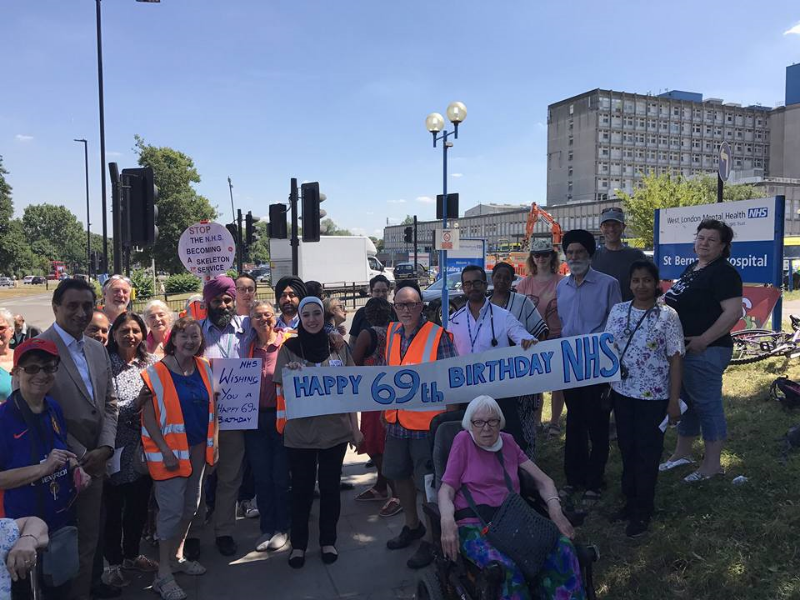
Ealing Save Our NHS organised a lovely NHS 69th Birthday celebration on Wednesday 5th July.
The weather was great and there were lots of smiling faces, especially among our wonderful Ealing Hospital staff who were greeted with loud cheers when they joined us so they know we think they how much we appreciate them. 
 
We were joined by Virendra Sharma MP, GLA member Onkar Sahota, Ealing Councillors and lots of local people from Southall & Ealing.
We had some speeches, sang NHS songs and most importantly tucked in to a beautiful 18″ square birthday cake.
There were banners, balloons and a two metre long birthday card provided by the TUC and Health Campaigns Together to add to the atmosphere.
All in all a good day with a really good feeling of unity and determination to defend our local hospital too.

Ealing Save our NHS celebrate the 69th Birthday of the NHS from Ealing Save Our NHS on Vimeo.

[gmedia id=26]

Out Campaigning at Ealing’s Hanwell Carnival (VIDEO)

0

No longer having the election on our minds means that Ealing Save Our NHS is back to its ‘day job’, fighting to keep a fully resourced hospital in the London Borough of Ealing.

This year, as before, we were present at Hanwell Carnival in Ealing. This is the oldest one day carnival in London and we had a stall in Elthorne Park where it took place and a float in the carnival parade from Hanwell Community Centre to Elthorne Park.

Fun was had but, more importantly, thousands of leaflets were given out and many people were engaged in conversation on the threats to hospital services.

Ealing Save our NHS at Hanwell Carnival from Ealing Save Our NHS on Vimeo.

Ealing Tories in Denial About Ealing Hospital Closure – June 2017

0


Issue: 49

June 2017


This occasional newsletter is researched, written and edited by a group of concerned residents in Ealing, West London who want to preserve our NHS. We view the wholesale engagement of private, for-profit healthcare service suppliers as unnecessary, profligate and dangerous. Increased financial funding is what is needed in our NHS – not financial cuts, closure of vital services or privatisation.


Ealing Tories in Denial About Ealing Hospital Closure

Ealing Central and Acton Conservative candidate Mrs Joy Morrissey recently did a ‘flounce’ and refused to appear at a local General Election hustings. Her reason for her non-appearance was her allegation that Ms Rupa Huq, the incumbent MP, had lied about her in local campaign literature. One of the claimed lies concerns Ealing Hospital. Mrs Morrissey says that the hospital is not closing. Ms Huq says it is. Mrs Morrissey is threatening to sue Ms Huq. Maybe she’ll also sue me for some of what you are about to read.


I first lived in Ealing in 1967. I’ve since lived in Ealing continuously since 1974. Ealing Hospital has been operating since 1992 as an NHS District General Hospital. As such it has offered an A&E unit, trauma care, Emergency surgery, Intensive Care, Obstretrics, Maternity and Inpatient Paediatrics. This service line up lasted for 23 years. However in 2012, the Government/NHS NW London plans (‘Shaping a Healthier Future’ – ‘SaHF’) mandated the closure of Ealing Hospital as a District General Hospital. The closure process on the ground started in 2015 with the closure of Maternity. It continued in 2016 with the closure of In-patient Paediatrics and Children’s A&E. The belated SaHF business plan which related to Ealing Hospital appeared in December 2016 (actual, catchy title ‘STP: Implementation Business Case – Strategic Outline Case Part 1 (ImBC-SOC1’). Listed in this businesscase are the healthcare services which will be retained/created on the Ealing Hospital site over the next five years.


The new healthcare facility will contain 50 beds. (Currently there are 309 beds available. In 2012 there were 327.) These beds will be used primarily by the elderly frail in a new Frail/Elderly unit. All operating theatres will close. There will be no Intensive Care consultants and no Emergency consultants. There will be no A&E services i.e no ‘Type 1’ services for the very seriously physically or mentally ill. What will be left will be a large GP surgery staffed by GPs and nurses offering ‘Type 3’ services for the not seriously ill, some day care services, diagnostic services, physical therapies and the Frail/Elderly unit. By November 2022 Ealing District General hospital will be closed and……


‘BLUE LIGHT’ AMBULANCES WILL NEVER TAKE THE SERIOUSLY ILL OR SERIOUSLY  INJURED TO THE SITE WHICH USED TO HOUSE EALING DISTRICT GENERAL HOSPITAL.


After loudly trumpeting that she would not show up at hustings, Mrs Morrissey did show up at one on 30 May 2017.  The event was held at St Mary’s Church, Acton and some 180 people heard her demonstrate her poor grasp of even the basics of local healthcare commissioning. Perhaps being confused by the fact that the Ealing Clinical Commissioning Group (ECCG) is housed in Ealing Council’s Perceval House, she declared that the ECCG was a Local Authority body. Of course in reality this CCG and all the other 210 CCGs in England are NHS bodies.


Bizarrely it has also just come to light that Mrs  Morrissey , using the name Joy Boden, had previously a  film acting career in America. She had somehow, oddly, failed to disclose this.


Details Emerge of a 2012  World Economic Forum (WEF) meeting in Davos, Switzerland which reveal the Global Lineage of the STP Mantra

The WEF has been described as ‘….the most comprehensive planning body of the transnational capitalist class’. WEF leader members are the CEOs of the top 1,000 transnational corporations. Senior academics and ‘experts’ are also sucked into the WEF as ‘Forum Fellows’.


At the annual WEF meeting in Davos in early 2012 the WEF Sustainability team debated that resolving the conflicting goals of fiscal austerity and good health were necessary for economic growth. The base input to this debate were two papers authored by the management consultants Mc Kinsey & Co:


+ ‘The Financial Sustainability of Health Systems’


+ ‘Sustainable Health Systems Visions, Strategies, Critical Uncertainties and Scenarios’


The ‘medicine’ doled out in these papers will be familiar to seasoned STP researchers – rationing, mandating private insurance, increasing tax revenue and more services delivered with fewer resources. ‘Sustainability’ is to be achieved through transforming supply, with payment innovations related to value rather than volume, financial incentives, ‘turbo-charging’ health and social care service performance. Throw in digital technology, prevention and integrated pathways and we have the full set of STP and Accountable Care Organisation (ACO) mantras.


(Jeremy Hunt, our Secretary of State for Health recently said that STPs were ‘…local plans developed by local people’. What an outrageous whopper that is!!!!)


High class, transnational, management consultants’ jargon literally oozes from the 2012 McKinsey papers. Such gems include ‘capital-light settings’, shifts to ‘leveraged talent models’ and ‘capacity reduction in higher cost channels’. According to McKinsey this shift ‘must be accompanied by capacity reduction in high cost channels’ and the new systems ‘must become more agile and leverage the opportunities for more self-care’.


In these two McKinsey reports are many of the basic components which Simon Stephens, head of NHS England trotted out in his October 2014 ‘Five Year Forward View’ ((FYFV). Stephens was not only in attendance at the 2012 WEF Davos meeting, he was leading the Sustainability team! Flexible roles carried out by less qualified, cheaper staff; cutting Acute bed numbers, selling off parts of the NHS estate – it all stems from the McKinsey-led ‘cutsfest’ papers at WEF Davos 2012.


You might wonder whether the attendees at this meeting could be people we are familiar with. Not half. What a cast of characters:


+ Simon Stephens

He was attending as a senior officer for the world’s largest private healthcare corporation – UnitedHealth ($148.8 billion revenue in 2016). He is leading the STP charge in England after being head hunted from UnitedHealth in 2014. The head hunter was Odgers, run by Baroness Virginia Bottomley, an ex-Secretary of State for Health and Jeremy Hunt MP’s cousin. (What a cosy family affair)


+ CEOs of leading healthcare/pharma companies including Apax Partners ($46 billion to invest in 2017), Novartis ($49.4 billion revenue pharma company – 2015), Merck ($39.4 billion revenue pharma company – 2015), Kaiser Permanente (‘integrated managed care consortium’ – $60.7 billion revenue – 2105. One of its systems was integral to the Torbay and South Devon Integrated Care ACO – set up in 2015 it collapsed in 2017)


+ The World Bank, the World Health Organisation and the European Community


+ Michael MacDonald – then Senior Fellow at Imperial College’s Centre for Global Health Innovation. He’s now Director of Strategy at NHS England


+ Julie Watts

Group CEO of BMI Healthcare since November 2014. BMI Healthcare had annual revenues of £834 million in 2012


+ David Mobbs

Was the boss of Nuffield Health, which was a private hospital chain charity. Revenues of £575 million, and he earned £860,000/year. A scandal erupted in 2011 about the size of his remuneration and the fact that the company only paid £100,000 in Corporation Tax. He eventually resigned in 2015


+ Ron Webster

A leader in the West Yorkshire STP


+ Amanda Doyle

A leader in the Lancashire and South Cumbria STP


+ Alan Milburn

Secretary of State Health 1999 – 2003. Since 2013 he has been a senior figure at PwC  who are one of the leading outsource STP authors/managers with at least seven of the 44 STPs in harness. He’s also a member of the European Advisor for Bridgepoint Capital. Bridgepoint has invested 480million Euros in Care UK.


+ Sir Bruce Keogh

NHS Medical Director 2007 – 2013. Since 2013 he has been National Medical Director of NHS England.


+ Stephen Dorrell

Secretary of State for Health 1995 – 1997. Chair of Government Health Select Committee 2010 – 2014. A leading healthcare executive with KPMG since 2014. Chair of NHS Confederation and Chair of Laing Buisson, a UK leader in healthcare research and information.


+ Robert Naylor

CEO of UCL Hospital since November 2000. Knighted in 2008 . He’s the highest paid NHS executive. On 31 March 2017 the so called Naylor ‘Review of NHS property and Estates’ was published by the Government. He identified £5 billion of NHS land to be sold off, including the Ealing and Charing Cross Hospital sites.


+ Julie Moore

CEO of NHS University Hospitals Birmingham. Made a Dame in 2012, she has been Birmingham and Solihull STP boss since May 2017


+ Liz Kendall

Shadow Care Minister 2011 – 2015. Came fourth in the Labour Party leadership contest in 2015. A strong and vocal advocate for the role of private healthcare suppliers in the NHS.


Others include Mark Newbold, Niti Pall, Paul Bate, Paul Corrigan and Nick Seddon. I could expand and explore these people’s future NHS roles in England since 2012 – but I think the reader has already got the picture.


What is now blindingly obvious is that the STP cost/service cutting and operational re-engineering of care services in England has been globally fashioned over many years. In England the whole NHS privatisation bandwagon got rolling in January 1988 with the publication by the Centre for Policy Studies of a report:


‘Britain’s Biggest Enterprise: Ideas for the Radical Reform of the NHS’


Priced at £1:95p this infamous polemic was authored by the MPs and now Tory Party grandees, Oliver Letwin and John Redwood.


The source of this newsletter piece is the excellent Socialist Health Association report ‘The Truth about Sustainability and Transformation Plans’ authored by Stewart Player and published on 25 May 2017. For more information go to www.sochealth.co.uk


UK Government and Microsoft Have No Shame in Blaming the NHS for Ransomware Attacks on NHS Computers

I find it quite pathetic that both the UK Government and Microsoft have been pointing fingers at the NHS for the crippling Ransomware cyber attacks on 12 May 2017 which disabled NHS IT services.


Government Ministers Amber Rudd and Sir Michael Fallon have tried to play down the impact of the cyber attacks. Fallon said that the Government had previously warned the NHS about the dangers of ‘unprotected’ software. 45 NHS Trusts were supposedly affected by the attack. However not all NHS bosses covered themselves with glory either. In my region – North West London – NHS bosses initially stated that the region’s Trusts were not affected. This was spectacularly not true at West Middlesex Hospital.


A bit of history here will help put all this in context. In 2001 Prime Minister Blair met Bill Gates – Microsoft co-founder – and was dazzled by him. Gates persuaded Blair to initiate the largest software project ever attempted in England. It was very grandly christened the ‘National Programme for IT’. One of its goals was for full online medical records to be accessed remotely 24/7. It was all a spectacular failure and cost tax payers over £10 billion. The project however opened the door for Microsoft based Personal Computers (PCs) to flood the NHS. There are still around 500,000 NHS PCs running the now obsolete Microsoft XP Windows operating system. In fact this represents 85% of all NHS PCs.  In July 2010 Tory MPs Andrew Lansley and Francis Maude terminated the national NHS software maintenance contract with Microsoft. In April 2014 Microsoft terminated support for XP globally. Cash strapped NHS Trusts in subsequent years could not afford to replace their obsolete PCs or even shell out for expensive software maintenance contracts.


As for Microsoft with $100+ billion in the bank, its withdrawal of support worldwide for Windows XP in 2014 was cynical and money grabbing. However Microsoft does have form for bad behaviour. In March 2013 the European Commission found Microsoft guilty of maintaining a monopoly and fined the company 561 million Euros.


Bolton NHS Trust Enters into a Huge ‘Scary’ IT Merger

The Holy Grail of a single Patient Administration System (PAS) covering hospital and community patient data is being claimed in Lancashire. 17 million case-note activities, 60,000 patient records and 26 million waiting list entries have all been merged together. Breathtaking stuff.


I took in even sharper intakes of breath when I discovered that the IT supplier carrying out this massive project was none other than CSC. CSC is infamous in NHS and Government circles for having failed disastrously in the so called National Programme for IT. After trying for 10 years CSC failed to deliver software care records to 211 NHS Trusts. In the end just nine NHS Trusts finished up running some version of the promised software.


Unsurprisingly maybe, CSC has now changed its name to DXC…..


It will be more than interesting to see how this enormous data merger actually performs.


If You Want to Save the NHS – Don’t Vote Conservative – May 2017

0


Issue: 48

May 2017


This occasional newsletter is researched, written and edited by a group of concerned residents in Ealing, West London who want to preserve our NHS. We view the wholesale engagement of private, for-profit healthcare service suppliers as unnecessary, profligate and dangerous. Increased funding  is what is needed in our NHS – not financial cuts, closure of vital services service or privatisation.


If You Want to Save the NHS – Don’t Vote Conservative

I am not a ‘party’ political animal and I have never been a member of a political party. However I’m convinced that five more years of a Conservative Government will result in the destruction of the NHS as I’ve known it since I became an adult in the 1960s.


The current Government’s Sustainability and Transformation Plans (STPs) will mandate the creation of Accountable Care Organisations (ACOs). ACOs will be private consortia of NHS, Local Authority and possibly private companies which will determine how and where money is spent for healthcare and social care. NHS bodies and Local Authorities will no longer hold the purse strings or push the management levers in the delivery of care. ACOs will be the fixed price, 10/15 year contract vehicles for cutting the national annual care bill by £22 billion.


The North West London STP, along with its aberrant precursor the NHS NWL Shaping a Healthier Future (SaHF) plan, will deprive Ealing – a town with more residents than Leicester or Sunderland – of a Major Hospital. The NWL STP will deprive the 426,000+ patients registered at the 76 Ealing GP surgeries of hospital A&E and Intensive Care services in the town. The number of beds at Ealing Hospital currently stands at 288. Under the Conservative party-driven STP this will be slashed to just 50 beds.


Under a ‘hard’ Brexit our new Tory Government might eject all EU/European citizens from the UK. EU/European countries might reciprocate and eject British nationals from their countries. The net result of this will be the loss of tens of thousands of care workers and the influx of thousands of new patients needing care.


I do hope that all Political Parties will explicitly spell out in their manifestos what their plans are for funding and improving care services. On 2 May 2017 the Shadow Health Minister revealed some of Labour’s NHS manifesto intentions. He said Labour, if elected, would stop the planned closure of hospital A&E units. He also said that Labour would introduce a moritorium on implementing STPs. The former intention will be clear to most voters whilst the latter won’t mean that much to the majority of voters who won’t have a clue what STPs are all about. Labour wants to set up ‘NHS Excellence’ which will be a new body which will involve local people in reviewing STPs.


Locally the Conservatives have made it very clear that they agree with Government Shaping a Healthier Future (SaHF) and Sustainability and Transformation Plan (STP) intentions to decimate Ealing Hospital. They are unwilling to admit that by reducing beds from 288 to 50, closing A&E, Intensive Care and Surgery what we will be left with not qualify as a hospital in any meaningful sense. Ealing Labour Party has made it very clear that they support the retention of Ealing District General Hospital and oppose the SaHF and STP proposals.


‘999 call for the NHS’ and Public Law Firm Leigh Day Launch STP ACO Judicial Review Initiative

This initiative will select a Clinical Commissioning Group (CCG) and request a Judicial Review (JR) of the CCG’s STP plans for new local NHS and social care organisations to operate ‘fixed, pre-set population budgets’. These so called capitated budgets will force the NHS to behave like an insurance company. Crowd funding is being used to raise £25,000.


To contribute and to find out more go to:


www.crowdjustice.com//challenge-stp/


One of the issues with regard to a JR concerning ACO/MCP/ACP/LCO/PAC ‘models of care’ – which are the projected vehicles for implementing these fixed, pre-set population budgets  – is that there is scant information on any of these in any of the STPs that I have read.


What the STPs don’t spell out re ACOs and their variants include:

+ 10/15 year fixed price contracts

+ Specific service profiles for a specific population

+ Consortia made up of a variety of organisations including public, private, charity and voluntary organizations

+ Contract values in the £billions


Bids are In for a £6 Billion Accountable Care Organisation (ACO) Contract in Greater Manchester

This is the largest ever NHS services tender. A 10 year ACO contract is on offer for the provision of community health, social care, primary care, mental health and voluntary sector care services for 600,000 patients. The closing date for bids was 28 April 2017. The ACO was originally supposed to go live in April 2017 but now the projected start date is 1 April 2018.


The lucky contract winner will be referred to as a Local Care Organisation (LCO). Not included in the LCO services are so called ‘core’ GP services. The organisation ‘commissioning’ the LCO is Manchester Health and Care Commissioning – a non-statutory collection of the Manchester Clinical Commissioning Groups and the city Council. The commissioners are quoted as saying that the LCO is a strong part of Greater Manchester’s pioneering devolution arrangements. We all know how to identify pioneers don’t we – they are the folks with arrows in their backs.


One does wonder how much Manchester residents know or understand what this LCO is all about. One can only speculate how many residents were involved in the formative stages of conceiving the LCO Invitation To Tender – never mind in developing the concepts for the LCO. My guess is that no residents were involved.


At a national level it’s of great concern that the ACO/LCO concept has not been debated in Parliament and there is no Government legislation or regulations which legitimise this £6 billion undertaking.


Be Very Scared of Moves Towards PPPs and the ‘Alzira Model’

Hidden under the bonnet of many of the STP vehicles are some components with very chequered histories. Two of these are PPPs and the ‘Alzira Model’. The fact that both are being talked about by NHS England and their prime Accountable Care Organisation (ACO) NHS consultants PwC is worrying.


What is PPP?

PPP stands for Public-Private Partnership and is a funding model for public infrastructure and services. A PPP contract will be long term and will involve at least one public body and one private body. PPPs are used to conceal public borrowing while providing long term State guarantees for profits for private companies. In the NHS the most common PPP contracts are 30/60 year PFI contracts for hospitals. PFI interest payments are often so high that they threaten the financial viability of hospitals. The most spectacular PPP failure was the London Underground Metronet PPP. It failed in 2007 after just five years and cost the tax payer £410 million to bring the work back under public ownership.


What is the ‘Alzira Model’?

The Alzira Public Private Investment Partnership (APPIP) was created in 1997. Signatories to the partnership were the Spanish Valencia Government and RSUTE – a joint venture special purpose vehicle. The RSUTE shareholders were a medical insurance company and Spanish banks. The function of the APPIP was to construct a hospital and manage both the clinical and non-clinical facilities in the town of Alzira. Funding would be calculated by applying an annual ‘Capitation’ fee of 204 Euros per resident. This capitated budget approach is exactly the one favoured by all ACO undertakings. The hospital was built and began operating as La Ribero Hospital on 1 January 1999. As the first PPP hospital in Spain there was local hostility and initially few patients were referred to the hospital. High interest payments drove wages down and led to an unhappy workforce with union protests. Staff at the La Ribero Hospital had less job security, lower pay scales and longer working hours than staff at non PPP Spanish hospitals. One of the local banks involved became overstreched and went bust in 2001.


Following losses, the APPIP contract was terminated in March 2003. Clearly the capitation fees had been set too (optimistically) low. However nothing succeeds like failure and the Valencia Government had to pay RSUTE 69.3 million Euros on termination. RSUTE II sprang into life and paid the Government a premium of 72 million Euros for a new APPIP contract. The new contract was a bigger deal which served 245,000 inhabitants, offering primary and specialist care, managing 30 health centres and two outpatient clinics as well as the hospital. The annual capitation fee was initially 379 Euros/head (as opposed to the failed project’s 204 Euros/ head). There was even an annual capitation uplift every year! By 2012 the annual capitation had soared to 639 Euros.


Under RSUTE II there have been doctor shortages, staff dissatisfaction and a doctors’strike in 2007. There were also claims that RSUTE II ‘cherry picks’ the most profitable medical and surgical specialities, whilst referring HIV and other chronic disorders to other hospitals.


Much of this information has been extracted from two papers jointly authored by the University of Zaragoza and the University of Manchester/Manchester Business School. The authors found it extremely difficult to get hold of reliable and complete data on the financial performance of the PPP. However they conclude that the original RSUTE project was never going to be viable. As for the re-negotiated RSUTE II PPP, it has proved to be very costly to the Government.


The questions that must be asked include whether the PPP/Alzira Model approach is a viable way of achieving cost savings and or service improvement. The NHS paid for 20 Morcambe Bay clinicians to visit Alzira and study the functioning of the PPP in 2014. However there’s nothing in the NHS Morcambe Bay Vanguard that even vaguely resembles the Alzira Model. Maybe the clinicians weren’t impressed – and maybe that represents taxpayers’ money well spent on the trip.


Smoking Ban at Scottish Hospital Judged Unlawful by Supreme Court


On 11 April 2017, the Supreme Court overturned a decision by the Scottish Inner House of the Court of Sessions to implement a comprehensive smoking ban at Carstairs Hospital. Carstairs Hospital had previously implemented a truly draconian, comprehensive ban on smoking anywhere (inside or outside). The ban even extended to visitors being searched and having tobacco products confiscated.


Charles McCann, who suffered from a mental health disorder and who was detained in the hospital, applied for a Judicial Review to challenge the ban. The Supreme Court judged that Mr McCann’s rights under domestic law and Article 8 of the European Convention on Human Rights had been infringed. In effect the decision allows patients and their visitors to smoke in the hospital grounds.


Although this decision relates to a Scottish hospital let’s hope it encourages someone to challenge the idiotic no smoking anywhere ban implemented by the West London Mental Health NHS Trust.


CAN WE AFFORD TO CLOSE ANY MORE A&E DEPARTMENTS?

0
EVIDENCE FROM NORTH WEST LONDON.  By Dr Gurjinder Singh Sandhu
 
 
In this readable and alarming piece of work Dr Sandhu talks about the impact of cuts on North West London so far and the risks faced by even more.  He covers the fact that cuts are concentrated in the most deprived areas, the crisis in social care, the increasing population and proportion of elderly.
 
“Despite a sharp deterioration in A&E performance in North West London following the closures already made, the STP envisages closing the A&E at Ealing hospital by 2021 and closing the A&E at Charing Cross Hospital at some point after that. The STP also proposes to consolidate acute services from nine onto five sites in North West London….”
 
“In this respect North West London is further down the STP pathway than any other region in England and there are important lessons to learn….”
 
“Since the closure of Emergency Departments in North West London in
September 2014, each successive winter has seen deterioration in Type 1 A&E
Performance”
 
“Patients trapped in acute hospital beds due to shortages of social care provision
have an important impact on hospital capacity, patient flow and the ability of staff to
admit new patients, including emergency patients, further compounding the A&E
crisis.”
 
Dr Gurjinder Singh Sandhu is a Consultant Physician who currently works in Acute Medicine and is developing an interest in health inequalities in elderly care medicine. Dr Sandhu is an active member of Ealing Save Our NHS.
[pdf-embedder url=”https://ealingsaveournhs.org.uk/wp-content/uploads/2017/04/DrSandhu_AE-closures-NW-London_CHPI_FINAL_19Apr.pdf”]
 

Thanks for visiting us

Sign up to receive all the latest news from Ealing Save our NHS

We don’t spam! Read our privacy policy for more info.