The ‘Knives’ are Out – Cuts and Free Film Show – ESON newsletter 20/09/19
|
|||||||||||||||||||||||||||||||||||||||||||||||||||||||||||||||
|
|
|||||||||||||||||||||||||||||||||||||||||||||||||||||||||||||||
|
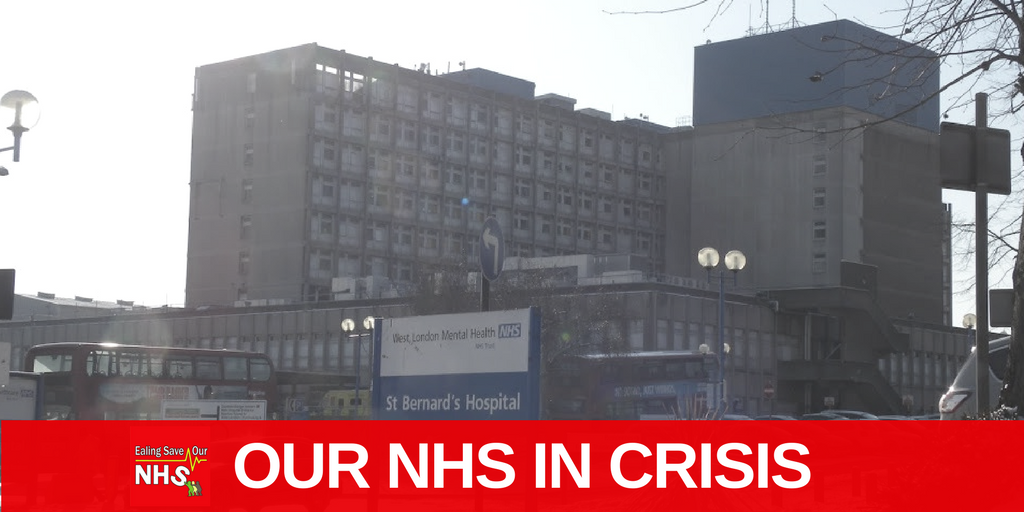
Appalling Admission of Failure by NHS North West London (NWL) as Final Anticipated Deficit Figure for 2019/20 is £112 Million
‘Unscheduled Care’ is the reason given by NHS NWL bosses for an anticipated annual deficit at the end of this financial year of £112 million. Unscheduled care equates to poor planning. A deficit equates to underfunding.
The blood on the carpet here must be attributed to the disastrous £1.3 billion ‘Shaping a Healthier Future’ (SaHF) plan. SaHF, launched in 2012 and ignominiously abandoned in March 2019, tragically closed two hospital A&Es in September 2014. This has caused rises in unscheduled care at the remaining seven Major Hospital A&Es ever since. For over six years Ealing and Charing Cross Hospitals were threatened with downgrading (loss of A&Es). NHS NWL closed down Maternity and then Paediatrics at Ealing Hospital. At Ealing and Charing Cross Hospitals – loudly earmarked for possible complete closure as ‘Major Hospitals’- hiring new permanent staff has been difficult and expensive. So temporary, Agency, ‘Bank’ and locum staff costs have been enormous.
Patients at all seven Major Hospitals will no doubt now suffer from service cutbacks, closures, more pain and possible death in order to reduce this deficit. It’s hard to forget that expert analysis of SaHF pegged the cost of the failed initiative at £235.55 million by 31 March 2018. Separate research has revealed that management consultants’ fees incurred by NHS NWL on service transformation 2009/10 to 2018/19 now total over £76 million. The ‘Sunday Times’ on 10 February 2019 revealed that the maintenance backlog at just four of the nine NHS NWL Major Hospitals stood at £729 million.
When will anyone in authority take responsibility for this NHS NWL financial, management, planning, commissioning and service delivery debacle and do the honourable thing by resigning?
NHS NWL Hopes That Reducing the Number of Referrals to Hospital Consultants Will Cut Costs by £60 Million
NHS North West London (NWL) has decreed that GPs will have to restrict the number of patient referrals to hospital/Secondary Care consultants they initiate. This is to cut costs. NHS NWL’s cost cutting record is not good. The NHS NWL 2012 ‘Shaping a Healthier Future’ (SaHF) programme planned to achieve cuts of £4 million every year. No achieved SaHF cuts were ever announced during the programme’s 2012-2019 existence.
Presumably with fewer referrals to consultants, fewer consultants will be needed so salary costs will be saved. ‘Alternative ways’ must be sought by GPs whose opinion is that a patient needs hospital treatment. What alternatives might these be?
Maybe contacting the hospital consultant in a private capacity and paying for the consultation and the treatment? The patient having to put up with the pain by constant use of painkillers perhaps? Or if it’s someone with mental health problems, suggesting to the patient that they get a book from the library (or search the online world) and attempt to consult those resources for clues on how one might ’get better’.
The London North West University Healthcare NHS Trust LNWH) has been singled out by NHS NWL for cuts to its Acute costs, improvements in patient flow and reductions in Delayed Transfers of Care. For its two Hospital A&E units at Ealing and Northwick Park the 95% four hour waiting time target was breached to a level of just under 85% in December 2018. By March 2109 it had only improved to just over 88%. In a surprise revelation in September 2019 Dame Jacqueline Docherty, Chief Executive of LNWH, is seemingly stepping down from her role on 31 March 2020. A seven month notice period seems very protracted. In 2018/19 she earned £230,000.
Ealing’s Referral Facilitation Service Bites the Dust
Ealing GPs are soon to now ‘audit’ their own consultant referrals. Ealing CCG has decided to discontinue its Referral Facilitation Service (RFS) in November 2019. RFS is provide by US healthcare giant UnitedHealth at no small cost. The service was clearly aimed at reducing referrals by refusing some of them. The service has cost over £2 million over three years. Apparently very few referrals were refused and the service was correctly deemed to be a complete waste of money.
NHS NWL makes it clear that the hospitals which face the biggest financial challenges are those in the London North West University Healthcare NHS Trust. These, of course, are the Major Hospitals at Northwick Park, Ealing and Central Middlesex.
The Collaboration of NHS NWL CCGs, who collectively ‘boss’ the purchasing of all healthcare services for 2.2 million people in north west London were quoted in ‘The Guardian’ 9 September 2019:
‘The safety of our patients and the quality of our services will always come first’.
Given that the collaboration is a non-statutory purchasing body and not a clinical services delivery body, this aspiration is in many ways quite offensive. Four of the eight local CCG bosses in this collaboration signed their names to the shambolic SaHF Acute reconfiguration programme and have drawn their not ungenerous stipends for over six years. NHSE has clearly demanded that quantity of service and cost cutting are very high priorities.
It also appears that even if you are referred to one consultant, you will then be prevented contemporaneously being referred to a second consultant (of another discipline). To employ another mental health example there is plenty of data which confirms that those with mental health problems use more physical healthcare services than those without. (Colorado Access insurance system data puts the percentage at 60%). So chances are if a consultation with a psychologist and a urologist are needed, the GP must choose between say, a 20 week wait to see a urologist or a 40 week wait to see a psychologist. More stress for the GP, the patients and his/her loved ones – whichever choice the GP makes.
Yet Another Attempt at Acute Reconfiguration Transformation
Language and strategy very similar to that used in the failed SaHF is employed to instruct GPs to send fewer patients into Acute care. All attempts in NHS NWL in recent years to reduce Acute admissions (so called Non-Elective Admissions – NELs) and treat more patients in GP surgeries, GP hubs and at home mostly ended in failure – failure to cut costs and sustain bed number reductions. It will be interesting to see if West London NHS Trust’s (WLNT’s) 10 year Ealing Out Of Hospital services approach (branded Ealing Community Partners – ECP) can both save on costs and suffer no reduction in service quality. However, and somewhat surprisingly, at the 11 September 2019 WLNT Board meeting, there was no sign of cost cutting – more the opposite with lots of new hires planned. Clearly there are parts of NHS NWL not required to help reduce the enormous deficit.
The latest released monthly figures for July 2019 show little improvement with aspirations of further action on managing urgent care and limiting the growth of elective and outpatient care.
New Regional NHS NWL Clinical Commissioning Group (CCG) Start Date Delayed till April 2021
Lots of loud voices offered the opinion that the NHS NWL rush to eliminate eight local CCGs and ‘replace’ them with one new regional CCG in April 2020 was a bad idea. Many thought the whole process had not been adequately thought through. No doubt some (all?) of the eight existing local CCG bosses were less than impressed by the prospect of losing their remuneration in six months’ time. NHS NWL has announced that the start date will now be 1 April 2021.
Should the BMA Boss Be Paid More than Seven Times The Salary of a First Year Junior Doctor?
Union bosses do themselves no favours when their take home pay completely dwarfs the workers they are attempting to represent. ‘The Times’ of 9 September 2019 revealed that the salary of Chaand Nagpaul, Chairman and General Secretary of the British Medical Association (BMA) is £193,000/year. A first year Junior Doctor earns £27,100/year. One wonders whether Mr Nagpaul is worth seven first year Junior Doctors?
GP Locums Are Now Eligible for Holiday Pay – Backdated for Six Years
GP locums, who allegedly earn on average £140,000/year, can now enjoy holiday pay back datedfor up to six years. This is the outcome of a Court case in Gateshead. Not only could this cost an estimated £250 million a year, that figure does not include any back payments. The General Medical Council reckons there are 20,000 locum GPs in England, some of whom can command £1,000/day.
Surely this eligibility will encourage more GPs to become locums rather than become dedicated to one practice? Does this matter? Well the growth in locums will increase the running costs for Primary Care and will slowly eat away at the number of salaried and permanent partnership roles in GP practices. It will also degrade continuity of care, which is highly valued by most patients, especially elderly patients.
A&E Waiting Times Throughout England are the Worst for 10 Years
In 2008, 93% of patients were seen in NHA hospital A&E units within four hours. In 2018 it was 88%. Separate figures show that August 2019 was the busiest August month ever.
The UK Spends Less on Healthcare Than USA, France, Germany, Japan and Canada
The Office of National Statistics (ONS) has published data collected for 2017 on percentage of Gross National Product (GDP) spent on healthcare. Here are the top seven:
USA 17.1
France 11.3
Germany 11,2
Japan 10.9
Canada 10.7
UK 9.6
Italy 8.8
Mental Health Services in Crisis: Not Enough Nurses, Psychiatrists and Specialist Beds – and It’s Getting Worse
+ 2009 – 2018: 6,800 mental health nurses were lost
+ 20% fewer specialist psychiatric doctors in training
+ 2009 – 2018: beds for patients with serious mental health issues fell by 8,000
+ 75% of young people with mental health issues get worse before they receive treatment
+ 2009 – 2018: a 47% increase in the number of people detained under the Mental Health Act
+ 100,000 vacancies in NHS and Local Authority social care services
Figures courtesy of ‘M.D.’ in ‘Private Eye’ 23 August 2019 (Dr Phil Hammond).
Incidence of Mental Health Problems Linked to Poor Air Quality in Polluted Areas
Research has been recently published which indicates a strong link between poor air quality and the increased risk of bipolar disorder, severe depression and schizophrenia. Researchers used a US health insurance database of 151 million individuals with 11 years of inpatient and outpatient claims for mental illness. Data on 1.4 million patients in Denmark was also analysed. The latter data revealed that the rate of schizophrenia doubled amongst those exposed to poor air quality during early childhood.
Although all experts do not agree with the findings, the Royal College of Psychiatrists said that the research ‘builds on the increasing evidence of a link between air pollution and the development of mental illness’.
These findings will anger and exasperate residents of Hayes and Southall who have been subject to odour and air pollution since May 2017. The source of the 24 hour pollution is Berkeley Group and Ealing Council’s implementation of soil ‘cleaning’ initiatives on the Southall Gas Works site where some 10,000 new residents will occupy 3,750 new homes over the next decade.
Hospital Bed Reduction Programme is Relentless – 7,200 Over the Next 12 Months
It’s common knowledge that the cost of patients spending days and nights in hospital is very high. However there are times when a hospital stay is the only safe and viable option. With more of us living longer and having multiple physical and mental illnesses in our old age, surely we need to increase the number of hospital beds? But apparently not. A new NHS target has emerged to free up 7,200 beds nationally over the next 12 months.
Anecdotal research last year revealed that major causes of ‘Delayed Discharge’ (or bed blocking in the vernacular) at Ealing Hospital were elderly patients who were getting better and seriously ill mental health patients. The former had to stay in their bed because no arrangements could be made for them to be safely cared for at home or in mythical ‘community care’. As for the seriously mentally ill there were consistently no specialist mental health beds available.
Some of Our Hospitals and GP Surgeries are Toxic
‘The Times’ of 19 August 2019 reports that The British Lung Foundation has discovered that 248 (17%) of our NHS hospitals in England have dangerous levels of air pollution. The toxicity level being breached is the World Health Organisation’s (WHO’s) 10 micrograms per cubic metre of air (mcg/m3) of fine particles (PM2.5). These particles are tiny and can penetrate deep into the lungs and enter the blood stream.
Lowestoft Hospital fared the worst at 16.18 mcg/m3. 72% of all London NHS hospitals are in breach of the WHO standard of 10, as are 2,100 GP surgeries throughout England. Ealing Hospital (10.21) and West Middlesex Hospital (10.0) are in breach as is my own Hanwell GP surgery – Elthorne Park (10.32).
GP Surgeries to be Fined £40,000 for Closing for Four Hours Each Week
The ‘Daily Mail’ (who else?) on 19 August 2019 exclusively revealed that NHS England (NHSE) is putting GPs under even greater pressure by fining them £40,000/year for weekly half day closing. Apparently if GP Surgeries want to close for training they have to ask their CCG for permission.
NHSE has, apparently, invested time and resources to discover that 10% of GP surgeries in England close for four hours during day time every week. As it is, the weekday opening hours of 8:00am to 6:30pm are longer than most Local Authorities and most medium to large businesses.
This Draconian measure comes at a time when many GPs are contemplating early retirement; some newly qualified GPs are being tempted to go and work in Australia and New Zealand; and some GPs are going part time because of workload and stress.
This is not carrot and stick by NHSE – it’s stick and stick.
I got the chance to ask Dr Raj Patel in public on 20 August 2019 why NHSE was doing this. This Deputy Medical Director for Primary Care NHSE/NHSI passed off my question quite glibly and said that half day closing was an outdated anachronism. When I tried to follow this up by asking if it was true that if GP surgeries wanted to close for a few hours for training they had to get permission from their CCG – the microphone was taken from me…
Could ‘Social Prescribing’ Help Patients – Or Will it Prove To Be a Damp Squib?
In the January 2019 NHS Long Term Plan (LTP) there are proposals for 1,000 ‘Social Prescribing Link Workers’ (SPLWs) to be employed by the 1,000+ LTP defined Primary Care Networks (PCNs). SPLWs will attempt to help patients access activities and services that provide a more effective alternative to medicine. Examples quoted include referrals to community services, which could offer access to social, fitness or arts and culture initiatives. PCNs will get 100% re-imbursement for hiring a SPLW.
The first thing that occurs to me is that the role of the SPLW is possibly already being carried out by other ‘workers’. To some extent, Local Authority social workers and NHS mental health Trust psychologists and mental health workers will all be attempting to devise and help implement patients’ coping strategies through ‘social prescribing’.
Secondly, exactly who will these 1,000 workers be? What training or qualifications will be required of them? If they are in work now, won’t they leave a ‘hole’/vacancy in, for example, a Local Authority’s social services team?
That being said, SPLWs could provide some valuable services if there were enough of them. One SPLW working for my Hanwell PCN (five GP surgeries and 35,000 patients) would be spread quite thinly. In Acton – with a PCN of 15 GP surgeries and 77,000 patients – one SPLW could actually achieve very little. Maybe Acton PCN will hire five SPLWs. But where would it house them? Surely PCNs won’t have capital budgets for premises?
‘Team London Small Grants’ are now available for voluntary projects that help people who are experiencing loneliness and social isolation. Receiving a small grant might enable a volunteer group to respond effectively to a patient referred by a SPLW. Search for ‘Team London Small Grants’ at www.london.gov.uk. Deadline for applications is 13 September 2019.
Only time will tell whether PCNs will hire SPLWs who will enable needy patients to engage with social, sports, arts and cultural initiatives.
Prue Leith is the Latest TV Celebrity Chef to Lend Her Name to Improving NHS Hospital Food
The Health and Social Care Secretary Matt Hancock MP announced in June 2019 a comprehensive review of hospital food sourcing and preparation. In order no doubt to publicise this initiative further it was announced in August 2019 that Prue Leith, TV’s ‘The Great British Bake Off’ judge is to advise the Government.
No doubt somewhat related to these food improvement initiatives is the fact that 18 people have died this year in NHS food related incidences of listeria and streptococcus. Recently six UK hospital patients died after eating pre-packed sandwiches contaminated with listeria supplied to the NHS. 12 Mid Essex NHS patients died from streptococcus infections.
This isn’t the first NHS food improvement initiative involving ‘famous’ chefs in recent years. In 2000, TV chef Lloyd Grossman was hired by the NHS to train hospital chefs. In 2005 it was Jamie Oliver’s turn to get into the act. This time it was via embarrassing the Government over State school dinner offerings. In 2014 it was James Martin fronting the ‘Operation Hospital Food’ BBC1 TV series. Finally TV chef Ainsley Harriott joined other celebs in the 2015 NHSE/Public health England ‘Stay Well this Winter’ initiative.
The burning question of course is whether these celeb-led initiatives actually led to improved hospital food. What’s probably needed is more money for modern food preparation equipment in hospitals. We also need better trained and rewarded food sourcing and preparation staff, enlightened fresh food selection policies and an end to all aspects of outsourcing with regard hospital food.

Support for Children’s Health and Wellbeing Continues to Deteriorate in Ealing
On 1 July 2015, Ealing future would-be parents suffered the closure of Ealing Hospital’s Maternity Unit. On 30 June 2016, Ealing Hospital’s Paediatric services were withdrawn, along with the closure of the children’s A&E unit in the hospital. Anecdotaly, concerned parents still arrive in the middle of the night with seriously ill children only to discover to their horror that A&E specialist support for children no longer exists at the hospital.
On 6 July 2019 Ealing Council decided to close the Children’s Centres at Wood End and North Ealing. The annual budgets of 11 other Children’s Centres in Ealing were cut by 24%. Apparently, the Council insists that the level of midwifery, health visitor and other specialist services for children will be unaffected. Some parents will take this insistence with more than a little pinch of salt.
Are the Goals for Primary Care Networks a Case of ‘Mission Impossible’ or ‘Mission Irrelevant’?
As part of NHSE’s Long Term Plan published in January 2019, about 1,000 Primary Care Networks (PCNs) have been set up and are now in operation across England, with 76 of them in north west London. There are eight PCNs in Ealing, each PCN between 5 and 15 GP practices, and each handling between 36,661 and 77,731 patients. For each PCN a Clinical Director has been appointed. PCNs are not statutory bodies.
But what problems are PCNs supposed to fix? Apparently PCNs will bring General Practices together to work ‘at scale’. What exact problem or problems will this togetherness solve? No real clarity on that one from NHSE. As for ‘at scale’ I can only presume that in this context this means handling larger volumes of patients (presumably more efficiently and more quickly) than is the case currently.
Simplistically though, only many more GPs and Practice Nurses will facilitate handling larger volumes of patients (with hopefully reduced waiting times). And unless we all get much healthier or doctors/medicines/Primary Care treatments improve radically, with more GPs handling more patients we’ll need more hospital beds, consultants, operating theatres, psychologists, ICUs, A&E units etc, etc.
The PCN approach tries to negotiate the current and likely future shortage of GPs by offering cash inducements for GPs, via their PCN, to gain shared access to other kinds of healthcare professionals – initially pharmacists and physiotherapists. Another cited reason for PCNs is to enable the integration of Primary Care with other services. The track record of attempts to integrate healthcare and social care services in England however is strewn with failures. It’s suggested that with each PCN Clinical Director sitting on the new Ealing Integrated Care parthership (ICP) – in 2020 or 2021 – that this will somehow help to enable integration. The final NHSE PCN justification is ‘to improve population health’. How this might be achieved is not spelled out and is quite frankly an unsupportable claim.
NHSE’s ambitions for PCNs are quite breath-taking. PCNs are expected to deliver co-ordinated health and social care. This will involve co-ordinating local government, community pharmacies, dental providers, social care providers, mental health staff, hospitals, dementia workers, podiatrists/chiropodists, voluntary sector organisations and community service providers. Each PCN will hire (fire), manage and somehow share the following staff around its network of GP surgeries – clinical pharmacists, physiotherapists, Social Prescribing Link Workers (SPLWs), physician associates and paramedics. SPLWs, by the way, aim to connect people to community groups and statutory non-clinical services for practical and emotional support. Maybe they are what in the 1960s we called social workers.
As from April 2020, PCNs will provide structural medication reviews and optimisation; enhanced health in care homes; anticipatory care; personalised care; and supporting cancer diagnosis. As from April 2021, PCNs will deliver cardiovascular disease diagnosis and prevention, and locally agreed action to tackle inequalities.
PCN funding seems to be either ‘by April 2021’ or ‘by 2023/24’. It’s £1.8 billion over five years. 70% of the cost of hiring specific new clinical staff will be provided by NHSE. This 70% funding will commence this financial year with clinical pharmacists. SPLWs can be 100% funded right now by NHSE.
PCNs will need more than just a Clinical Director to handle personnel, financial, management and recruitment duties – as well as functioning as a GP. Is there money from NHSE to run this small PCN business? 0.25% of a person apparently. It seems inadequate. In the Acton PCN in Ealing, 15 GP surgeries are supposedly working together to collectively provide Primary Care for a registered patient population of 77,731. (This is a larger population than that of Macclesfield, Maidenhead, or Scarborough). Running this lot is akin to running quite a large small business.
According to a survey carried out by ‘GPonline’ in May 2019, 48% of GP practice partners think PCNs will increase workload amid fears of rising bureaucracy.
NHS NWL Gets £ZERO To Plug its £739+ Million NHS North West London Hospital Repair Backlog – in Johnson’s £850 Million Pre-Brexit Give-Away
El Presidente Johnson announced on 5 August 2019 his first pre-Brexit ‘give-away’ to selected NHS Trusts and CCGs. 20 NHS bodies throughout England will receive £850 million for building work. However the NHS North West London (NWL) region (or ‘Footprint’ in NHSE speak) with the largest repairs backlog will receive zero funds. To refresh your eyes and minds with some of these repair bills as reported in the ‘Sunday Times’ on 10 February 2019, they were:
+ Charing Cross Hospital: £312 million
+ St Mary’s Hospital: £229 million
+ Hammersmith Hospital: £108 million
+ Hillingdon Hospital: £80 million.
Why do I think NHS NWL has been given no cash whatsoever? Here is my take on it:
Beware of Geeks Bearing Gifts!
Artificial Intelligence (AI) is a barely 70 year old branch of computer software. AI is often simplisticly linked to robots (who, allegedly, might kill all humans and run the world ). However the mundane truth is that the best AI can offer now and within the medium term future is useful ‘decision support’ information to healthcare professionals.
AI might be able to predict a diagnosis or treatment protocol extremely precisely, but it can’t, intrinsically, tell a doctor, nurse (or patient) the cause of or reason for a medical condition. An AI algorithm (piece of software) is only as ‘right’ as its design. If the sotware designer gets it ’wrong’ then the AI algorithm will consistently get it wrong over and over again. This amounts to ‘Artificial Ignorance’.
Of course it’s very fashionable these days to support and eulogise about AI. Our new Prime Minister and our Secretary of State for Health and Social Care are literally gushing about it. President Johnson on 7 August 2019 threw £250 million at an NHS AI laboratory. Press reports quote how this investment would improve cancer screening and identify patients most at risk from heart disease and dementia. These are credible claims. However the claim that this investment in AI will ’end bed blocking’ has no credibility at all.
Climate Change is Now the Excuse for Disastrous A&E Performance in July 2019
In July 2019, no London NHS hospital met the NHS A&E 95% target for ward admission, transfer or discharge within four hours. Kings College Hospital was the worst performer at 73.6%. Apparently nationally in July 2019 A&E admissions were up year by year by 4.6%. Apparently the weather was responsible for increased admissions and poor performance.
The reality in NHS North West London is that hospitals have been underfunded for years, two hospital A &E units were closed down in September 2014 and two other hospital A&E units have had the real threat of closure hanging over them for seven years.
The chronic shortage of doctors, nurses and mental health staff is a national disgrace. No amount of NHS money for hospital repairs or AI will directly help to fund, hire and train more NHS doctors and nurses.
NHSE Paid $226 Billion US Healthcare Giant £7 million to ‘Help’ CCGs Cut Costs, Integrate Their Care Systems and Embrace Accountable Care
UnitedHealth Group, in association with management consultants PriceWaterhouseCoopers (PwC), was last year paid £7 million by NHS England (NHSE) to help 55 Clinical Commissioning Groups (CCGs) cut their costs. The turnover of UnitedHealth last year was $226 billion. Simon Stephens, the boss of NHSE, knows the company very well as he’s a former President of UnitedHealth Europe.
The Optum Alliance (UnitedHealthcare and PwC) have been acting as ‘programme coach‘ (US management consultancy jargon) to, for example, Harrow CCG. The alliance has extolled the virtues of ‘demand management’ (in simple language restricting care service supply) with specific targeting of restricting unplanned hospital admissions. The alliance has also been proselytising about US-style Accountable Care. Central tenets of the Accountable Care shibboleth involve financial incentives to improve ‘performance’ and cost control.
Thanks to Calderdale and Kirklees 999 Call the NHS for spotting this NHSE ‘investment’.
Friarage Hospital A&E Closure: NHS Bosses Get Cold Feet After Campaigners Mount Judicial Review
A&E services at Friarage NHS Hospital in North Allerton, South Yorkshire were closed in March 2019. Local campaign group ‘Save Friarage Hospital’ mounted a challenge to this and began Judicial Review proceedings. In July 2019 NHS bosses (Trust and CCG) announced there would be a full consultation into services at the hospital. As a consequence, the campaign group has shelved legal action.

SUMMARY
The ‘Case for Change’ document proposes far ranging organisational plans, the content of which is quite undeveloped or even non-existent. There is a clear intention, however, to introduce rigid budgets which would inevitably lead to patients being denied treatment.
A confidential NHS document recently passed to Ealing Save Our NHS reveals that North West London NHS had a cumulative deficit (i.e. underfunding) of £324 million by 2018/19. A central response to this in the document is apparently to “stem growth of activity”. In other words, to cut existing health services.
We believe this is the background to the “Case for Change” and the main reason we find it to be unsupportable.
AN INBUILT LACK OF CLARITY
The Forward to the Case for Change document starts thus:
“This Case for Change document is written in response to the NHS long term plan…. The long term plan raises other issues: how a NW London integrated care system would operate; how integrated care partnerships (ICPs) would develop at a more local level and the development of primary care networks.”
Unfortunately in our view, the document doesn’t live up to this challenge as it fails to explain just how the Integrated Care System (ICS) would work, nor how the proposed Eight ICPs would work. It is also vague about the development of Primary Care Networks.
The introduction continues: “This document focusses on the first of those issues- a proposed change that would see NW London moving from eight CCGs to a single CCG.”
So even at the start it’s unclear whether we are talking about integrated care partnerships or about CCGs. We believe this ambiguity reflects the fact that decisions have yet to be made.
The Case for Change also says: “We want to eliminate the administrative burden that comes from running eight statutory organisations”. But they are statutory organisations, so how can they be replaced? Even merging them into a single CCG is legally dubious. The proposed solution seems to be keeping a CCG or CCGs and running a whole new structure of ICS and ICPs alongside, which obviously increases the administrative burden.
This lack of clarity is repeated throughout the whole document – a document, which claims to lay the framework for the NHS in a fifth of London with a budget of around £5 billion pounds.
Ealing Save Our NHS shares the view already expressed by other organisations that the document cannot be supported.
THE LEGACY OF SHAPING A HEALTHIER FUTURE AND ITS SUSTAINABILITY AND TRANSFORMATION PLAN (STP)
If ever there was an example of officials ignoring the nakedness of the Emperor, it was the doomed Shaping a Healthier Future Plan for North West London, which, along with the STP, is to be replaced by a ‘Case for Change’. Surely before NHS bosses embark on yet another re-organisation, they must make some public assessment of what’s gone wrong so far. They can’t pretend it didn’t happen!
Every re-organisation necessarily impedes front line staff from settling down to the job. It moves experienced people around, demoralises many and frequently empowers the managers at the expense of clinical staff. If there is no balance sheet of the disastrous SaHF, with its huge waste of money and time, how can we have any confidence in new proposals?
Some of the same people, who wasted possibly £200 million worth of NHS money in North West London on SaHF, have now put their name to the Case for Change! Are we honestly supposed to pretend the last seven years of attempts to apply SaHF never happened? Are we still to pretend the Emperor was clothed?
Many mothers in Ealing are distraught at the loss of Maternity and Paediatric services in Ealing Hospital – yet these awful closures of important services are claimed as somehow being “successes” for SaHF. Meanwhile, even after the official demise of SaHF, Ealing Hospital has continued to have services removed and there is clearly no strategic view of its future. It seems as though North West London senior managers are content to allow our local hospital to drift while they address their own organisational structures. Ealing Save Our NHS firmly believes this would not be allowed to happen to a hospital based, not in Southall, but in an affluent part of London.
Until the focus is on the needs of the communities, especially the neediest communities, local people are unlikely to support yet another re-organisation.
We do of course welcome moves to cut spending on administration:
“Maintaining eight separate statutory bodies is difficult to justify when there is so much pressure on health spending, and each statutory body costs an average of about £680k to run.”
What the ‘Case for Change’ annual £680k figure for running each CCGs refers to is a mystery because data from the latest NHS NWL Annual Reports of the 8 CCGS reveals total ‘workforce/employee benefits’ of over £80 million.
There is of course no mention of the millions of NHS money given to outside management consultants for the failed ‘Shaping a Healthier Future’ plans. This amounted to £76 million between 2009 and 2017, at which point SaHF stopped publishing the figures. Is this just to be shrugged off?
THE CASE FOR CHANGE PROPOSALS
“We want to … move towards greater integration with the eight local authorities in NW London. We believe doing so will enable us all to achieve more for our residents in improving health and care services within the budgets we have.”
This statement and others, though typically vague on detail, sets alarm bells ringing for more than one reason.
There are huge differences between local authorities and NHS services, in that local authorities are elected and accountable to the public. If decisions are taken jointly in committees with unelected NHS staff appointed centrally, this accountability would effectively be lost. There is no commitment in the ‘Case for Change’ that the ICP meetings of local authorities and NHS managers would even be held in public, like the CCGs, let alone any suggestion of accountability.
The other fundamental difference between the NHS and Local authority provided social care is that NHS services are free. It has often been pointed out that a person with dementia is faced with losing all their property including their house as they have to pay for social care, whereas the identical person with cancer would receive free treatment from the NHS. There are no assurances that combining budgets would not take us towards more care being charged for.
Even more concerning is the mention of services provided ‘within the budgets we have’. This is just one of several references to fixed capitated budgets not based on patient need.
For some time, it has been suggested that the underfunding of the NHS has been partly motivated by a philosophy of some in Government that more NHS services should be paid for as part of a deliberate ‘shrinking of the state’. The proposition of the Long Term Plan to merge NHS and social care budgets does nothing to dispel that fear.
The proposed Integrated Care Partnerships appear to be motivated by centralised budget cuts. The proposed ‘Partnership’ would seem to be one of junior partners being overseen, at least in part, by a North West London strategic body (the ICS), in turn overseen by NHS London, NHS England and the Health Minister.
Exactly how will it work? The document doesn’t say, presumably because they don’t know. The only clarity is that budgets would be restricted and consequently cuts enforced. One code for this is “move away from payment by results”. Apart from introduction of that key centralised financial straitjacket, it seems most other things are still vague for the grass roots level, presumably because:
“The operating model to determine functions which continue at local level will be developed over the summer as part of the engagement process. We need to develop further the framework for ICP development and encourage those who are furthest ahead to make progress.”
Despite the inability to develop plans in key areas, the ‘Case for Change’ aks us to endorse drastic new organisational plans. In summary there would be an Integrated Care System (ICS) Board, a Clinical Commissioning Group (CCG) Governing Body, an STP Partnership Board, 8 Place (Borough) Teams’, ‘Local Committees’’, 8 Integrated Care Partnerships (ICPs) and 47 Primary Care Networks (PCNs) management teams. All centrally controlled with fixed budgets for a huge area with massive variations of problems.
Will there be separate plans and separate budgets or a single plan and separate budgets or a single plan and a single budget? Answer – not decided.
It’s no wonder that elected Councillors for local Boroughs have a wide range of concerns which included inadequate time to assimilate the changes for a 1 April 2020 start date, financial risks, budget organisation, how it will actually work in practice, cuts to services, no business case and staffing uncertainties.
So little has been worked out or decided – this is a senior NHS management demanding a free hand to make sweeping changes.
CENTRALLY RESTRICTED BUDGETS WOULD REPLACE PATIENT NEED
“A move to a single CCG will also support the move away from the payment by results system towards capitated outcome-based budgeting, support consistency and equity in our methods for engagement, and simplify system wide financial planning.”
“At the end of financial year 2018/19 the eight CCGs in NW London had collectively overspent their budgets by £56.7m – we aim to manage our spending within our budgets.”
“Over 30% of patients in acute hospitals do not need to be in an acute setting and should be cared for in more appropriate places”
Put these three extracts from the ‘Case for Change’ together and a frightening picture emerges. Already the LNWUH Trust was retrospectively refused funding for A&E patients, simply because numbers had exceeded an anticipated target. Having been denied funding in an unprecedented manner, Trusts are told they are ‘in deficit’ and should not ‘be rewarded for the so-called overperformance of vital services.
This is quite patently not clinically driven policy but cuts driven policy. The new system would mean that patients would inevitably be denied treatment.
‘NHS NWL has stated publicly that as these are just organisational changes and will not impact care services, no formal public consultation will be needed. However, as fixed priced budgets seem to be a central part of the reform commissioning package this would certainly impact on patient services by reducing, or at worst eliminating, some care services. Given this, surely the public must be formally and transparently consulted about these major changes.
ACCOUNTABILITY REPLACED BY ‘ENGAGEMENT’
We have already made reference to the possible undermining of the current accountability of local authorities through merging social care into ICPs.
The refusal to examine the SaHF collapse highlights a cavalier attitude to accountability. If eye-watering sums of money can be wasted, thousands of staff demoralised and services cut in a failed project, how can the very same people expect support for a new project?
The Case for Change document has no proposals for public accountability. Accountability is one thing – engagement another. It’s well known that for all its strengths, the NHS has always suffered from a democratic deficit relative to many other public services.
Currently the 8 CCGs do at least meet in public and are borough based and subject to scrutiny by local authorities. But a year ago the CCGs were collectively all given a new boss and expected to integrate their policies. The fig leaf of them being independent and clinically led was thus removed at a stroke!
Would the proposed ICPs (however they are constituted) meet in public? We are not told. The single CCG would do so, but a single CCG covering the whole of North West London would be remote from all local communities and of interest only to a dedicated minority and then only if they had the time and ability to travel across London. Furthermore, this single CCG would be subject to the decisions of the ICS, made presumably behind closed doors.
In a nod to the tax-paying public and patients, the ‘Case for Change’ proposes establishment of a huge focus group called a “citizens’ panel” to be managed no doubt by the public relations/engagement team. Of course focus groups have their place, but they are a tool for senior management and should not be confused with public accountability. It’s hard to imagine that the poorest from our communities would have a strong voice in this focus group.
Likewise Healthwatch. The Case for Change states that “Healthwatch has always been represented in our entire governance structure and will continue to be so. Their active participation has enabled effective engagement across NW London, regular patient involvement in project development and implementation.”
During the seven years of huge public opposition to the Shaping a Healthier Future our local Healthwatch, the ‘official’ vehicle for public participation, barely even mentioned SaHF, let alone questioned this disastrous project in any way. Instead it focussed mainly on patient surveys requested by the CCG.
So in our view although Healthwatch no doubt has a useful purpose, it must be recognised as a wing of the health authorities and cannot be seen as representing the broader views of the public.
IN CONCLUSION
A team from Ealing Save Our NHS recently had the opportunity of a short meeting with the Accountable Officer and the opportunity to share our concerns. Helpful as this was in some respects, we were of the view that the ‘Case for Change’ was still extremely undeveloped. It became clear that proposals are deliberately kept fluid in many respects. For example there is no clarity on the functioning of the CCG in relation to boroughs, let alone how the ICPs would work.
Furthermore some hitherto existing categories such as what constituted an NHS District General Hospital are to be disregarded in favour of more fluidity. This reads like a free hand for the centre and a loss of clinical decision making in favour of centrally ordered rigid budgets.
A recent update provided for the North West London local authorities Joint Health Overview and Scrutiny Committee (JHOSC) failed to substantially address any of this detail, apart from lists of commissioning and management areas of responsibility.
It’s therefore the strong view of Ealing Save Our NHS that to push all this through in the next few months as proposed would in our view be irresponsible.
NHS NWL has as yet failed to produce even a draft NHS NWL Long Term Plan. Clearly it would be putting the cart before the horse to introduce underdeveloped organisational changes before having an approved regional 5 year Long Term Plan to service the care needs of 2.2 million residents, let alone rushing it through uncompleted.
Finally, it’s our belief that the rigid budget system underlying the Case for Change would inevitably lead to a loss of services to patients. Those with money might be able to purchase these lost services, but others certainly could not, further undermining the principle of Health Services for all.
4 August 2019
|
||||||||||||||||||||||||||||||||||||||
 |
||||||||||||||||||||||||||||||||||||||
 |
||||||||||||||||||||||||||||||||||||||
 |
||||||||||||||||||||||||||||||||||||||
|
The Downsizing of Ealing Hospital is a Past, Current and Future Threat
It is now apparent that the ‘hollowing-out’ of services at Ealing Hospital has been going on for over 10 years. This downsizing was brought into sharp focus when NHS North West London (NWL) published its ‘Shaping a Healthier Future’ (SaHF) plans in 2012. SaHF sounded the death knell for Ealing Hospital as a District General Hospital by mandating the closure of its Accident & Emergency (A&E) service in ‘at least three years’. It posited downgrading it from ‘Major Hospital’ status to ‘Local Hospital’ status.
Ever since the establishment of the Ealing Clinical Commissioning Group (ECCG) in 2013, this planning and purchasing body has shown little support for Ealing Hospital. In 2015 the ECCG closed down the hospital’s Maternity service and in 2016 it did away with Paediatrics.
In October 2014 Ealing Hospital Trust was dissolved and the hospital became a part of London North West University Healthcare Trust (LNWUHT). This Trust runs Northwick Park, Central Middlesex, St Mark’s and Ealing Hospitals. The Trust is headquartered at Northwick Park Hospital and during recent years the leadership of many healthcare services at Ealing Hospital has been transferred to Northwick Park.
On 26 March 2019, it was announced in Parliament that the SaHF plan was no longer supported by the Department of Health. The abandonment of this expensive failed plan seemed to suggest that Ealing Hospital’s A&E was saved and the downgrading/hollowing-out of Ealing Hospital would be terminated. However recent conversations with Ealing Hospital consultants along with information leaked from NHS NWL suggest otherwise.
When experienced professional staff leave Ealing Hospital they are often not replaced.
Incredibly there is no-one on-site who manages Ealing Hospital. Ealing Save Our NHS (ESON) asked LNWUHT bosses on 21 June 2019 for a list of services available at the hospital along with details of the level of service (e.g. consultants, surgery, specialised nursing). ESON asked for this as this information is not available on any NHS website. If patients have a right to choose where they are treated, they need to know where treatment is available! Three weeks on, the list has not been received by ESON.
At the June meeting with LNWUHT bosses, ESON asked for a copy of the post-SaHF plan for Ealing Hospital. No such plan exists but one is planned. September 2019 was the date promised for this plan. Apparently there are intentions to introduce some ’specialised services’ at Ealing Hospital. This same phrase and intention was voiced by Mark Easton, the NHS NWL boss at his meeting with ESON on 8 July 2019.
ESON made it clear to LNWUHT and NHS NWL bosses that nothing less than a development plan and formal re-launch of Ealing Hospital was needed.
If all the new flats being built and planned to be built in Ealing over the next 10 years ever get finished and occupied, the number of Ealing residents will rise from 345,000 now to over 400,000 by 2030. Not to have a fully functioning, sustainable major hospital in Ealing to service all these residents would be irresponsible and utterly shameful.
NHS NWL Proposes a Bewildering Array of Organisational Changes: Local Authorities are Expressing Significant Reservations
On 28 May 2019, NHS North West London (NWL) published a ‘Commissioning Reform’ paper on why replacing its eight local CCGs with one regional one was such a good idea. On 26 June 2019 an NHSE paper on Integrated Care System (ICS) design was published. On 10 July 2019 I was sent a set of NHS NWL slides the contents of which were an attempt to put more flesh on the bones of the May ‘case for change’ paper.
Feedback also exists from leaked comments from NHS NWL staff on 12Jjune 2019 and Local Authority Councillors speaking at the 21 June 2019 North West London Joint Health and Scrutiny Committee (JHOSC). At the JHOSC, Councillors expressed a wide range of concerns which included inadequate time to assimilate the changes for a 1 April 2020 start date, financial risks, budget organisation, how it will actually work in practice, cuts to services, no business case and staffing uncertainties. The most vociferous Councillors were those representing Hammersmith & Fulham, Hounslow, and Kensington & Chelsea. Shamefully no Ealing Councillors could be bothered to attend the meeting. Ealing Save Our NHS (ESON) met with NHS NWL supremo Mark Easton on 8 July 2019 and quizzed him on what and why was being proposed.
Why the Changes?
The overt reason for all the proposed changes is for NWL to comply with the January 2019 NHSE Long Term Plan (LTP). The LTP preaches that if care organisations work together then, as night follows day, we will enjoy improvements to our health provided by ’co-ordinated efficient services’.
However, surely with NHS Trusts and borough CCGs in deficit the changes must be driven by the desire to more successfully control costs? ‘Fixed (price) contracts’ was the term used by Mark Easton at the ESON meeting. The current ‘payment by results’ approach puts the incentives in the wrong place according to Mr Easton..
Back to the ‘working together’ approach – this is completely at odds with the ‘working apart’ approach of separating NHS purchasing from care service suppliers. This ‘market’ approach is one of the bedrocks of the 2012 Health & Social Care Act. One can only presume that after more than five years trying to get the separation/market approach to work it’s now deemed to be a failure.
What Are the Changes?
The first thing that strikes me is the high number of management bodies which will be created and will have to be maintained. Here’s a flavour:
+ Integrated Care System (ICS) Board
+ Clinical Commissioning Group (CCG) Governing Body
+ STP Partnership Board
+ ‘Place Teams’ – 8 of them
+ ‘Local Committees’ – 8 of them
+ Integrated Care Partnerships (ICPs) – 8 of them
+ Primary Care Networks (PCNs) management teams – at least 47 of them.
To unpack some of the new jargon, ‘Place’ means borough. ’Local Committees’ are borough subcommittees of the new CCG and have delegated commissioning authority. Each of the ‘Place Teams’ report to its borough Local Committee. It’s really unclear as to what the Place Teams will actually do
It is clear that ICPs will not exist as from day 1 (irrespective as to whether this is April 2020 or April 2021). Each borough ICP will be ’developed’ by the borough Local Committee. The future goal for the Local Committees is that they will be ‘absorbed’ by their ICP.
There are three choices as to how a borough Local Committee might operate. Basically this is all about how the NHS and Local Authorities might work together. Crudely the options are:
It seems that in NHS South West London option 2. is favoured, whilst in NHS South East London boroughs are likely to choose different options.
Some of the proposals are extremely difficult to understand. A flavour of this is as follows:
Under the slide heading ‘Primary Care at NWL and Place’ it states ‘This could mean in practice: Central NW London team supported by locally based primary care teams’.
One has to ask what teams are these? Is the ‘Central NW London team the new CCG – or something else? What are these ‘locally based primary care teams’? Are they Place Teams, Local Committees PCN teams or ad hoc teams?
The reader is then presented with two options:
‘A single primary care commissioning team, for NWL, delivered by primary care leads (from CCGs), the NHSE commissioning/ finance teams, Enhanced Services team etc., to agree service plans, outcomes and financial envelope with local integrated care partnership (ICP) teams’.
For a start under the new reform regime there won’t be ‘CCGs’ – only just one at regional NWL level. What is ‘Enhanced Services team’? Is this pharmaceutical (introduced in 2013) and/or Directed Enhanced Services e.g. a PCN contract – introduced on 1 July 2019?
The other approach option is:
‘CCG-based teams to commission integrated care at a place-level as the PCNs mature alongside the core general practice commissioning requirements, overseen by local PCC and /or ’Committee-in-Common’. This model enables local ICPs to evolve alongside local general practice and PCN development over the 5 years of the PCN contract’.
‘Committee-in Common’ is a confusing and surreal concept. It’s where two or more organisations meet in the same place at the same time. However the two organisations remain distinct and (if the committee is decision making) take their own decisions. It’s hardly an example of progressive ‘working together’.
I have been researching/writing about NHS plans, processes and legislation in some detail now for over six years. I am also reasonably well educated but I have to say that I do not have the faintest idea what either of these options actually means.
There are plenty of references to the NHS NWL Sustainability & Transformation Plan (STP), parts of which are obsolete (e.g. the closure of Ealing Hospital A&E). Mark Easton did accept that following the demise of SaHF and the requirements of the January 2019 NHSE Long Term Plan (LTP), NHS NWL would adopt a single new plan – the NHS NWL LTP – some time later this year.
There is plenty of ‘Shaping a Healthier Future’ type aspirational verbiage including the old chestnut of ’more than 30% of patients in Acute hospitals shouldn’t be there’. However there’s nothing in the current reform proposals that reflects the chronic shortage of doctors, nurses, consultants and care support workers. No reference is made to the enormous building maintenance backlog and the desperate need for capital so that many of the NHS NWL hospitals don’t fall apart. Local Authority Social Care hardly gets a mention.
How Do NHS Staff Feel About the LTP and NWL’s ‘Commissioning Reform’ Proposals?
On 24 June 2019 the Doctors’ Union – the British Medical Association (BMA) – voted to oppose the NHS LTP describing it as ‘a plan for a market-driven healthcare system’. The BMA also opposed the shift of care from hospitals to the community. The BMA, formed in 1832, has over 100,000 members.
On 12 June 2019, some 500 NHS NWL staff were treated to an away day at which the NWL LTP/ reform proposals were presented to them. A whistle-blower released on-line comments and reactions to the slide show and the questions and answers sessions. These 100+ comments and responses from the staff revealed an unhappy workforce worried about their jobs, redundancy, incomplete information on how the reform might actually work, stress, bullying, overwork, need for a single IT system, unrealistic QIPP plans, vacancy and recruitment freezes, and money wasted on contractors, interims, agency staff, project managers and on the away-day itself! There is also an intriguing comment about Hillingdon is not being involved in the restructuring.
Public Consultation and Local Accountability
There are plenty of references to ‘engagement’ with key stakeholders in the NWL material, but there is no commitment whatsoever to formal public consultation on the reform plan. Twice I have asked Mark Easton face-to-face about whether ICPs will meet in public. Neither time did I get a straight answer. It’s probably important to discover whether the ICS, ICPs, Place Teams, Local Committees and PCNs will meet in public. If it’s just the NWL CCG which meets in public, then local activist organisations – like ESON in Ealing – will find it very hard to hold the NHS to account locally. This is especially true for Ealing as currently its only hospital does not hold performance review/information meetings in public at the hospital.
What Might Happen Next?
‘Key stakeholders’ are currently being ‘engaged’ and ’final engagement events to design proposals’ are planned for August 2019. Comments are welcomed up to 24 August 2019. Delegated budgets, management costs, outline structures and staffing intentions are being assembled and will be added to the reform plans. The eight statutory NHS NWL CCGs will be asked to approve the reform plans by October 2019. If all the CCGs give the green light then ‘change management’ and ’implementation’ will follow with the NWL preferred target start date for ’merge CCGs’ in April 2020.
There’s plenty that could de-rail this chain of events. Candidates for disruption include one NWL CCG saying ‘no’, a new Prime Minister and Cabinet, a no deal Brexit, a new Brexit referendum and a new Labour Government.
No ICP contracts have been signed and although 14 ICSs appear to ‘exist’ on paper surely none of them are single CCG post-LTP entities and will only be legitimised and formally activated when legislation to amend the 2012 Health & Social Care Act comes into force. The much trumpeted pioneer ICSs at Greater Manchester and at Dudley have been stalled for months. Dudley doesn’t even feature in the NHSE 14 ‘plastic’ ICSs! Parliament has been in a state of chaos for months and this chaos is likely to continue for many more months. My bet is that changes to the 2012 Act are unlikely to take place any time soon.
m
|
|||||||||||||||||||||||||||||||||||
 |
|||||||||||||||||||||||||||||||||||
 |
|||||||||||||||||||||||||||||||||||
|
Yet Another Major NHS Re-organisation: Will It Lead To Better Care Outcomes And/Or Significantly Reduced Management Costs?
On 28 May 2019 NHS North West London’s (NWL’s) Collaboration of Clinical Commissioning Groups (CCGs) published a 24 page draft document called ‘Commissioning Reform in North West London: the case for change’. This non-statutory body is proposing changes not just about who purchases care services but who manages care service delivery. Before these changes can be proposed to NHS England, the eight statutory NHS NWL CCGs will have to agree to them.
The context of this ‘case for change’ is the contents of the January 2019 NHS England’s Long Term Plan (LTP). On page 29 of the LTP it states ‘…..a single CCG for each ICS area.’ There is no business case in the LTP to support this massive organisational requirement. I can’t find a simple compelling reason in the LTP for the more than likely dismemberment of some 148 CCGs nationally. Is the case for change that after six years local CCGs have proved to be a failed initiative? In NWL it’s certainly the case that three of the eight CCGs are bankrupt. In the year 2018/19 the combined excess over expenditure of the eight NWL CCGs was £147,185,000.
We have to put this proposed reformation in the context of a chronic shortage of medical staff especially of doctors, nurses and mental health staff. There’s also the tragedy of social care being starved of money and much domiciliary care being of poor quality. We must also accept that seven years of the Acute reconfiguration transformation (‘Shaping a Healthier Future’) have ‘hollowed-out’ some of our District General Hospitals, especially Central Middlesex, Hammersmith and Ealing Hospitals.
One other truth that NHS NWL bosses still find hard to accept is that Type 1 (the most seriously ill) attendances at NWL hospital A&E units were lower in 2018/19 than they were in 2011/12. And this is over a period when the NWL population rose by 10%.
I have to point out that of the nine signatories/authors of this document, four of them were also signatories/authors of the ill-fated, £235 million 2012 NHS NWL ‘Shaping a Healthier Future’ project which was abandoned by the Department of Health on 26 March 2019.
Once, and if, all this is agreed it could become a reality on 1 April 2020 or 1 April 2021. It seems that three of the five London ‘footprints’ have decided on a 1 April 2020 start. It seems highly likely that by 1 April 2021 the current 192 CCGs across England will have been whittled down to just 44.
The Eight ‘Local’ CCGs in NWL are to be Terminated
The eight statutory NHS NWL CCGs, created in 2013 to meet the requirements of the 2012 Health & Social Care Act, are to be disbanded. However well or badly these purchasing bodies have performed over the last six years, they at least were ‘led’ by local GPs with local knowledge of the ‘town’ in which they operated.
All the CCG senior staff will no doubt lose their jobs. Losing eight CCG Chairs, CEO/COOs, HR, PR and Financial Directors will save a few £million in annual salaries alone. Or will they all be re-hired to run the eight new Integrated Care Partnerships (ICPs)? One wonders what will happen about the ’underlying’ deficit of the eight CCGs which in March 2019 stood at £99.6 million. Will it be ‘inherited’ by the new regional CCG?
And what about the 832 permanent staff employed by the CCGs ? The document speculates that ‘….there are likely to be few redundancies’. This seems hard to fathom on the face of it, as one can’t envision all or most of the staff at the eight CCGs joining the new CCG. What seems likely though is that CCG staff will move over to become ICP staff.
The annual ‘employee/workforce benefits’ in 2018/19 for all eight CCGs totalled £80.113 million. At the 19 June 2019 Ealing CCG meeting NHS NWL Accountable Officer Mark Easton quoted the total CCG cost to be £45 million. Where that figure comes from is a mystery to me. He seemed to suggest that this management cost was understandable given that NHS NWL turnover was £3 billion. He said management costs last year were reduced by 10% and that this year they would be reduced by another 10%. (There is a commitment in the document for costs to be reduced by 20%).
New NWL Integrated Care System (ICS)
The NWL ICS will, apparently be the whole care commissioning and service delivery shooting match. It appears that the 30 strong NHS NWL Health and Care System (HCS) will morph into the new NWL ICS board. Of course the NWL HCS is the re-named NWL Sustainability & Transformation Plan/Partnership (STP). In 2016, Ealing Council and Hammersmith & Fulham Council refused to sign the STP. Hence neither Council is formally represented on the NWL HCS. Will the two Councils finally relent and formally join the NWL ICS? It seems that Hammersmith & Fulham Council has concerns about the changes and has commissioned an independent review of what’s being proposed.
The graphic on page 5 states the NWL ICS will ’manage performance and £’. If this is the case, what is the new NWL CCG’s role with regard to managing performance and money? Surely the CCG is responsible for assigning priorities and purchasing all the care services for 2.2 million people? Is the CCG going to be just the purchasing department of the ICS?
A New Regional CCG (NWL CCG) Will Purchase All Care Services for 2.2 Million People in NWL
Presumably this will (like its eight predecessors) be a membership organisation. If so it will have 379 members (all the GP practices). One wonders whether the PCNs will also be members?
This ‘reform’ appears to be seriously at odds with the spirit and possibly the literal requirement of the 2012 Act for local commissioning. Will care commissioning be improved if it’s ’remote’ from the point of need, and service provisioning? Who will run this body, who will staff this body and how will the new NWL CCG bosses be chosen?
Eight New Local Integrated Care Partnerships (ICPs) Will Manage All Care Service Delivery in NWL
Presumably these ICPs will report to the new NWL CCG. No doubt local NHS Trusts, Primary Care Networks (PCNs), Local Authorities, charities, private care and voluntary organisations will variously report to these ICPs. Just how happy will these service providers be having an intermediate organisation sitting between them and the new commissioning body? Just how will this work in practice?
Apparently these ICPs will be both delegated commissioners and service provider managers. In Ealing, for example, WLNT delivers Secondary mental health and out of hospital services, LNWUHT delivers Ealing Hospital services, the seven PCNs will manage the 76 GP practices and Ealing Council supplies social services. So what will the Ealing ICP actually do? Where will the commissioning ‘split’ be made between the new CCG and each of the eight ICPs?
Is the plan to transfer many of the current local commissioning (CCG) staff to these new local service delivery (ICP) organisations? Will all these new jobs be advertised and multiple candidates interviewed? Or will staff just be transferred from one purchasing body role to a different purchasing and service delivery management organisation in the same town?
A view expressed by a senior NHS NWL executive is that these changes are aimed at ‘putting care closer to the patient’. However when this person was asked about the role of ICPs no answer at all was forthcoming.
‘…we will be moving away from the distinction between provider and commissioner’
This policy appearing on page 21 of the document really took my breath away. If this becomes reality then the 2012 Act will have been trashed. Believe me, I want the market system of separating purchaser and provider to be discontinued, but this must be done formally by Act of Parliament.
However at the 19 June 2019 Ealing CCG meeting, NHS NWL head honcho Mark Easton gave strong hints that the new CCG would delegate some of the commissioning to the new ICPs. It also came across that what the re-organisation was perhaps aiming at was more local control of service delivery (with the eight ICPs).
Healthwatch Inappropriately Described As a ‘Partner’ to ’Engage With’
The actual definition of the word ‘partner’ in a business context involves shared risk, shared profits and shared losses. Very often in the NHS this partner sharing is often non-existent. With regard to Healthwatch even the NHS’s careless use of the word is out of order. Healthwatch exists to hold NHS bodies to account. Healthwatch does not exist for NHS bodies to ‘engage’ with it. Currently some CCGs pay their local Healthwatch to deliver services. This is completely inappropriate and outrageous. Let’s hope the new NWL CCG does not pay money to its statutory ‘critical friend’.
Primary Care ‘Developments’
Many people feel Primary Care is regressing not developing. In 2012 they could get a GP appointment in days – now it takes weeks. I view with great cynicism the possibility of the aspirations being championed in this document becoming a reality anytime soon.
Page 22:
‘…GPs supported by Primary Care Networks (PCNs) in partnership with local community services, mental health and social care.’
It’s not clear what ‘local community services‘ are for a start. In Ealing, mental health and social care services are very thin on the ground and are stretched to breaking point. There’s hardly anything there to ‘partner’ with.
‘….mental health…can be managed by the local GP, practice nursing staff, community pharmacists and PCN effectively’
Anecdotally few GPs have any in-depth knowledge of mental health diagnosis and treatment. We are so far removed from GPs managing mental health that it’s really quite offensive to even propose this.
Page 23:
‘Our practices will work together in our PCNs. Our PCNs will operate through multi-discipline working delivering population health management, and support our ICPs to deliver the required health and care to our local population. These networks will be the bedrock of local/borough-level arrangements’.
I have read this through many times. Organising multi-discipline teams of staff from different organisations is difficult and expensive. Attempts to implement this team approach in NWL hospitals have largely been abandoned. Shouldn’t the ICP be supporting its PCNs? Exactly what will the relationship be between the PCNs and their ICP?
At best this motherhood and apple pie aspiration is meaningless. At worst it’s just unclear how these ICS/CCG/ICP/PCN processes and relationships are going to work at all, never mind improve outcomes and cut costs.
I’m sure there will be many more times in the coming months when we’ll hear about the virtues of ‘integration’, ‘co-commissioning’, ‘co-production’, ‘partnering’, ‘team approach’ and ‘multi-discipline’. Whether things will become any clearer is debatable. No doubt the real intentions behind creating these new structures and moving staff around into new jobs will become apparent over time.
NHS Admits That One in Eight Children Have a Mental Health Disorder: The Children’s Society Research On Waiting for Mental Health Treatment Makes Grim Reading
A quarter of 11 – 16 year-olds with a mental health disorder have self-harmed or attempted suicide. The figure rises to 46% amongst teenage girls. The Children’s Society charity has also released data obtained through Freedom Of Information research. It has discovered that in 2017, 106,000 10 – 17 year-olds were diagnosed with a mental health problem – but not treated. The target time for treatment for children is four weeks. However the research revealed that the average waiting time was 12 weeks. Even worse in some areas, children experiencing issues such as anxiety, depression and self-harm were waiting much longer – up to 364 days – for referral to first treatment. The charity is not impressed by the Government’s plans for mental health support in schools. It says as little as 20% of schools would benefit from the planned pilots.
Early Intervention Services For Children’s Mental Health Have Been Cut in More Than One Third of England.
An investigation by the Children’s Commissioner has revealed that prevention schemes like school counsellors, drop-in centres and online counselling designed to intervene before mental health issues become severely debilitating, even life-threatening, are now inaccessible.
Sadly children’s mental health problems and treatments have not improved much in recent years. In 2004 the Government revealed that one in 10 children in England had a diagnosable mental health problem. By 2015 the number of children being treated for mental health problems had doubled compared to 2010. In January 2018 NHS England/NHS Digital reported that the number of children self-harming was up annually by 385% over 10 years. At the same time the Department of Education reported that one in three 14/15 year old girls were suffering from a mental health illness. This was extracted from data in a 10 year study of 30,000 girls.
The Government in October 2018 announced an annual uplift of £2 billion for mental health services. In 2018/19 the annual mental health spend was £12.2 billion – around 10% of the total annual healthcare spend in England. However, the increase is dependent on the Government achieving a Brexit deal.
However one must pose the question – if this extra cash is forthcoming will it all definitely be spent on mental health services? A new regional integrated Care System (ICS) for each of the 44 English NHS ‘footprints’ is to be created. Local CCGs are to be disbanded and new regional CCGs created. At a local level new Integrated Care Partnerships (ICPs) will be set up. This effectively creates the opportunity for three levels of NHS executives to ‘slice and dice’ money available for physical health, mental health and social care.
|
|||||||||||||||||||||||
|